Détails
Thème
Littérature|Éditions originales
Description
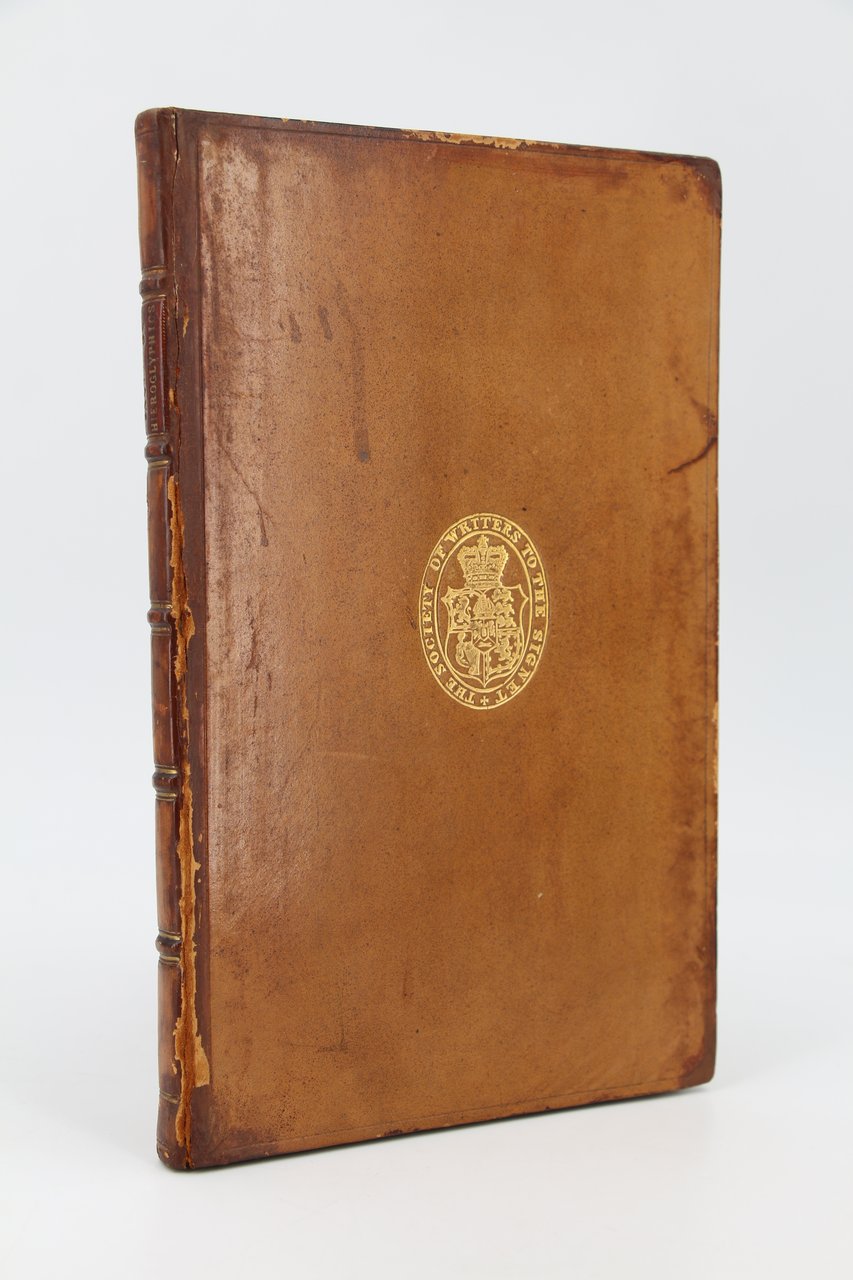
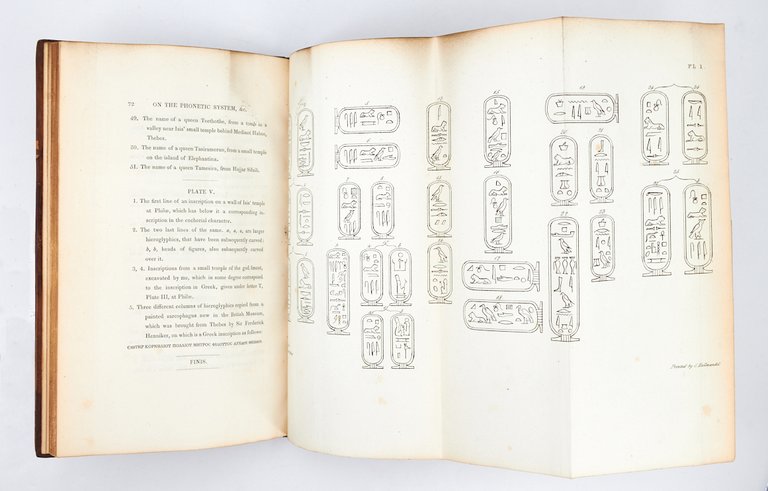
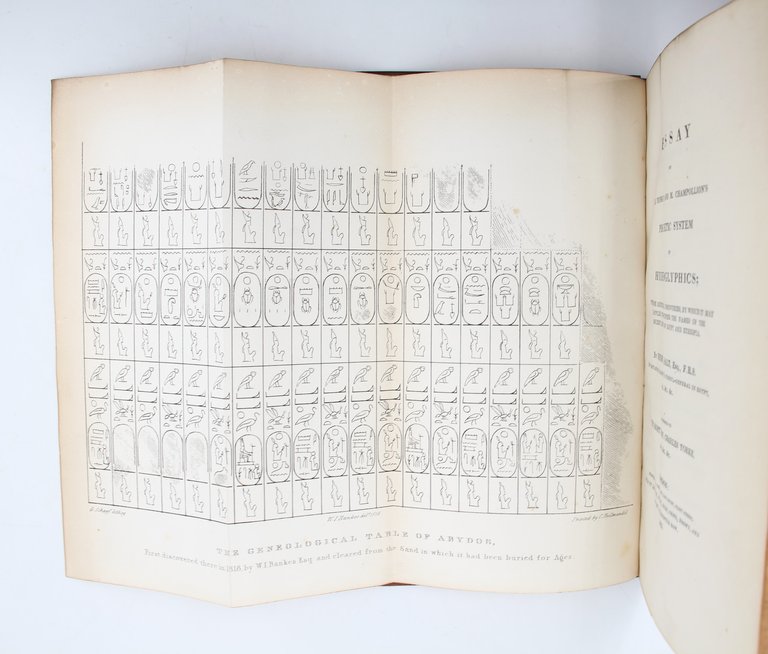
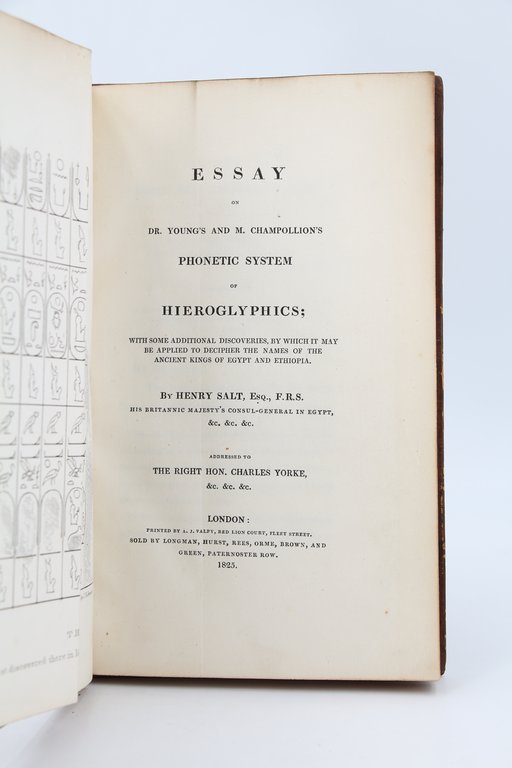
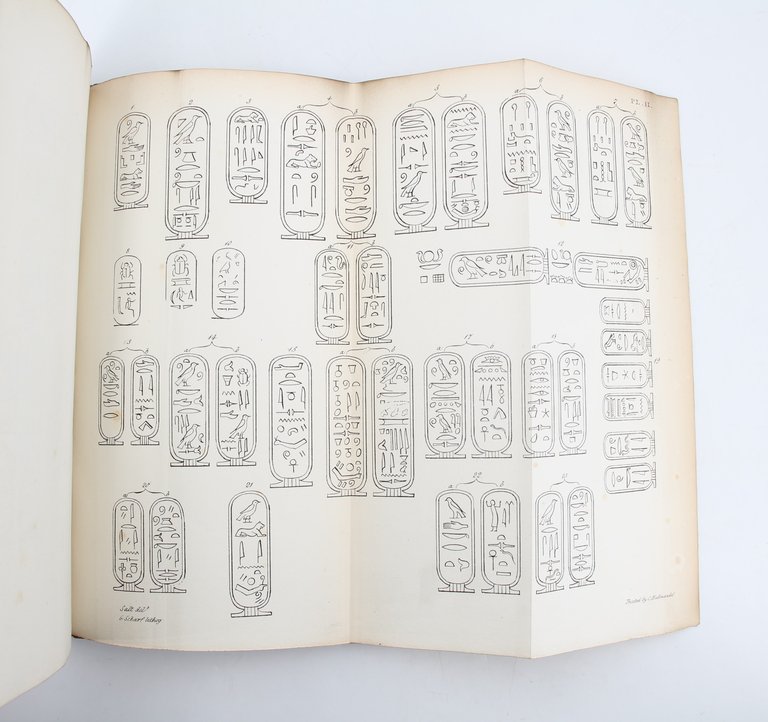
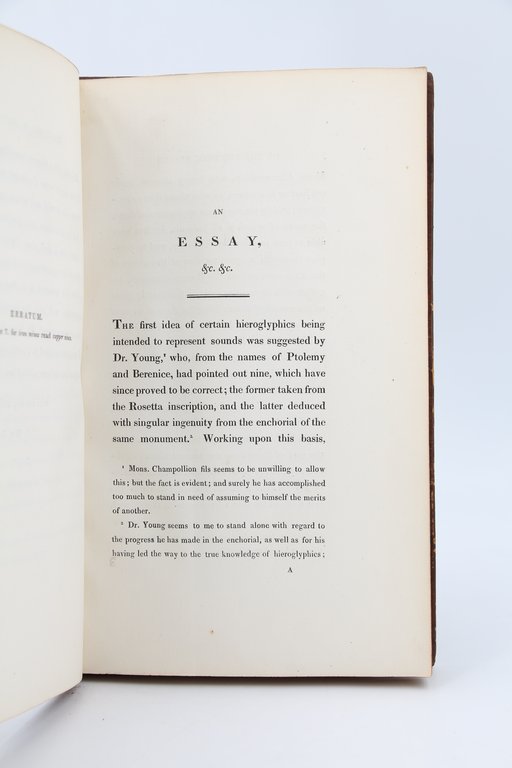
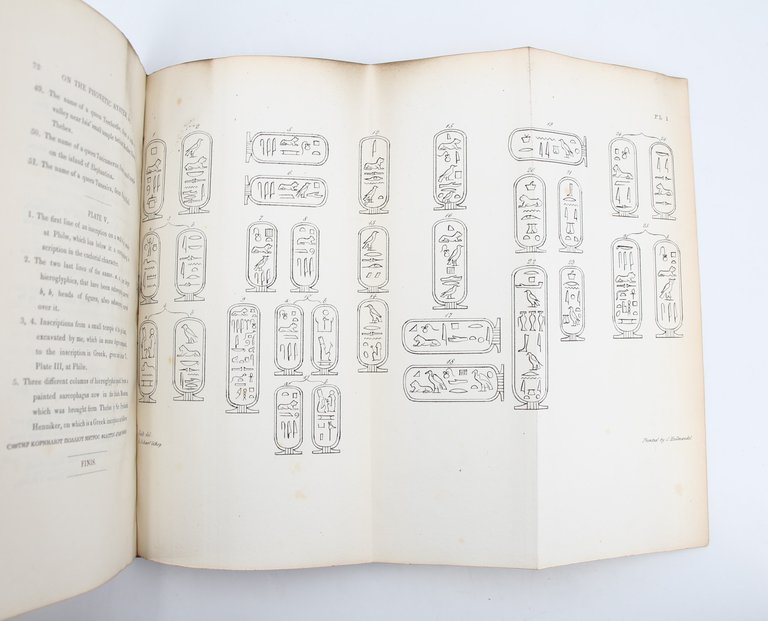
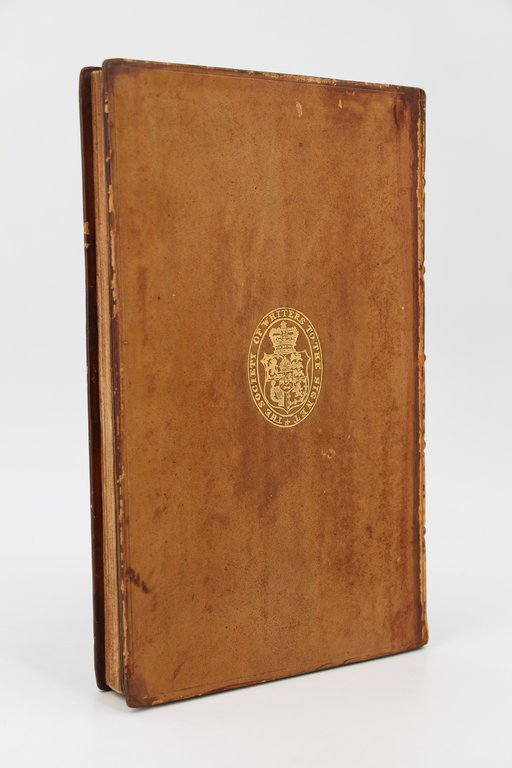
A.J. Valpy | London 1825 | 15.20 x 24 cm | 1 volume relié | First edition, with seven folding plates engraved by Hallmandel after G. Schärf. Beige full calf binding, spine with five raised bands framed in gilt, gilt lettered morocco title label lengthwise, stamped arms of the Society of Writers to the Signet in the center of the boards. Restored spine and corners, brittle spine ends, spalls and stains to boards. A very rare and important publication by the British Consul General in Egypt in 1815, Henry Salt (1780-1827),involved in the excavation of several historical sites and the collection of numerous antiquities. The most remarkable of these is the colossal bust of Ramses II found at Thebes and housed in the British Museum, which is said to have inspired Percy Shelley's Ozymandias. Salt carefully reproduces and explains various inscriptions, bearing the cartouches of Egyptian gods and pharaohs. He made valuable contributions to the understanding of hieroglyphics, following Thomas Young's work on the Rosetta Stone and Jean-François Champollion's groundbreaking discoveries presented in 1822. Historiography even proved that he successfully translated some Egyptian names independently of Champollion's work. Provenance: bindings with the arms of the Society of Writers to the Signet, Scottish sollicitors association founded in the late 16th century. Library shelf label glued to the flyleaf. * [FRENCH VERSION FOLLOWS] | Essay on Dr. Young's on M. Champollion's Phonetic System of Hieroglyphics; With some additional discoveries, by which it may be applied to decipher the names of the ancient kings of Egypt and Ethiopia Edition originale, illustrée de sept planches dépliantes de Hallmandel d'après G. Schärf. Reliures en plein veau havane, dos à cinq nerfs sertis de filets dorés, pièce de titre de maroquin estampée dans la longueur, armes estampées de la Society of Writers to the Signet au centre des plats. Dos et coins restaurés, mors fragiles, épidermures et taches sur les plats. Très rare et importante publication du consul général de Grande-Bretagne en Égypte en 1815, Henry Salt (1780-1827), qui s'est fortement impliqué dans la fouille de plusieurs sites historiques et la collecte de nombreuses antiquités. La plus remarquable d'entre elles, trouvée à Thèbes, est le buste colossal de Ramsès II, aujourd'hui au British Museum, qui aurait inspiré Ozymandias de Percy Shelley. Salt reproduit ici et explique soigneusement diverses inscriptions, portant les cartouches de dieux et pharaons égyptiens. Il a a apporté une contribution précieuse à la compréhension des hiéroglyphes, après les travaux de Thomas Young sur la pierre de Rosette et le célèbre déchiffrement présenté en 1822 par Jean-François Champollion. L'historiographie montrera même qu'il avait élucidé certains noms égyptiens indépendamment des découvertes de Champollion. Provenance : reliures aux armes de la Society of Writers to the Signet, association d'avocats écossais fondée à la fin du XVIe siècle. Une étiquette de cote de bibliothèque encollée sur le contreplat.

 Découvrez comment utiliser
 Découvrez comment utiliser