How Republics Die: Creeping Authoritarianism in Ancient Rome and Beyond
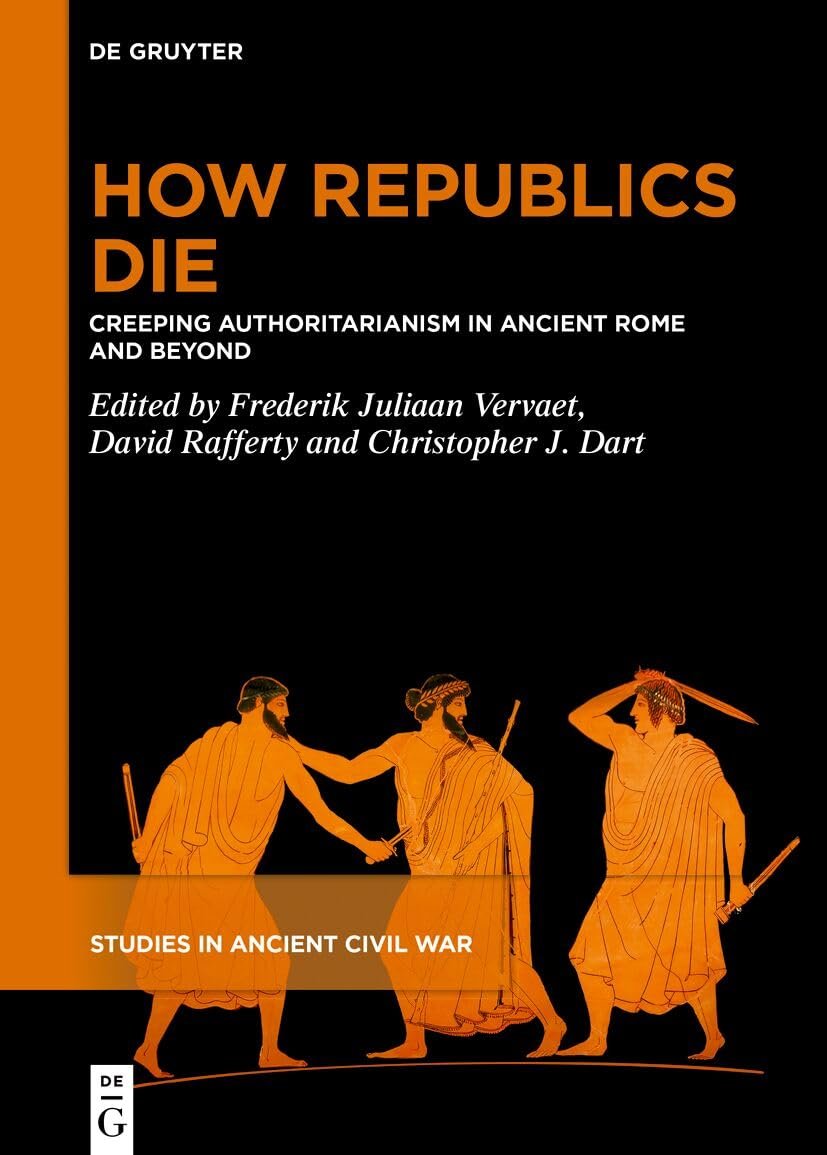
How Republics Die: Creeping Authoritarianism in Ancient Rome and Beyond
Mode de Paiement
- PayPal
- Carte bancaire
- Virement bancaire
- Pubblica amministrazione
- Carta del Docente
Détails
- Auteur
- Frederik Juliaan Vervaet, David Rafferty, E Al.
- Éditeurs
- De Gruyter 2025
- Description
- H
- Jaquette
- False
- Etat de conservation
- Neuf
- Reliure
- Couverture rigide
- Dédicacée
- False
- Premiére Edition
- False
Description
8vo, hardcover 550pp. Authoritarianism is everywhere on the advance; democracies seem fragile and threatened. We console ourselves that where rule by the people has long established itself, it has never collapsed from internal causes. Except it did, once: in Rome. This book gathers together Roman historians with political scientists and scholars of other periods of authoritarian takeover to explore how open and democratic political systems have historically fallen prey to autocrats. The Late Roman Republic is the main focus, with a mix of large-scale thematic and analytical chapters paired with more detailed case studies, from some of the leading scholars in the field. Other chapters widen the scope, analysing comparable cases from ancient Athens to Napoleon to Hitlerís Germany and Francoís Spain. The book as a whole draws on contemporary political science scholarship on democratic decay and competitive authoritarianism. It shows that these concepts are not only applicable to modern states, but that we can properly use them to study past democratic collapses as well. This provides the tools for a more historically-informed understanding of how republics die, as part of a renewed conversation between historians and political scientists.
