Statuti della venerabile Archiconfraternita della Santissima Trinita de' Pelegrini, & Convalescenti, nuovamente riformati, e stampati. In Roma, per gli heredi d'Antonio Blado stampatori camerali, 1578 (Colophon: In Roma, appresso gli heredi d'Antonio Blado stampatori camerali, 1578) [in fact a 17th-century counterfeit]
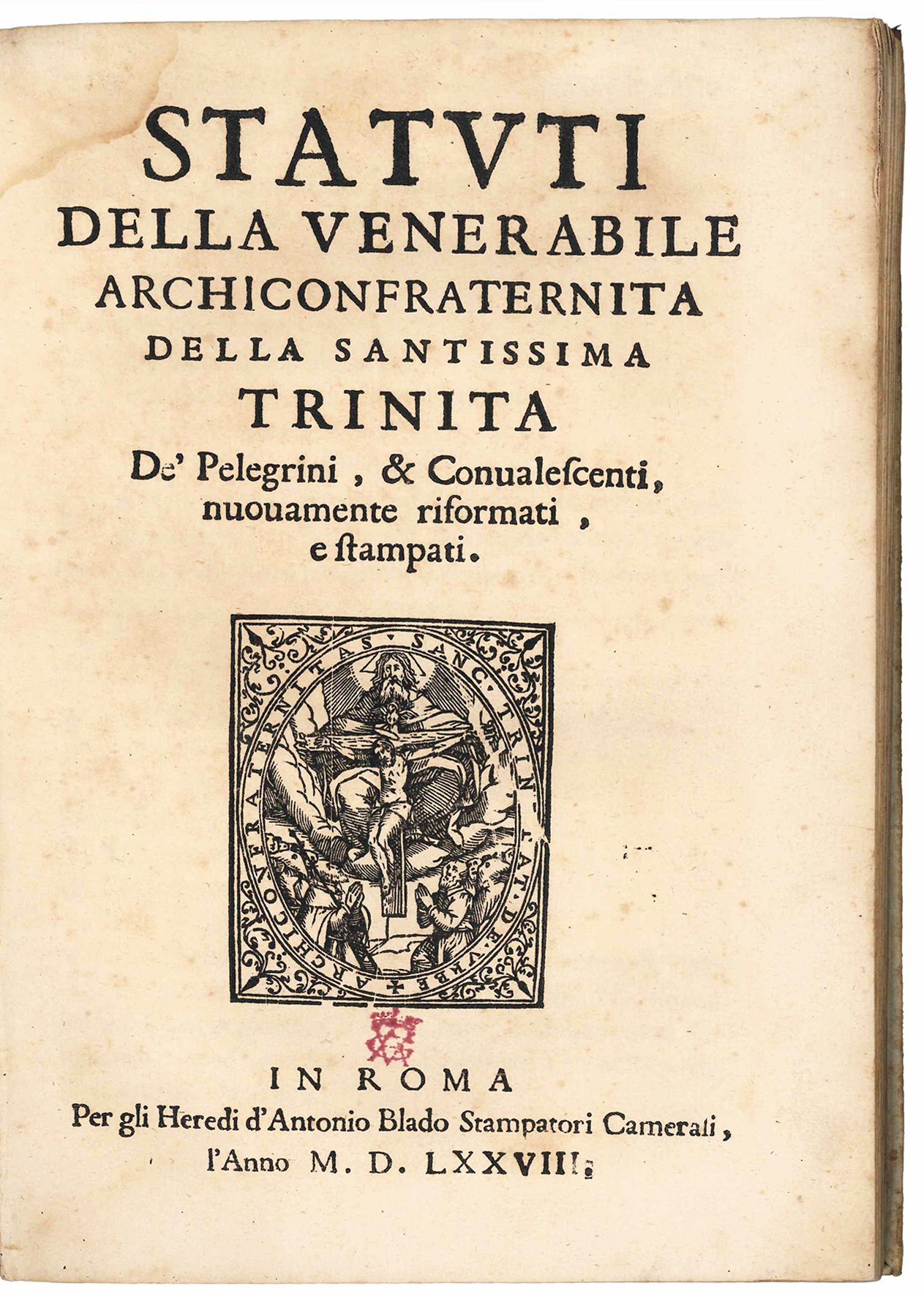

Statuti della venerabile Archiconfraternita della Santissima Trinita de' Pelegrini, & Convalescenti, nuovamente riformati, e stampati. In Roma, per gli heredi d'Antonio Blado stampatori camerali, 1578 (Colophon: In Roma, appresso gli heredi d'Antonio Blado stampatori camerali, 1578) [in fact a 17th-century counterfeit]
Mode de Paiement
- PayPal
- Carte bancaire
- Virement bancaire
- Pubblica amministrazione
- Carta del Docente
Détails
- Auteur
- ARCHCONFRATERNITY OF THE HOLY TRINITY OF PILGRIMS AND CONVALES
- Thème
- seicento
- Etat de conservation
- En bonne condition
- Langues
- Italien
- Reliure
- Couverture rigide
- Condition
- Ancien
Description
A 17TH-CENTURY COUNTERFEIT OF A BLADO EDITION
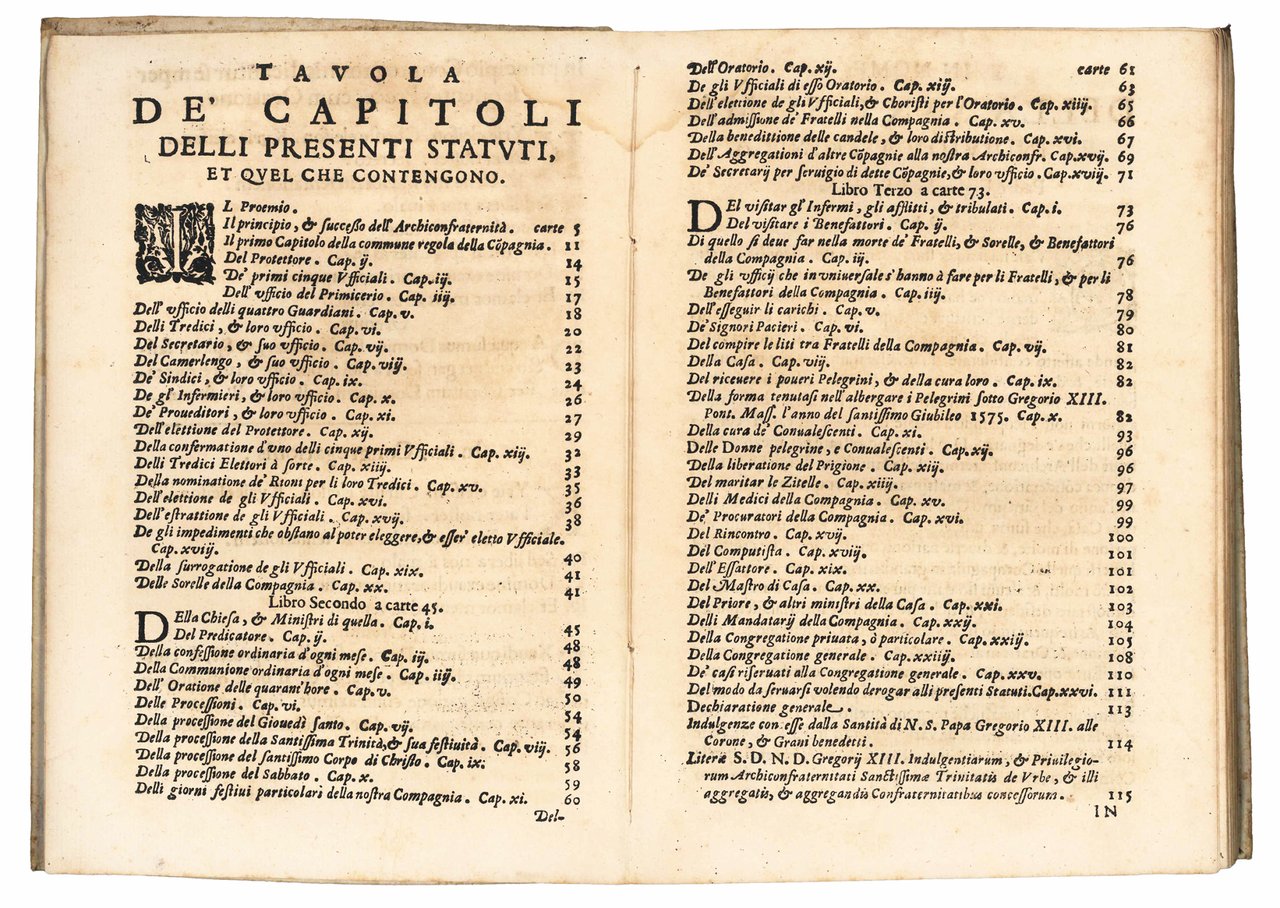
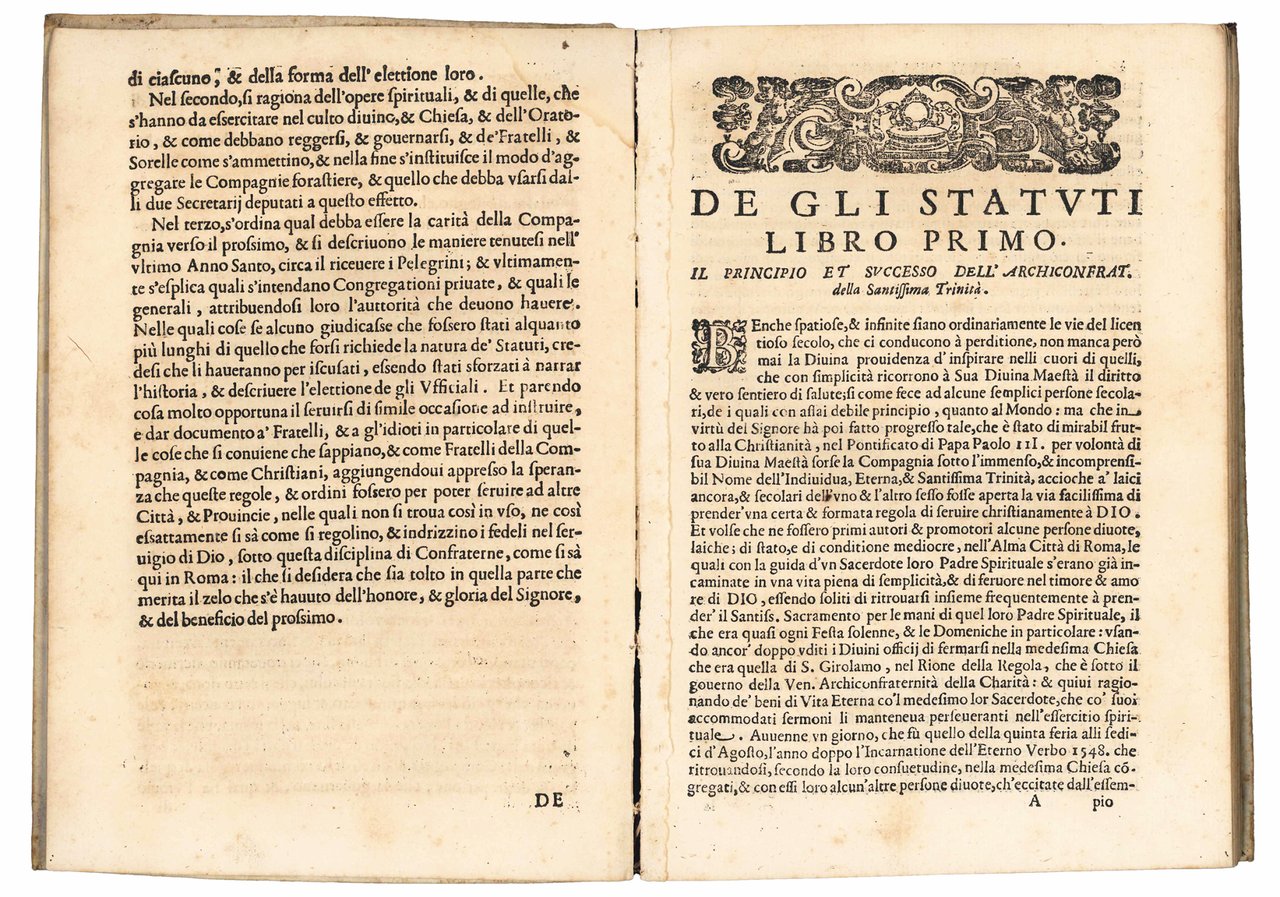
4to (238x164 mm). [8], 120 pp. Collation: +4 A-P4. Woodcut emblem of the Archconfraternity on the title page. Contemporary limp vellum, inked title on spine. Giuseppe Arconati Visconti red stamp on the title page. Light foxing and browning, but a very good, genuine copy.
This edition is most likely a 17th-century counterfeit of Antonio Blado 1578 Roman edition of the Statutes of the Archconfraternity of the Holy Trinity of Pilgrims and Convalescents. It is unclear why the statutes were reprinted, probably some fifty years later, using the typographical data from Blado edition, whose workshop had ceased operations in the 1590s.
Founded by St. Philip Neri, the Confraternity of the Holy Trinity immediately set itself the task of assisting pilgrims who came to Rome for Holy Years and caring for convalescents discharged from hospitals. In 1558, Pope Paul IV granted the Confraternity the church of SS.ma Trinità dei Pellegrini and the adjacent hospice. In 1562, Pope Pius IV favored it with new bulls and promoted it to Archconfraternity.
In a city as popular with pilgrims as Rome, there was no shortage of hospitals, but the medicine and infrastructure of the time did not allow for hospital stays beyond the time necessary for the most urgent care. Those who could not afford to convalesce in private facilities therefore found themselves in serious difficulty, if not in danger of falling ill again or dying. The brothers therefore devoted themselves to gathering all sorts of sick and abandoned poor people from the streets and taking them to hospices, which were gradually rented or purchased throughout the city thanks to the abundant alms of simple faithful, princes, and prelates. The Archconfraternity is still active today. Its constitutions first appeared in 1554, while its statutes were first printed by Antonio Blado in 1578, and were confirmed and reprinted in 1821.
Edit 16, CNCE15728.
