The Killing Wind: A Chinese County's Descent into Madness during the Cultural Revolution
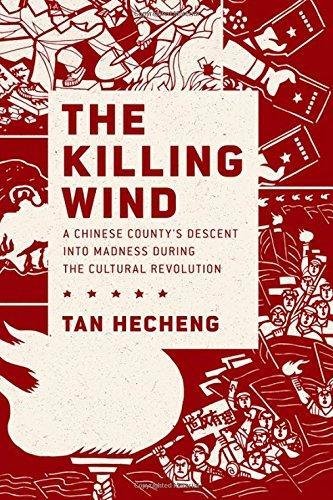
The Killing Wind: A Chinese County's Descent into Madness during the Cultural Revolution
Mode de Paiement
- PayPal
- Carte bancaire
- Virement bancaire
- Pubblica amministrazione
- Carta del Docente
Détails
- Auteur
- Hecheng, Tan
- Éditeurs
- Oxford University Press, 2017
- Thème
- CINA China Chine
- Description
- As New
- Description
- H
- Jaquette
- True
- Etat de conservation
- Comme neuf
- Reliure
- Couverture rigide
- Dédicacée
- False
- Premiére Edition
- False
Description
8vo, hardcover in dust jacket, 505pp. A spasm of extreme radicalism that rocked China to its foundations in the mid- to late 1960s, the Cultural Revolution has generated a vast literature. Much of it, however, is at a birds-eye level, and we have very few detailed accounts of how it worked on the ground. Long after the event, Tan Hecheng, now a retired Chinese writer and editor, was sent to Daoxian, Mao s home county, to report on the official investigation into the massacre that took place there during the Cultural Revolution. In The Killing Wind, Tan recounts how over the course of 66 days in 1967, over 9,000 Chinese class enemies were massacred in the Daoxian, in the Hunan Province. The killings were unprovoked and carried out with incredible, stomach-churning brutality, which is documented here in excruciating detail. But although this could easily be just a compendium of horrors, it s also a meditation on memory, moral culpability, and the failure of the Chinese government to come to terms with the crimes of the Maoist era. Tan interweaves the story of his research with the recollections of survivors and reflections on the long-term consequences of the Cultural Revolution. Akin to Jan Gross s Neighbors, about the Holocaust in a Polish town, The Killing Wind likewise paints a single episode in extraordinary detail in order to make a broader argument about the long term consequences flowing from one of the twentieth century s greatest human tragedies
