Livres anciens et modernes
LAURI, Giovanni Battista (1579-1629)-GILIOLI, Giovanni Tommaso
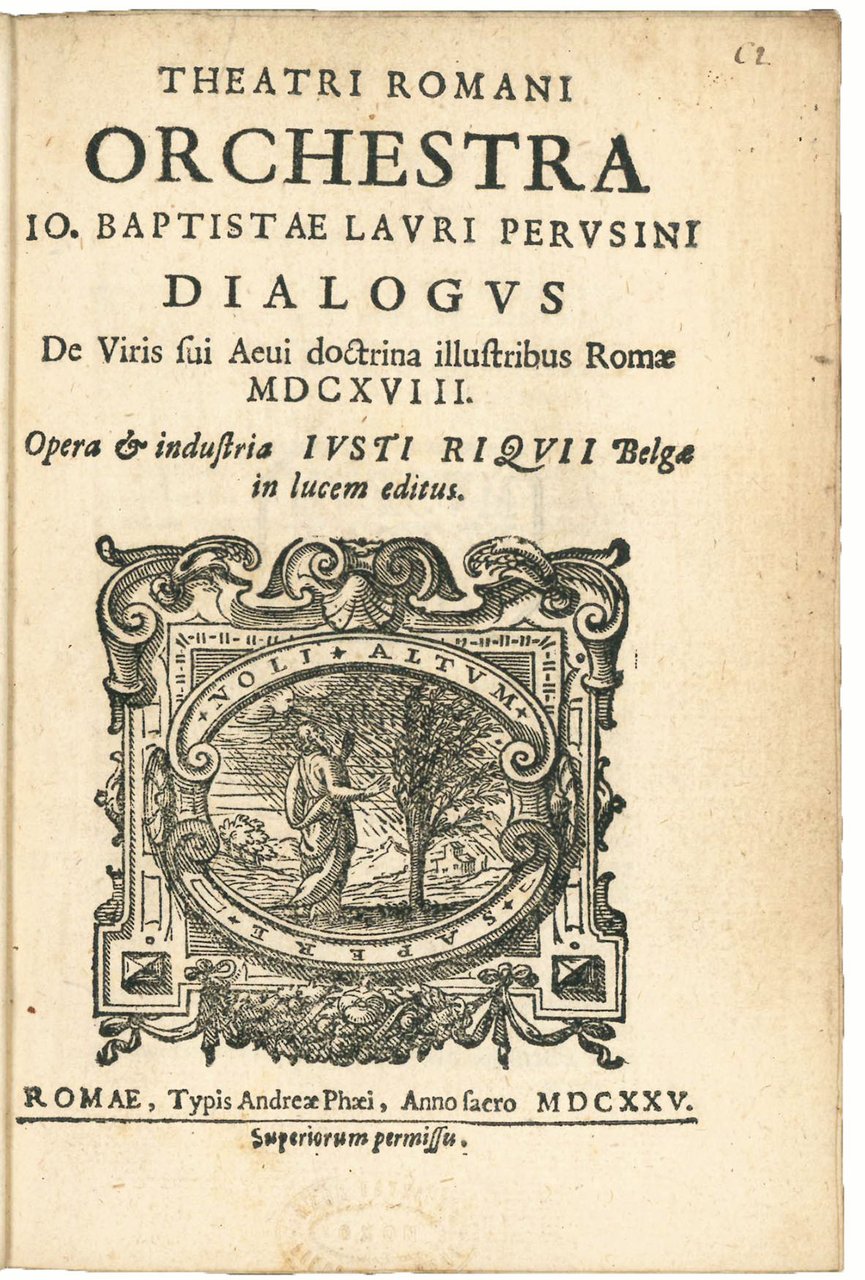
Theatri Romani orchestra Io. Baptistae Lauri Perusini dialogus de viris sui aevi doctrina illustribus Romae MDCXVIII. Opera & industria Iusti Riquii Belgae in lucem editus
Andrea Fei, 1625
5800,00 €
Govi Libreria Antiquaria
(Modena, Italie)
Les frais d'expédition corrects sont calculés une fois que l'adresse de livraison a été indiquée lors de la création de la commande. Un ou plusieurs modes de livraison sont disponibles à la discrétion du vendeur : standard, express, economy, in store pick-up.
Conditions d'expédition de la Librairie:
Pour les articles dont le prix est supérieur à 300 euros, il est possible de demander un plan de paiement échelonné à Maremagnum. Le paiement peut être effectué avec Carta del Docente, Carta della cultura giovani e del merito, Public Administration.
Les délais de livraison sont estimés en fonction du temps d'expédition de la librairie et de la livraison par le transporteur. En cas de retenue douanière, des retards de livraison peuvent survenir. Les frais de douane éventuels sont à la charge du destinataire.
Pour plus d'informationsMode de Paiement
- PayPal
- Carte bancaire
- Virement bancaire
-

-
 Découvrez comment utiliser
votre Carta del Docente -
 Découvrez comment utiliser
votre Carta della cultura giovani e del merito
Détails
Description
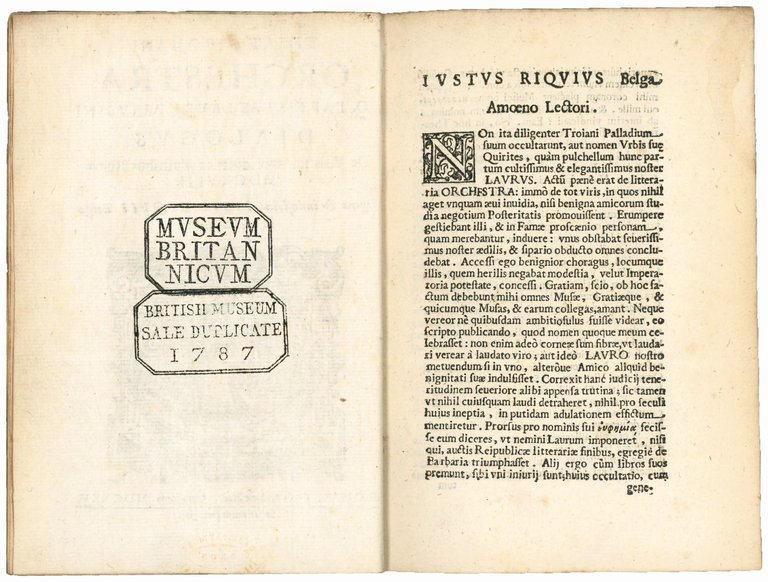
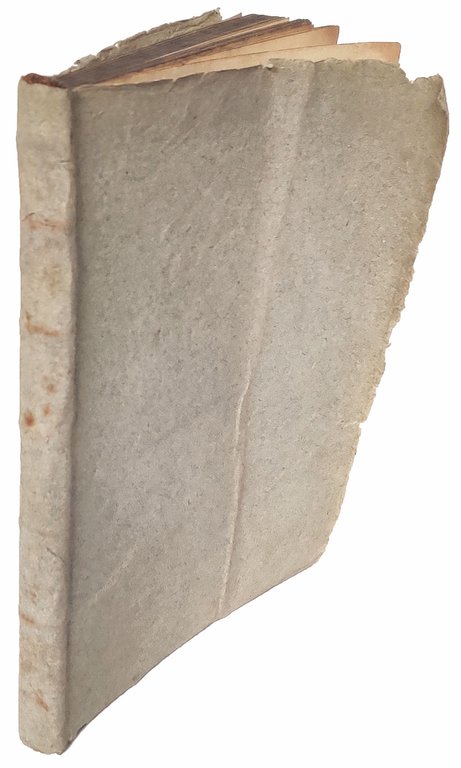
8vo (164x110 mm). [8], 127, [5] pp. Collation: [π]4 A-P4 Q6. Printer's device on the title page. Decorative initials and tailpieces. Later wrappers, marbled edges. Embossed stamp of “Mark Pattison Oxon” on the title page; stamp of the British Museum “Museum Britannicum British Museum Sale Duplicate 1787” on title-page verso. Marginal repair to l. [π]2 not affecting the text, some light browning and foxing, a good copy.
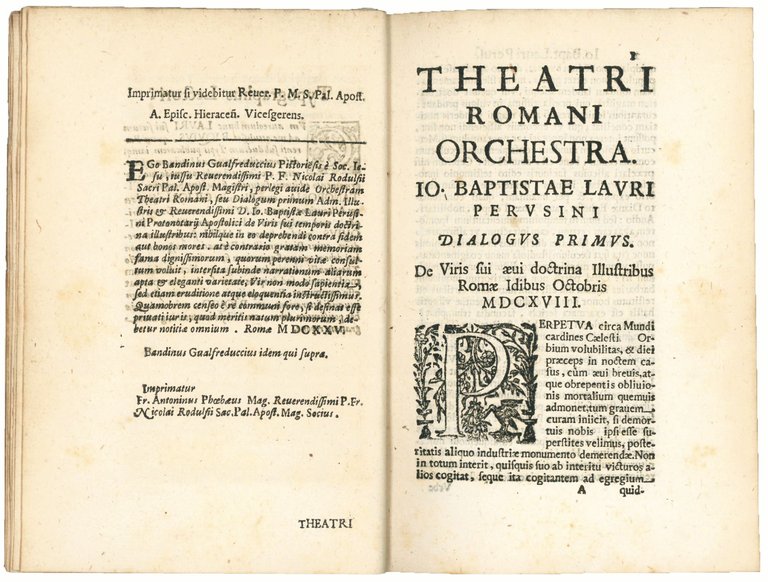
Rare first and only edition edited by Josse de Rycke (Iustus Riquius). The edition opens with a preface by Riquius, which is followed by a note from the typographer to the reader. In the preface Riquius celebrates the glory and patronage splendor of papal Rome.
The Theatri Romani orchestra is written in the form of a dialogue between two interlocutors Beraldus and Velia. The work is essentially a kind of bio-bibliography of illustrious men, both ecclesiastical and secular, who were more or less contemporary with Lauri. In particular, Lauri focuses on the Roman cultural life of the time dominated by the Accademia dei Lincei (founded in 1603) and celebrates the new golden age of Paul V's and Urban VIII's Rome, both in the arts (quoting illustrious personalities of the time such as John Barclay, Thomas Dempster, Caspar Schoppe, Giovanni Battista Marino, Alessandro Tassoni, Giovanni Ciampoli, Virginio Cesarini, and many others) and in the sciences, where Christopher Clavius, Luca Valerio, Mark Welser, Giulio Cesare Lagalla, Federico Cesi, Galileo Galilei and Christopher Grienberger, to name but a few, are mentioned. Among the many illustrious prelates, the names of Federico Borromeo, Maffeo Barberini (Urban VIII), Scipione Borghese (Paul V's nephew), and Roberto Bellarmino obviously stand out for the decisive role they played in Rome in the first quarter of the 17th century. Josse de Rycke and Giovanni Tommaso Gilioli are also mentioned in the dialogue.
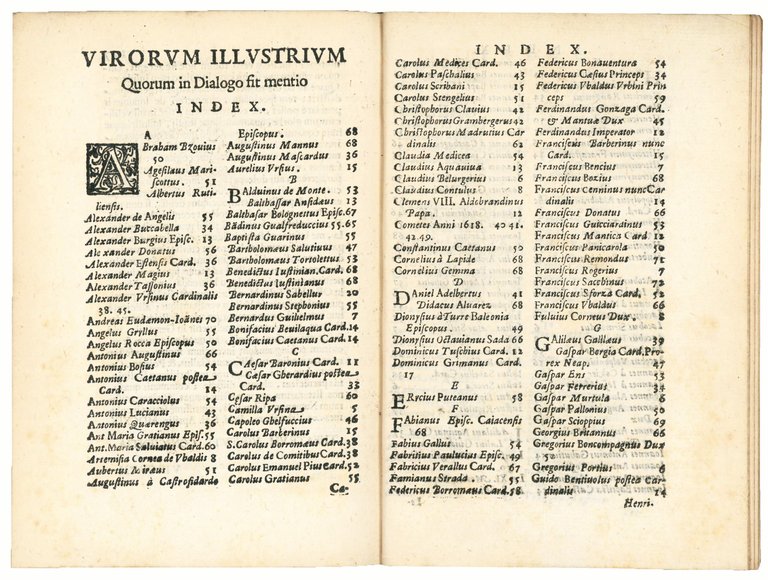
The second part of the volume contains the poem by Lauri Titanopoeia, sive de fabricatione calcis liber (pp. 77-97), dedicated to the production of lime (first published in Perugia in 1611), followed by two works in prose by Giglioli, De calcis fabricatione physica allegoria (first published in Rome in 1623 together with the Titanopoeia) and Consolatio ad Io: Baptistam Laurum Perusinum super excessu Io: Pauli Fratris (pp. 99-125), and finally the index of names cited in the Theatri Romani orchestra.
As early as 1614, Federico Cesi, founder of the world's first scientific academy, the Accademia dei Lincei, and a convinced advocate of the importance of philology and poetry in popularizing science, asked Johannes Faber to bring the Belgian poet, archeologist and philologist Josse de Rycke to Rome as a valuable aid in his project of uniting science and ‘humanae litterae'. For health and family reasons, however, Rycke did not arrive in Rome until 1624 and became a member of the Lincei the following year. Later, thanks to the interest of Cardinal Scipione Cobelluzzi, he obtained the chair of eloquence and history at the University of Bologna, where he died shortly thereafter in 1627. In 1625 Cesi wanted to celebrate the pontificate of Urban VIII Barberini with three publishing initiatives, all under the sign of the bee (the symbol of the Barberini family), which saw Rycke as the author of elegiac couplets of a didactic and encomiastic character (Melissographia and Apes Dianiae) and as linguistic reviser of the Apiarium, an extensive entomological treatise in which the bee plays a triple role: heraldic symbol of the Barberini, object of scientific research and, finally, emblem of a collaborative ideal by which the members of the Accademia dei Lincei wanted to be inspired (cf. A. Gallottini-M. Guardo, Le Apes Dianiae di Iustus Riquius. Poesia e antiquaria nella prima Accademia dei Lincei, in: “L'Ellisse”, 3, 2008, pp. 52-53).
Giovanni Battista Lauri, a native of Perugia, was encouraged to pursue his studies by Cardinal Bonifacio Bevila
