Geographie de Ptolemee en Occident (IVe-XVIe siecle)
Geographie de Ptolemee en Occident (IVe-XVIe siecle) | Livres anciens et modernes | P. Gautier Dalche.
Geographie de Ptolemee en Occident (IVe-XVIe siecle)
Geographie de Ptolemee en Occident (IVe-XVIe siecle) | Livres anciens et modernes | P. Gautier Dalche.
Mode de Paiement
- PayPal
- Carte bancaire
- Virement bancaire
- Pubblica amministrazione
- Carta del Docente
Détails
- Auteur
- P. Gautier Dalche.
- Éditeurs
- , brepols, 2009
- Thème
- archeologie, archeology, archeologie, archeologie
Description
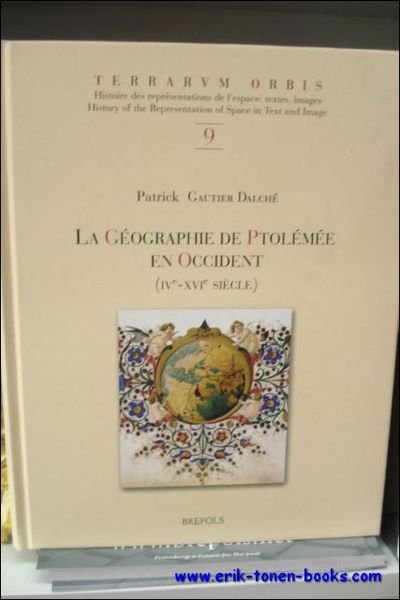
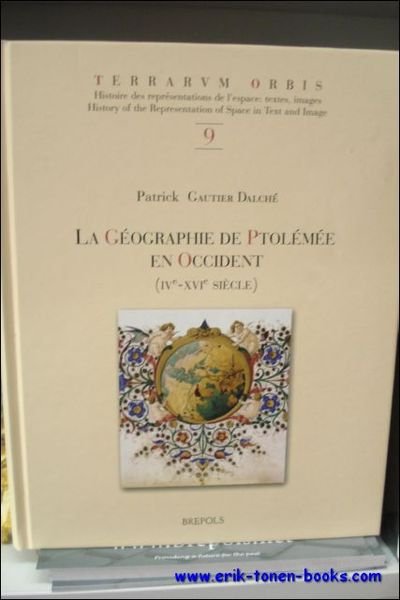
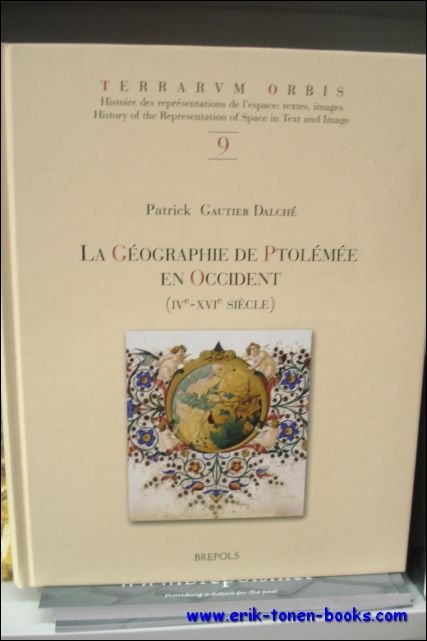
443 p., 30 colour ill., 210 x 270 mm, Languages: French Hardback. ISBN 9782503531649. In Late Antiquity, Ptolemy?s treatise on cartography (second century AD) was yet to achieve the recognition that Ptolemy had hoped for, despite relatively wide distribution. However, in the early Middle Ages, knowledge of the Geographia did not disappear completely, owing mainly to treatises on astronomy translated from Arabic. The Latin version produced at the beginning of the 15th century did not, therefore, have the revolutionary character that is often attributed to it. The work that made it possible to understand the universe of Antiquity as it appeared in the classics was well received from the ?literary? point of view. But the astrologists and scientists educated in universities were instrumental, in a way that has, until now, been little studied, in analysing the contradictions between the Ptolemy?s representation of the universe and other representations that were still current and accepted. The long process of the modernisation of Ptolemy?s vision entered a decisive phase at the beginning of the second half of the fifteenth century following the synthesis between humanism and natural philosophy. It continued until the beginning of the sixteenth century, considering the modes of representation (anachronistically called ?projections?), retaining the concept of the influence of celestial bodies on the sublunar sphere, a feature of conceptions of the world held since Antiquity that the work of Ptolemy justified as best. This book questions a certain number of commonplaces of cultural history. It is based on the first hand analysis of Greek and Roman texts and maps from highly diverse intellectual backgrounds.