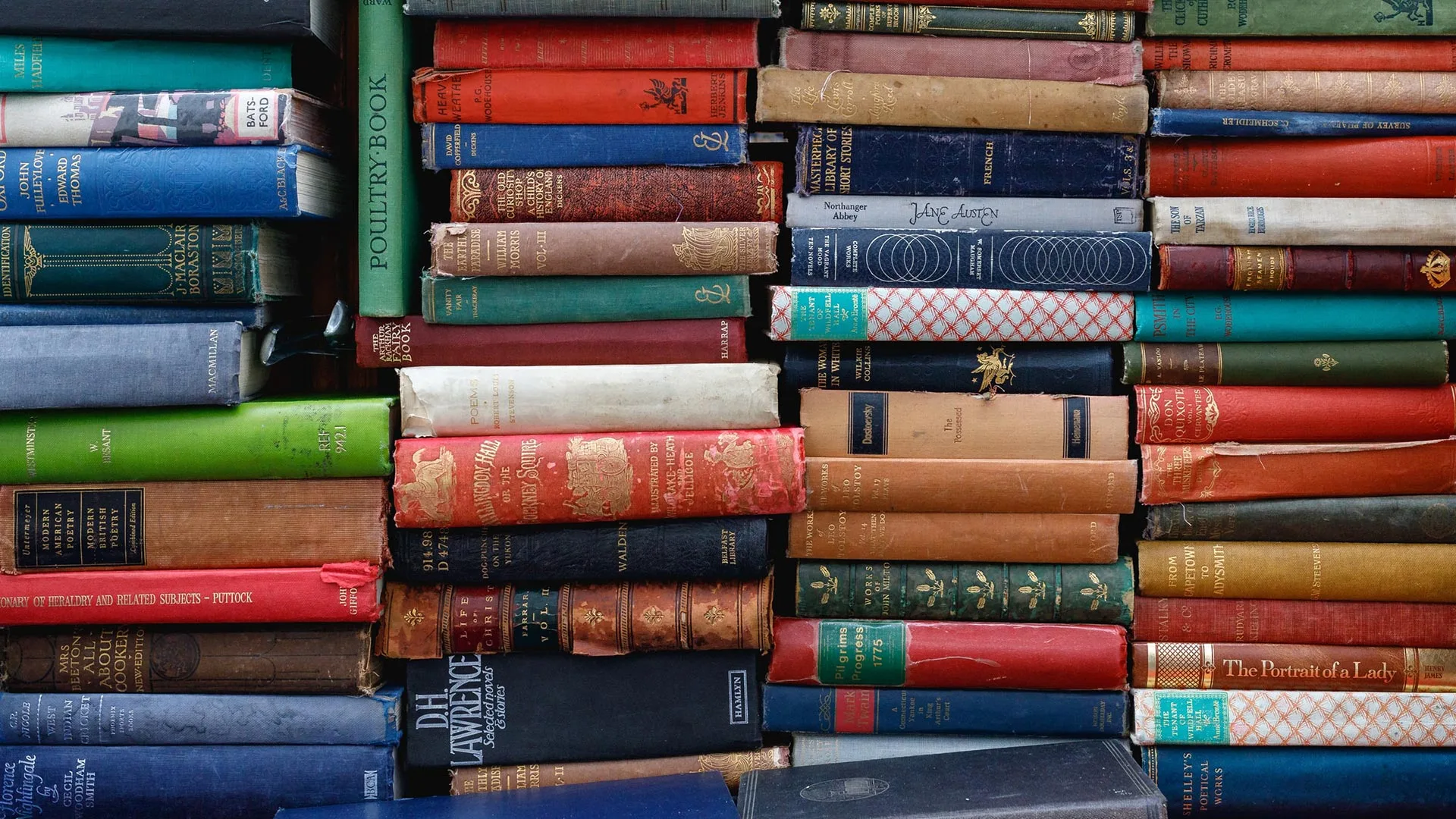
Il Convito o vero discorsi di quelle materie che al convito appartengono [...]
Il Convito o vero discorsi di quelle materie che al convito appartengono [...] | Livres anciens et modernes | RABASCO, Ottaviano (fl. 16th- 17th cent.)
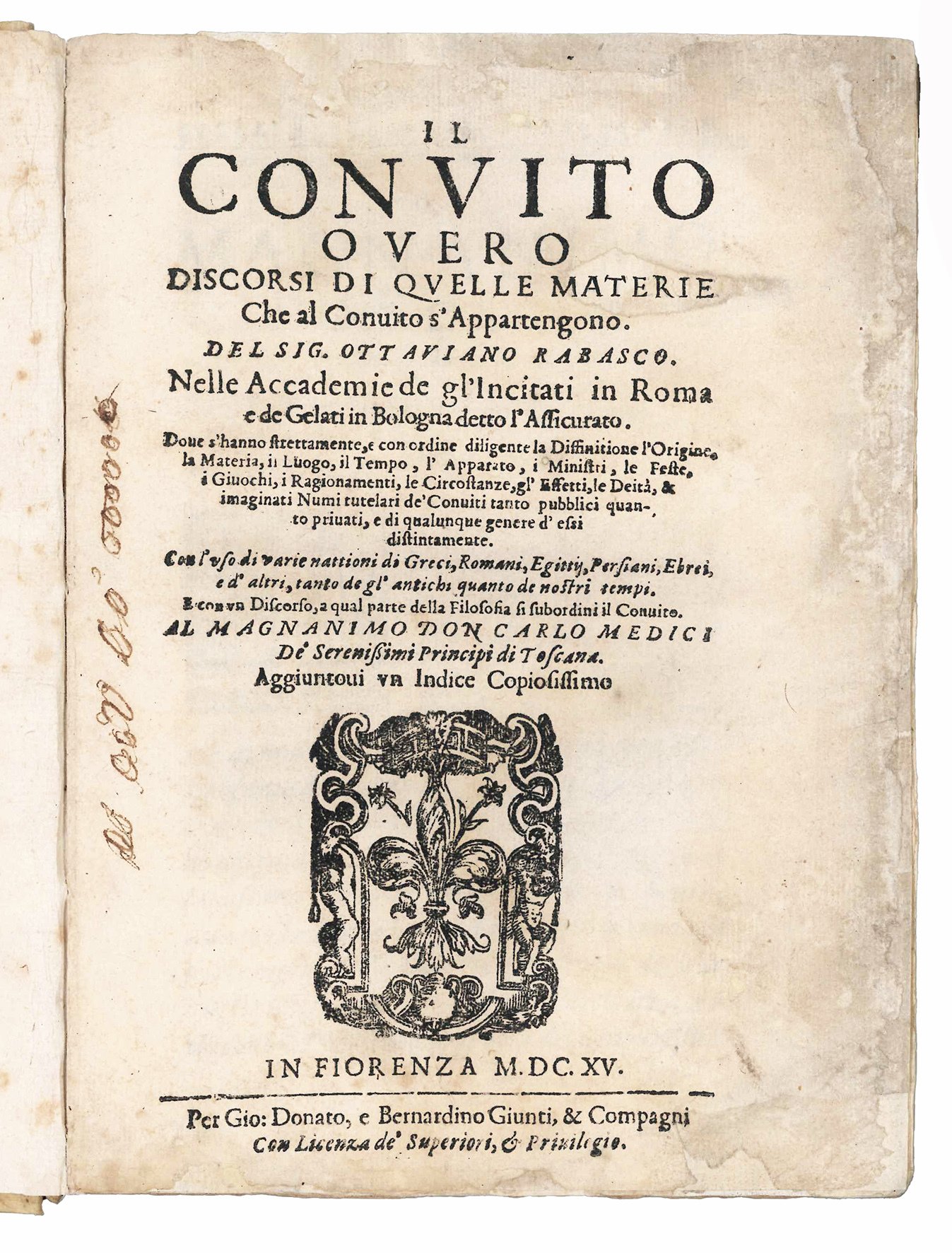
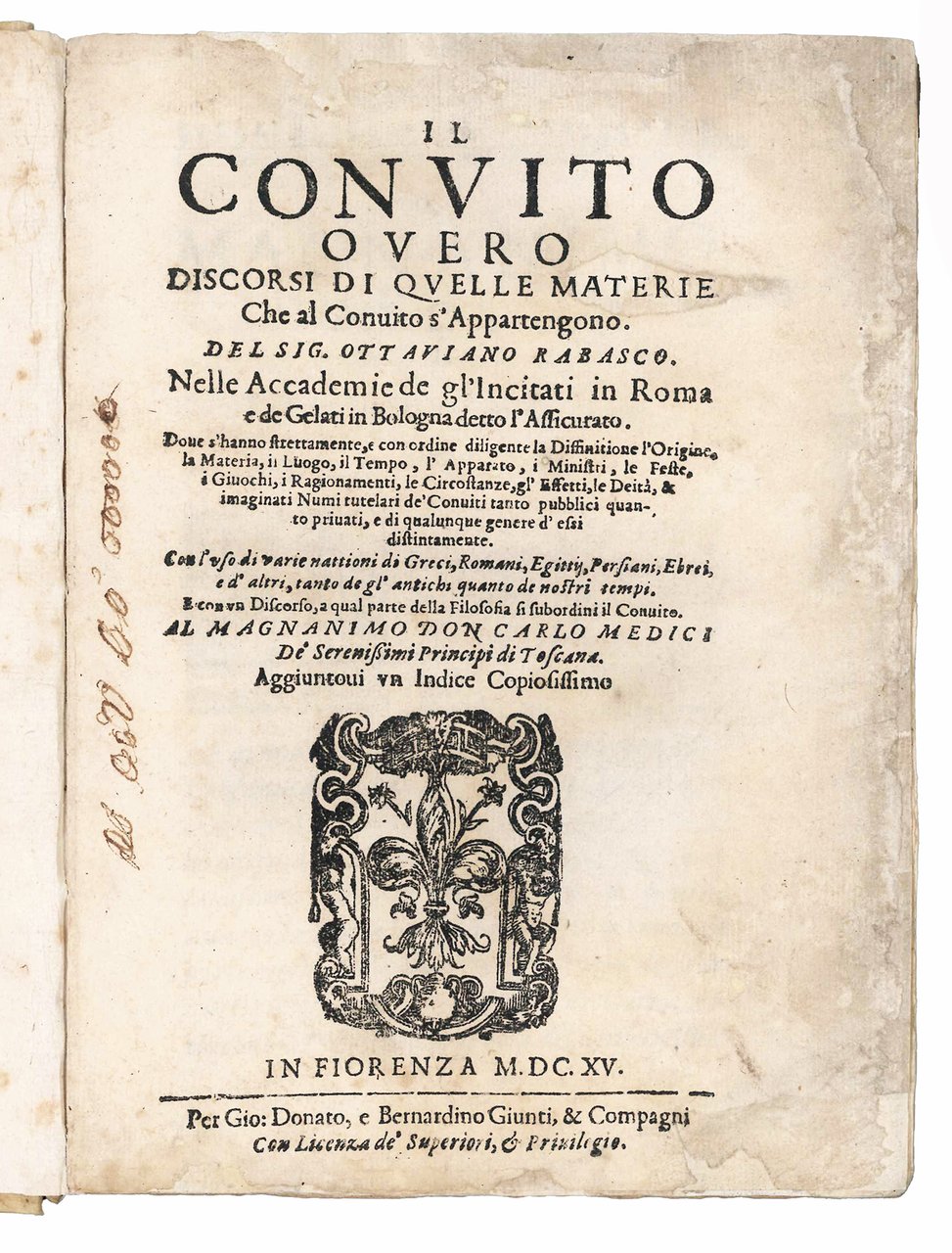
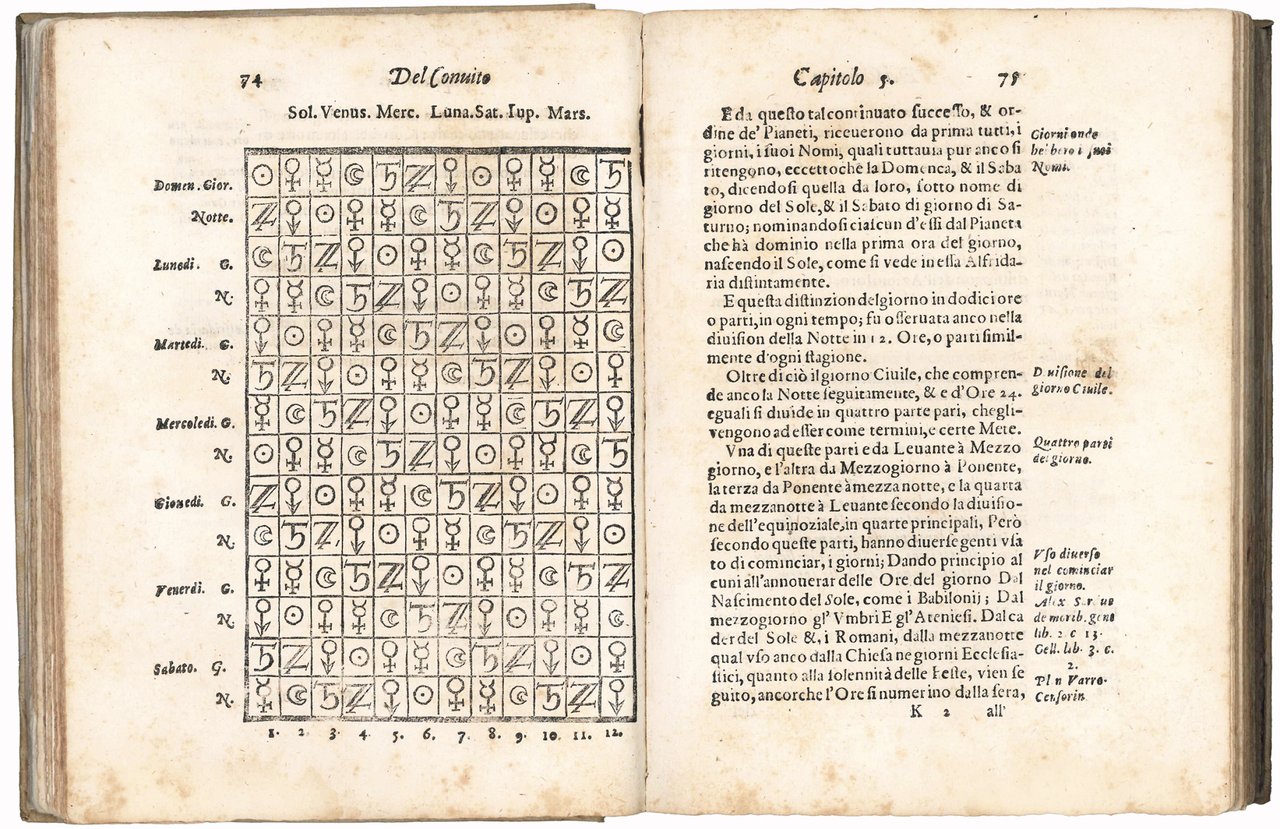
Il Convito o vero discorsi di quelle materie che al convito appartengono [...]
Il Convito o vero discorsi di quelle materie che al convito appartengono [...] | Livres anciens et modernes | RABASCO, Ottaviano (fl. 16th- 17th cent.)
Mode de Paiement
- PayPal
- Carte bancaire
- Virement bancaire
- Pubblica amministrazione
- Carta del Docente
Détails
- Année
- 1615
- Lieu d'édition
- Firenze
- Auteur
- RABASCO, Ottaviano (fl. 16th- 17th cent.)
- Éditeurs
- Giandonato Giunta, Bernardino Giunta & C.
- Thème
- seicento
- Etat de conservation
- En mauvais état
- Langues
- Italien
- Reliure
- Couverture rigide
- Condition
- Ancien
Description
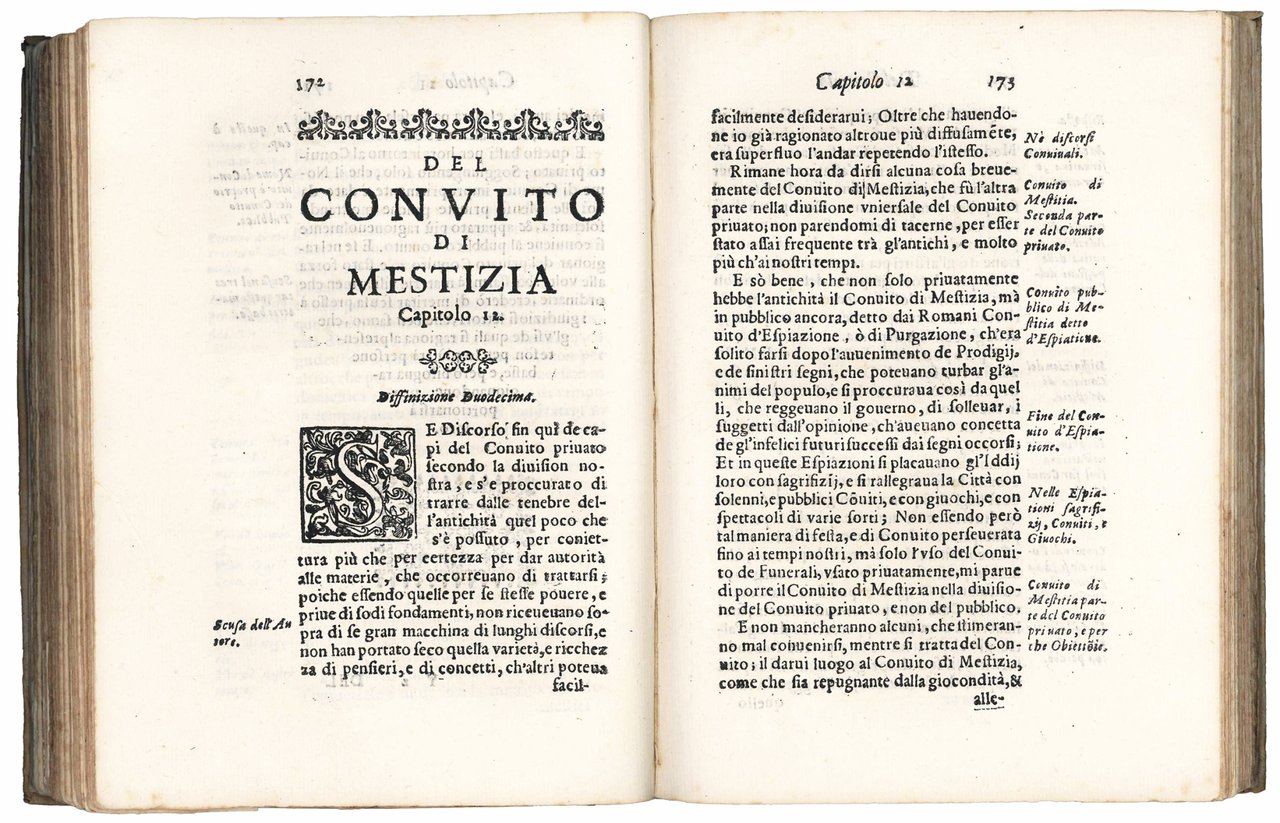
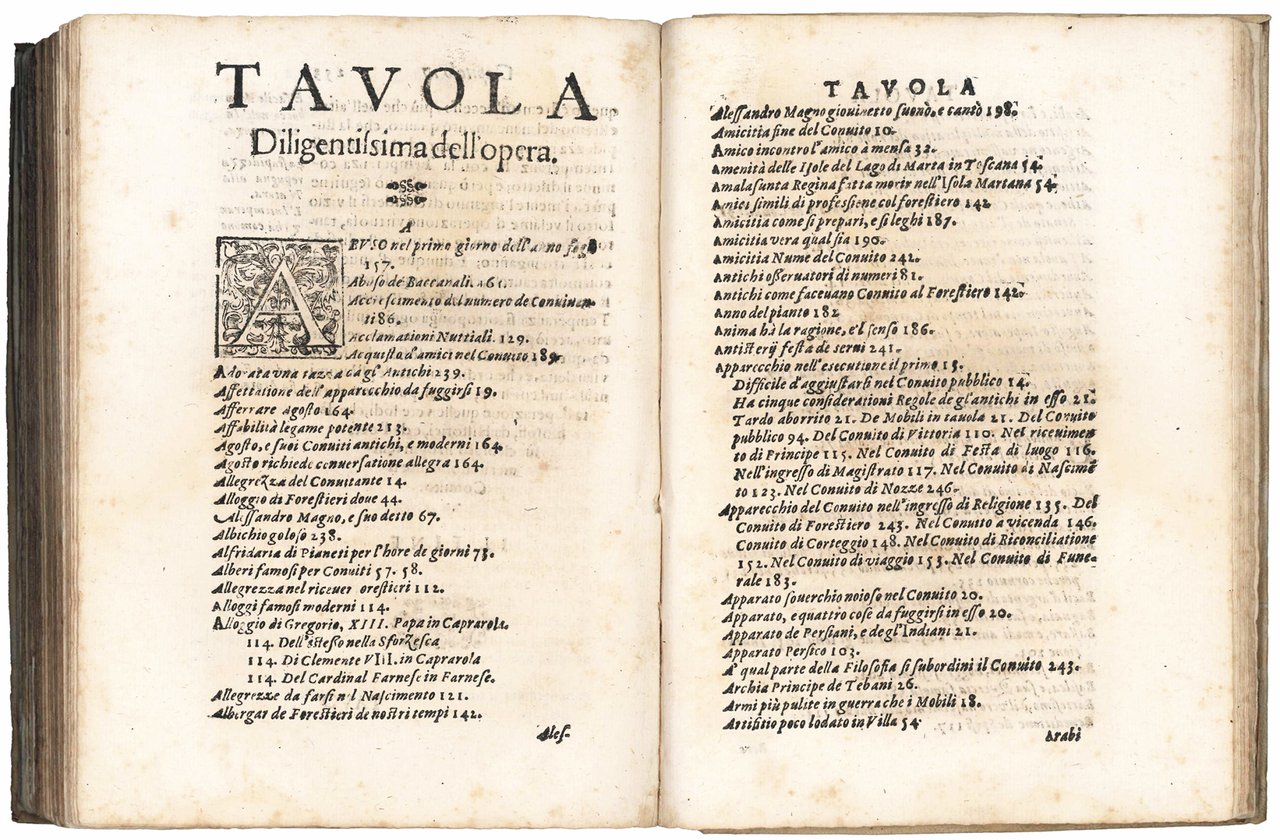
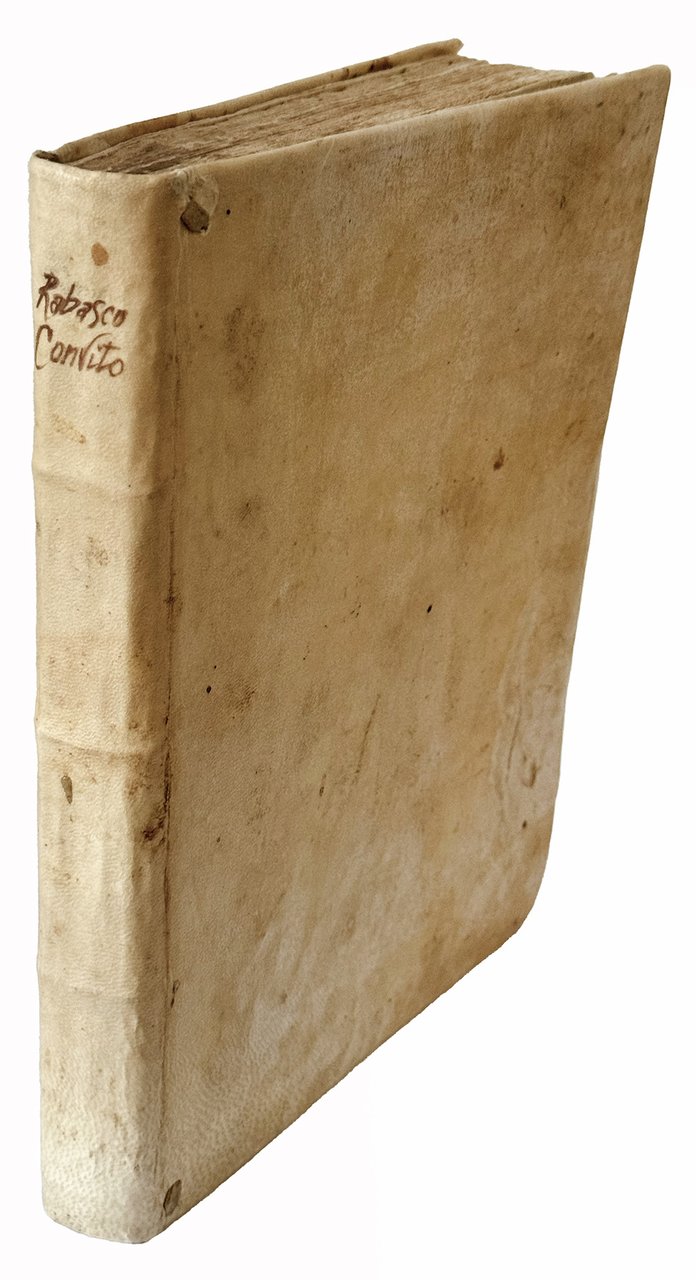
4to (210x152 mm). [12], 253, [39] pp. Collation: *4 +2 A-Nn4 Oo2. With the printer's device on the title page and 2 woodcut illustrations in the text (one full page). Contemporary stiff vellum with inked title on spine (recased). Bookplate Belmondo Caccia on the front pastedown. Restorations to the outer margins of the first four leaves not affecting the text, other restoration to the title page with loss of one word which is supplied by hand, some foxing and browning throughout, more heavily at places.
First edition, dedicated to Don Carlo de' Medici, of this comprehensive treatise on banqueting, hospitality and table manners. Originally from Marta near Viterbo, the author regards friendship as the purpose of a banquet and considers hospitality towards strangers to be sacred. He considers every aspect that contributes to the joy of a banquet and the pleasure of a stay, from practical elements such as food, table settings, and service, to more “philosophical” elements such as friendship, good manners, and conversation. He provides numerous examples from both ancient and modern history, describing Gregory XIII's lodgings at Caprarola and at La Sforzesca, for instance.
“Ottaviano Rabasco in his Il Convito of 1615 offers the most complete taxonomy of banquet types. Normally the banquet was merely an extended elaborated form of dinner, held around noon, though he stipulates that it could be served earlier, two hours before noon, at ten o'clock or eleven o'clock if the breakfast or colazione was not eaten first thing in the morning. Banquets could also be held in the evening, but normally the evening meal, supper or cena, was held a few hours before sleep, and so was smaller and lighter. Menus of the period do consistently list both banquets and suppers. There were no hard or fast rules about mealtimes though, and sometimes even a lunch or merenda could occur in the late afternoon. This was actually one of the most typical complaints of physicians, that courtiers ate practically round the clock, and by the clock, Rabasco reminds us, there were three that could be followed: “that of the stomach, that of the [clock] tower, that of the kitchen”. In other words, though hunger pressed and the clock struck time, one might have to just wait until food was prepared. Rabasco also distinguishes between private banquets, intimate and among friends, and grander public banquets. It is the latter that concerns us most here. This was the time to show off the most exquisite foods, of highest quality, in great quantity, and particularly showcasing produce and wines from one's native region, whether it be “salami from Bologna, olives, confections or moscatello from Genoa, marzolini in Florence, in Siena cheese from the Crete, marzipan in Piacenza, etc.”. Marzolini are cheeses, as are those from the Crete Senese, presumably something like pecorino from Pienza. As for the occasion, wedding were common enough along with baptism, but first place is accorded victory celebrations, reception of foreign princes or ambassadors, and even lesser occasions such as receiving a doctorate or being ordained» (K. Albala, The banquet. Dining in the great Courts of late Renaissance Europe, Urbana-Chicago, 2007, pp. XI-XII).
Italian Union Catalogue, IT\ICCU\UFIE\002434; Gamba, 2057; Cicognara, 1773; Westbury, 183; Vicaire, 725.