Petit opuscules
Petit opuscules | Livres anciens et modernes | GOLYCIN, Boris Vladimirovič (1769–1813)

Petit opuscules
Petit opuscules | Livres anciens et modernes | GOLYCIN, Boris Vladimirovič (1769–1813)
Mode de Paiement
- PayPal
- Carte bancaire
- Virement bancaire
- Pubblica amministrazione
- Carta del Docente
Détails
- Année
- 1790 ca.
- Lieu d'édition
- Paris
- Auteur
- GOLYCIN, Boris Vladimirovič (1769–1813)
- Éditeurs
- Crapart
- Thème
- Miscellanea di opere minori
- Etat de conservation
- En bonne condition
- Langues
- Italien
- Reliure
- Couverture rigide
- Condition
- Ancien
Description
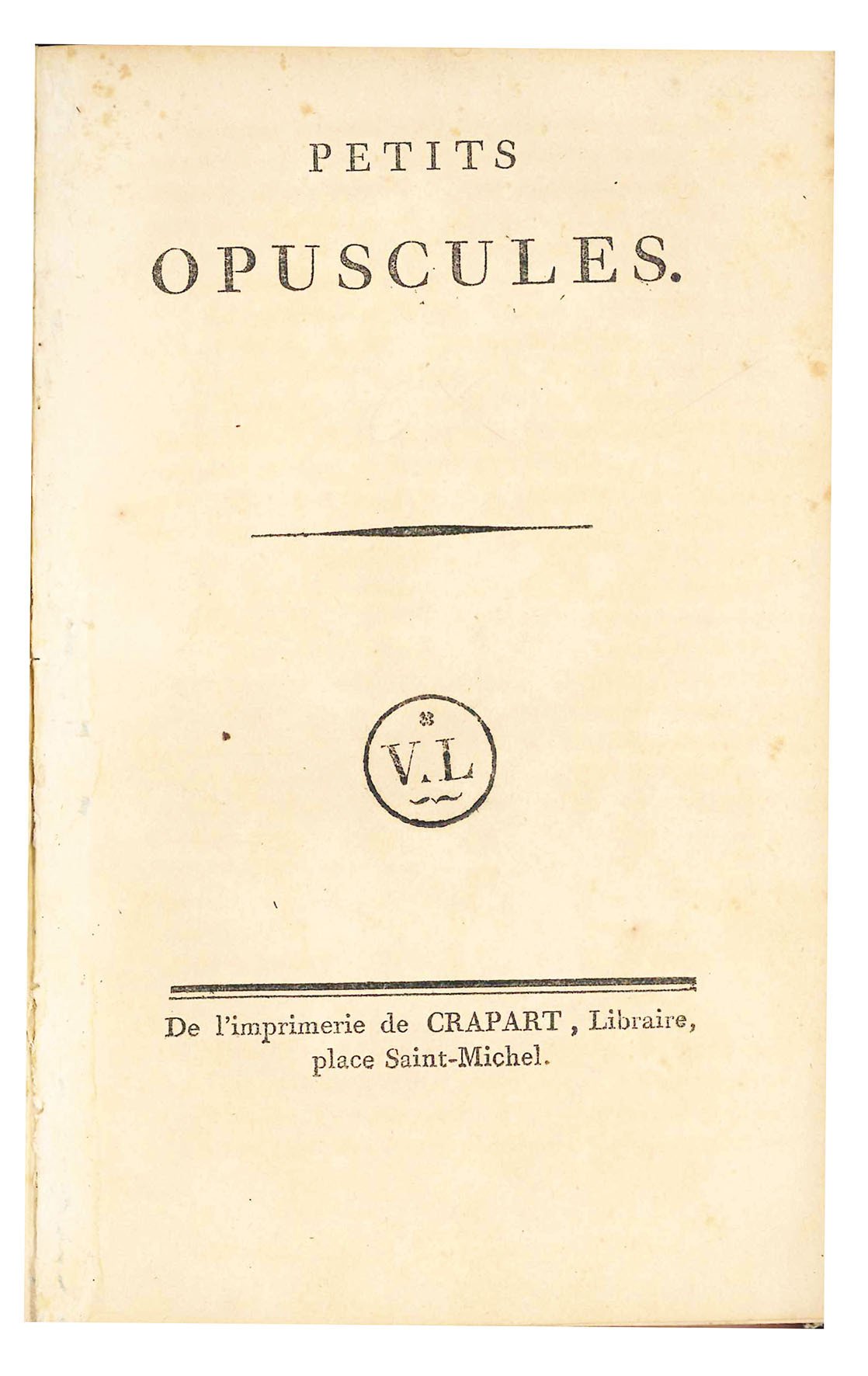
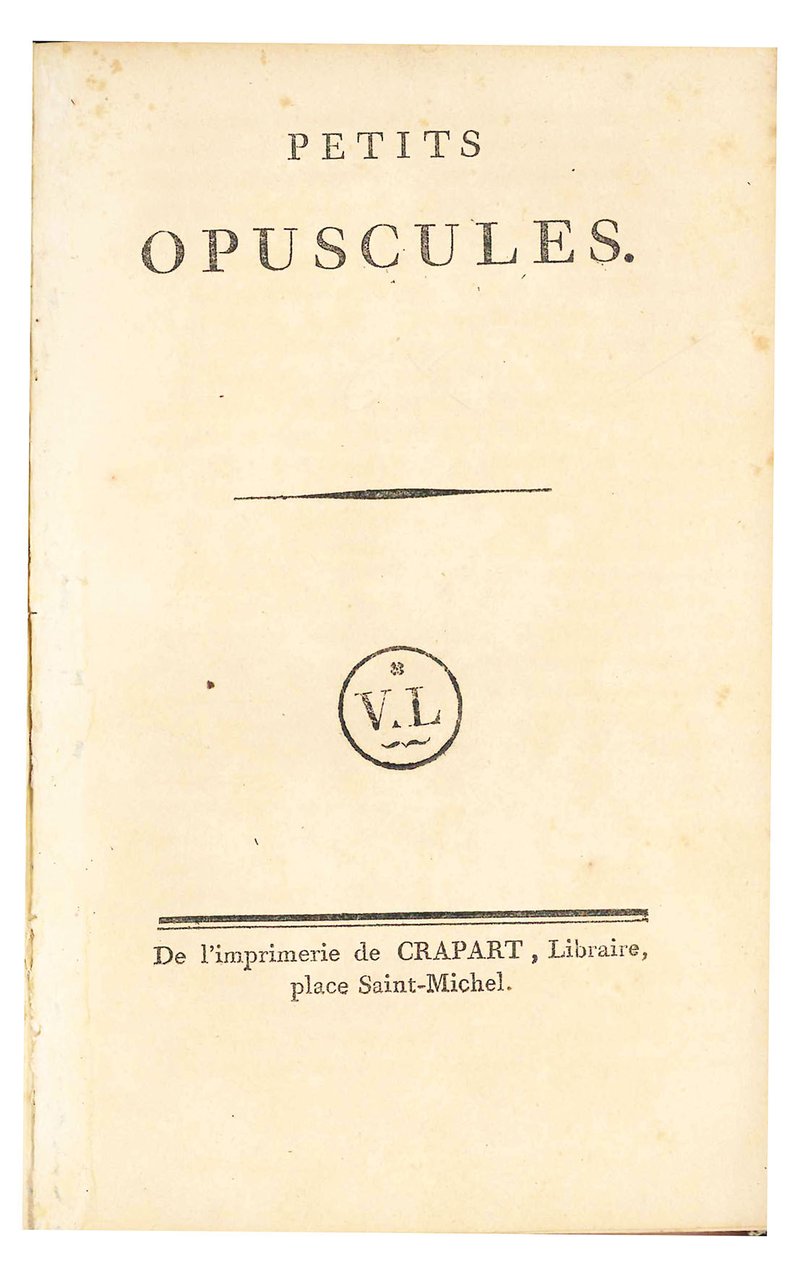
In 12mo (187 x 120 mm). 10, [2 blank] pp. Collation: A⁴. Later sprinkled wrappers. Light and occasional foxing.
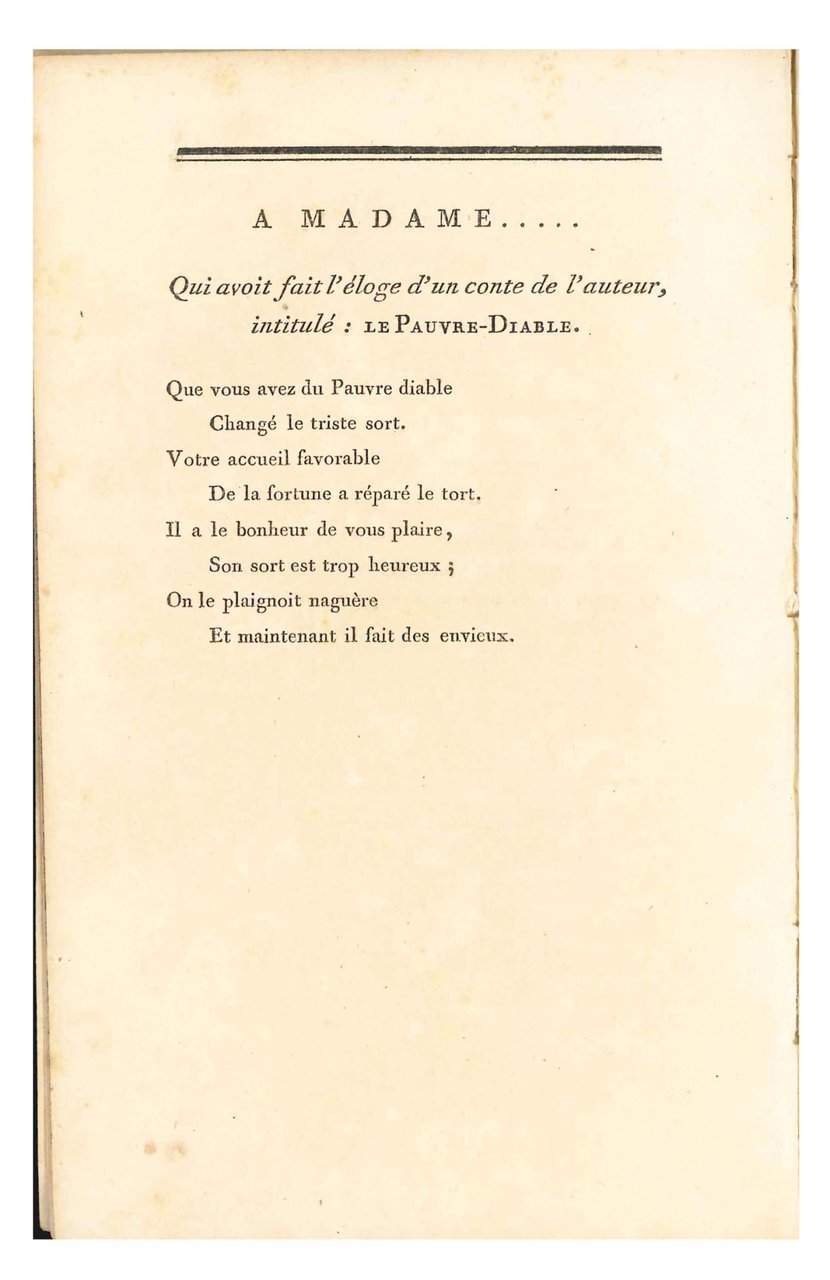
The work contains five prose and verse compositions: Jadis; Le Bosquet, Idylle; l'Aurore; Chanson; A Madame. The most solid documentary evidence for the work's authorship is found in historical studies on French-language Russian literature. In the specialized academic journal "La Revue russe", an essay titled Unpublished Letters of Prince Boris Golitsyne (1789-1790) and the Problem of Russian Correspondence Written in French (published by the scientific portal Persée and Elena Gretchanaïa) explicitly analyzes Prince Boris's literary output. The academic text states verbatim: "Some [of these writings] are also collected in the Petits Opuscules, published in Paris without the author's name and without date. In the magazines, these texts are signed 'M. le Prince Baris de Galitzin'...". Historians confirm that the young Prince Boris Vladimirovich Golitsyn (1769–1813), who was in Paris in those crucial years on the eve of the French Revolution, composed several society poems and occasional texts in French, printed anonymously for his own enjoyment and that of the noble circle. Golytsin is remembered primarily as a general in the Napoleonic Wars (he died from wounds sustained in the Battle of Borodino in 1812), but he was an atypical figure: a polyglot intellectual, musician, translator, and writer. Educated in France and Switzerland during his youth, he mastered French perfectly and loved composing short ethical essays, moral reflections, aphorisms, and fables (often published anonymously or under a pseudonym).