The dust of the world: a commentary on the Book of Ecclesiastes [presentation copy to the King of Denmark]
The dust of the world: a commentary on the Book of Ecclesiastes [presentation copy to the King of Denmark] | Livres anciens et modernes | BELAÏS, Rabbi Abraham (1773-1853)
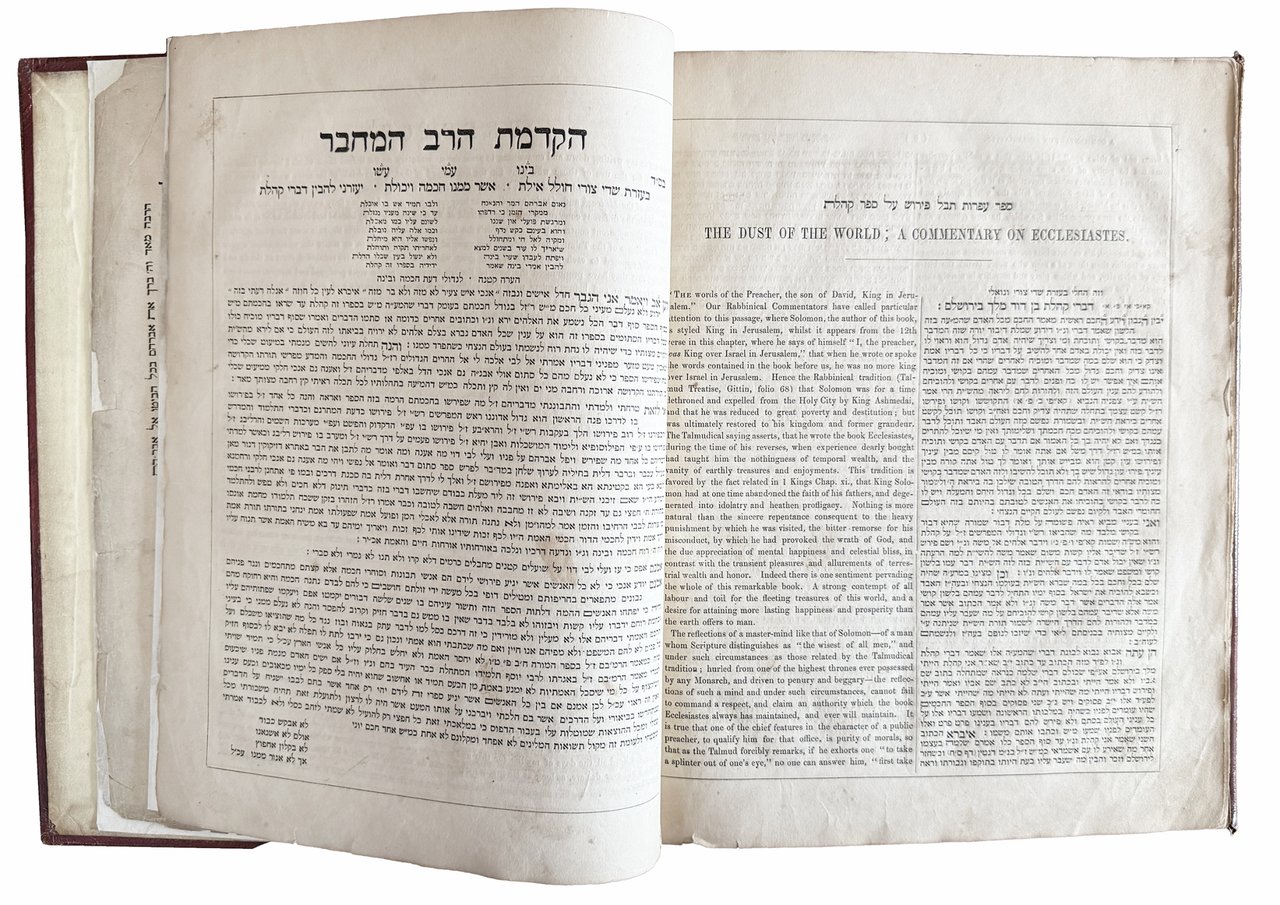
The dust of the world: a commentary on the Book of Ecclesiastes [presentation copy to the King of Denmark]
The dust of the world: a commentary on the Book of Ecclesiastes [presentation copy to the King of Denmark] | Livres anciens et modernes | BELAÏS, Rabbi Abraham (1773-1853)
Mode de Paiement
- PayPal
- Carte bancaire
- Virement bancaire
- Pubblica amministrazione
- Carta del Docente
Détails
- Année
- 1850
- Lieu d'édition
- [London]
- Auteur
- BELAÏS, Rabbi Abraham (1773-1853)
- Éditeurs
- Printed for and to be had of the Author, Mitre Square, Aldgate
- Thème
- Ottocento e Novecento
- Etat de conservation
- En bonne condition
- Langues
- Italien
- Reliure
- Couverture rigide
- Condition
- Ancien
Description
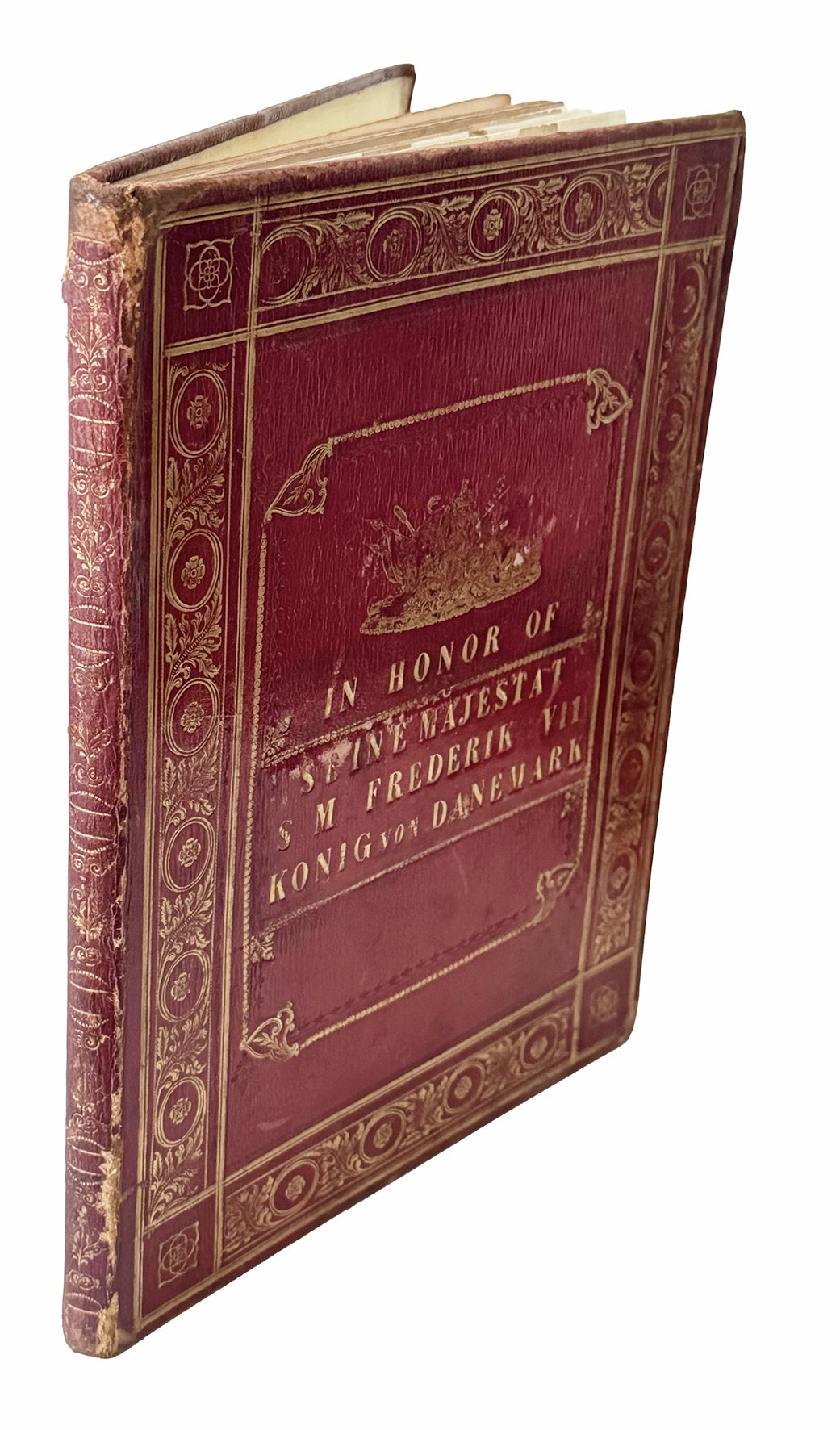
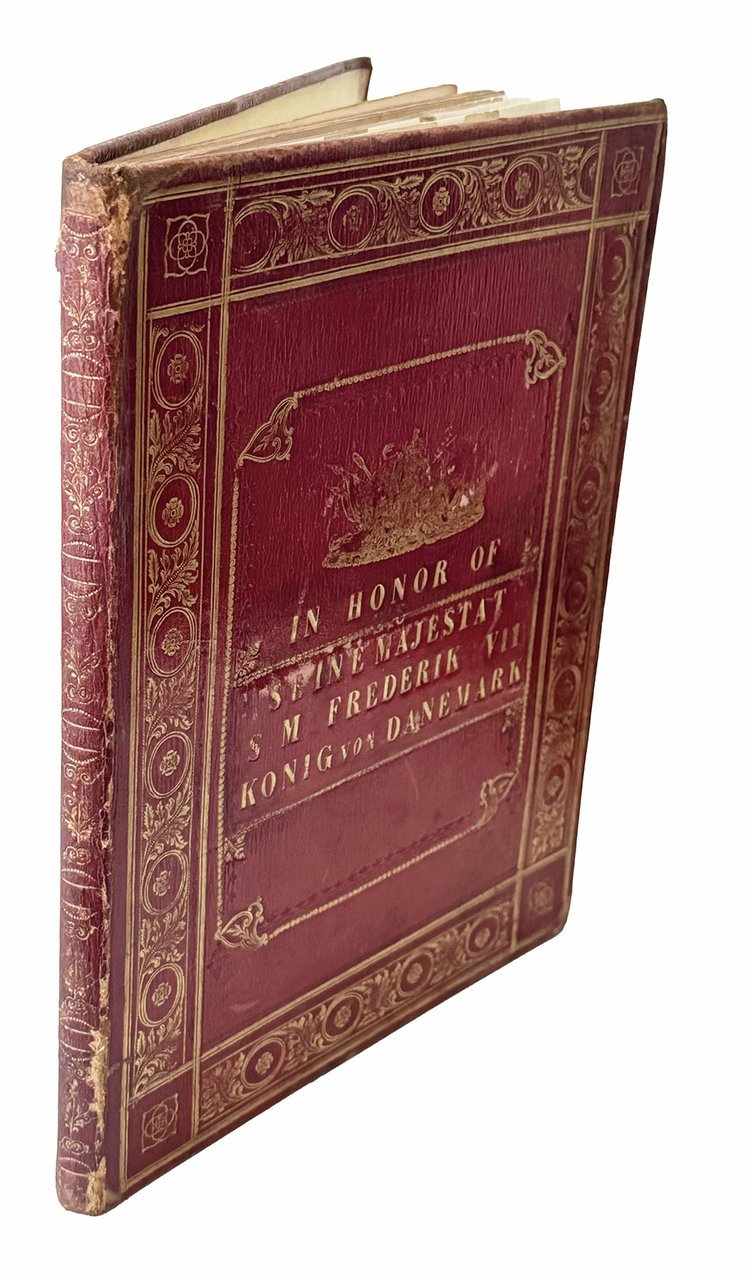
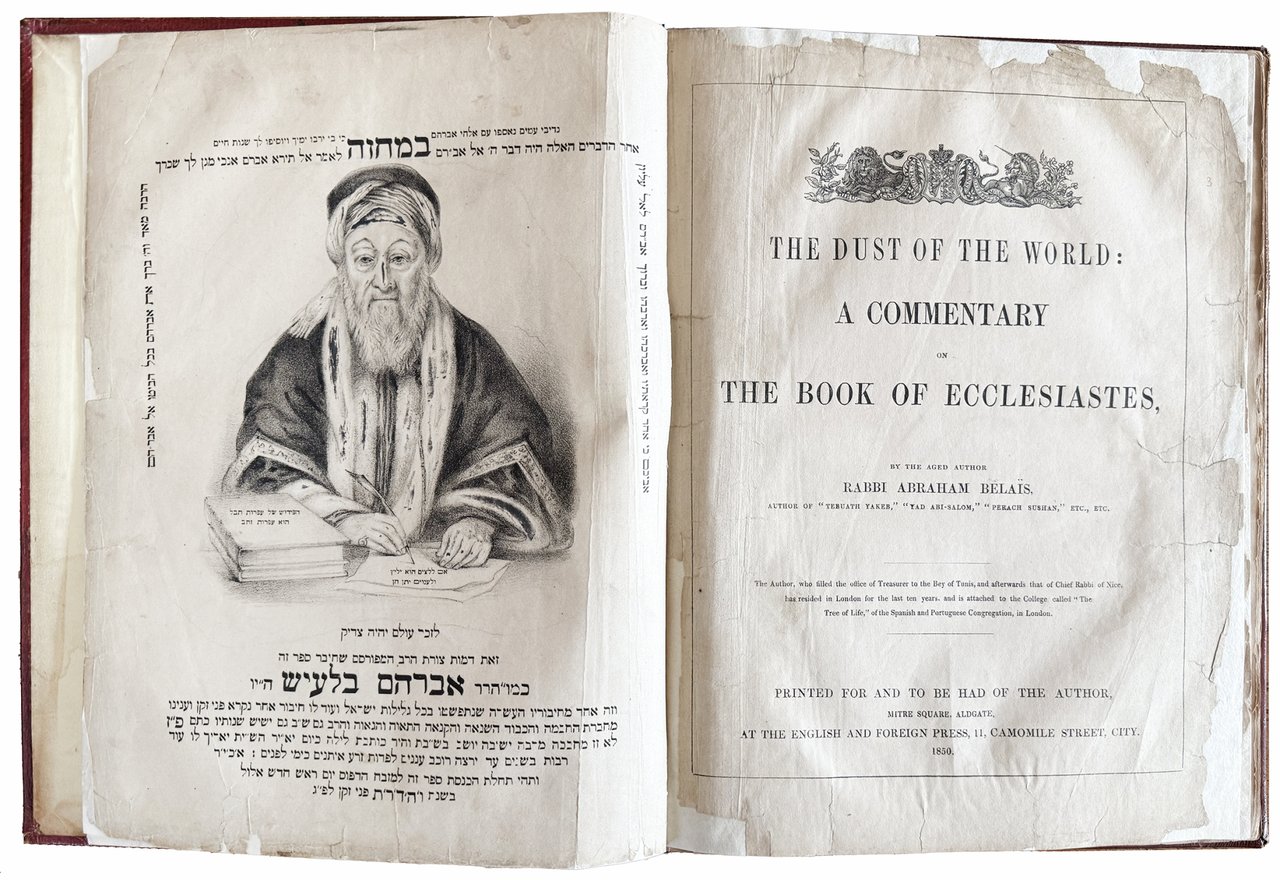
4to (277x212 mm). Lithographed portrait of the author as a frontispiece, 69, [1] pp. Hebrew and English text in parallel columns. Full red morocco gilt, front panel gilt-lettered “In Honor of Seine Majestat S.M. Frederik VII Konig von Danemark” and with the gilt coat-of-arms of the United Kingdom (worn and rubbed). On the front pastedown bookplate “Dr. Milton S. Ross”, some manuscript notes with dates according to the Jewish calendar, and another bookplate, belonging to the author or a member of the author's family, which depicts a tall man in a top hat in a gallery or museum holding a book, with the legend “A page of R.A. Belais”. Outer margins of the first four leaves repaired, pale browning throughout.
First edition of this commentary on the Book of Ecclesiastes, in Hebrew and English, in a presentation copy to the King of Denmark.
“Abraham ben Shalom Belais, Rabbi and poet; born in Tunis 18th of Ab, 1773; died in London 1853. An eccentric personality, he had a curious career. First rabbi in Tunis and treasurer to the Bey, being pressed by his creditors, he left his home and went to Jerusalem. In 1817 he, who had hospitably received at his home in Tunis many messengers from Palestine, made a trip through Europe to collect alms for himself. Wherever he went he received valuable gifts. King Victor Emmanuel I, at an audience in Turin, presented him with 1,000 francs. According to the ‘Gazette of the Netherlands', Oct. 1, 1827, he was a candidate for the rabbinate of the Portuguese synagogue of Amsterdam; and had papers of recommendation from several Italian ministers, bishops, and archbishops. In France, Belais was encouraged by the ministers of Charles X, and especially by the Vicomte de Larochefoucauld, director-general of fine arts: he even received a Hebrew letter from the duke of Sussex. He was rabbi of the congregation of Nice for some years; but from 1840 to 1853 was attached to the yeshibah connected with the Spanish and Portuguese congregation at Bevis Marks, London. The works of Belais are nearly all in Hebrew, and treat of morals and exegesis […] [He also] composed occasional poems” (Jewish Enciclopedia, by J. Jacobs, M. Kayserling and J. Weill).