L’Annunciazione
L’Annunciazione | Gravures | MARATTI Carlo
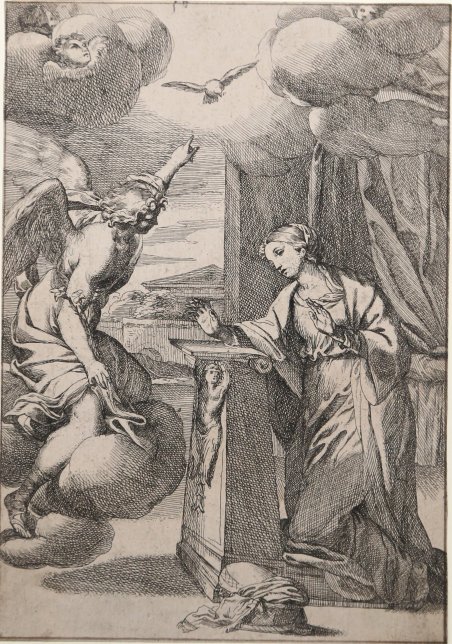
L’Annunciazione
L’Annunciazione | Gravures | MARATTI Carlo
Mode de Paiement
- PayPal
- Carte bancaire
- Virement bancaire
- Pubblica amministrazione
- Carta del Docente
Détails
- Année
- 1650
- Format
- 143 X 214
- Graveurs
- MARATTI Carlo
- Description
- Bartsch vol. 21, 4.
Description
Acquaforte, circa 1650, priva di firma. Esemplare del rarissimo primo stato di due, avanti la firma. Magnifica prova, impressa su carta vergata coeva priva di filigrana, rifilata al rame, in perfetto stato di conservazione. Riquadro ad inchiostro lungo la parte esterna. Allievo di Carlo Sacchi, il Maratti divenne ben presto figura di riferimento dell’arte romana del periodo Barocco, con particolare riferimento alla pittura sacra. Le sue 14 incisioni sono relative al periodo giovanile della carriera, intorno al 1650 e sicuramente prima del 1660, periodo nel quale era nello studio del Sacchi. Le tirature di primo stato, sono probabilmente prove di stampa e pertanto sono da considerarsi rarissime. Etching, 1650 circa, without signature. Example in the very rare first state of two, before the signature was added. Frequently depicted in art, the Annunciation was the moment that the Angel Gabriel visited the Virgin Mary and announced to her that she would conceive and become the mother of Jesus, the Son of God. The source is Luke 1.26-38. Gabriel is traditionally shown handing a white lily to the Virgin, as here; he interrupts her while she is reading, demonstrated by the open book on the table. A drawing in red chalk, that is a finished studio variant of the engraving ' is in the Royal Collection – Windsor RCIN 904181 (cfr. Blunt, A.F. & Cooke, H.L., 1960. The Roman Drawings of the XVII and XVIII Centuries in the Collection of Her Majesty The Queen at Windsor Castle, London – B(R) 306) The examples of the first state were probably just proofs and, therefore, are to be considered very rare. Cfr. Bartsch vol. 21, 4.