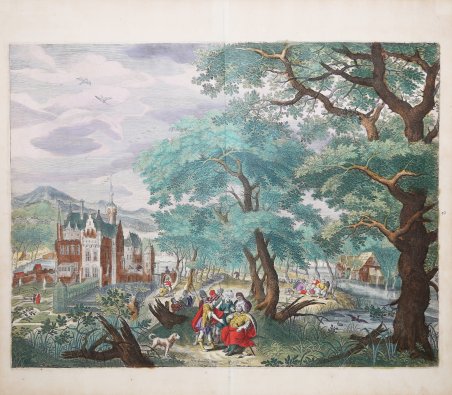
Paesaggio con David e Nabal
Paesaggio con David e Nabal
Mode de Paiement
- PayPal
- Carte bancaire
- Virement bancaire
- Pubblica amministrazione
- Carta del Docente
Détails
- Année
- 1614
- Format
- 483 X 355
- Graveurs
- LONDERSEEL Jan van
- Description
- Hollstein 112
Description
Bulino, 1614 circa, firmato nell’immagine in basso al centro: Hen daenelsen Inven/ Joan a londersel Schulp e CIVisscher excudit e ' 1 Samu 25:4. La scena raffigura David, non ancora re, seduto in primo piano centrale che consulta i suoi compagni, un cane a sinistra, un castello circondato da un fossato e un giardino sullo sfondo a sinistra, mentre, sulla destra, è raffigurata la tosatura delle pecore. Da un soggetto di Hendrik Danielsz. In basso nell’immagine c’è il riferimento al primo libro di Samuele, 25:4, in cui si legge che il re David, saputo che il ricco Nabal si trovava a tosare le pecore, decide di inviargli dieci giovani. La vicenda prosegue col rifiuto di Nabal a pagare la tassa di ‘fraternità’ che i nomadi prelevavano dai ricchi possidenti. Irato, David mosse contro di lui, ma fu placato dalla moglie di Nabal., Abigail che, dopo la morte del marito, divenne moglie di David. Magnifica prova, finemente acquerellata da mano contemporanea, impressa su carta vergata coeva con filigrana “stemma araldico con giglio”, con margini, consueta traccia di piega verticale centrale, in eccellente stato di conservazione. L’eccelsa qualità della coloritura a mano distingue e impreziosisce questo esemplare dalle prove in bianco e nero. ' Engraving, 1614 circa, lettered within image, in lower centre: Hen. daenelsen Inuen. / Joan. a londersel schulp. and CIVisscher excudit / 1 Samu 25.4. After Hendrik Danielsz. The scene appears to show - according 1 Samuel 25.4- David (who was not yet king) seated in central foreground consulting his companions, a dog at left, a castle surrounded by a moat and a garden in left background, pastoral scenes in right background, with the shearing of sheep. This biblical narrative, recounted in 1 Samuel 25:2–42, describes an episode during David's exile in the wilderness in southern Judah. David, in need of provisions, sent some of his men to request aid from a wealthy sheep farmer named Nabal, whose herd David had let graze unmolested all winter. The sheep farmer curtly refused their request. Infuriated, David set out with 400 armed men to seek revenge. ' Nabal's wife, Abigail, having learned of David's impending attack, quickly packed generous provisions—including bread, wine, meat, and fruit—on the backs of donkeys, and set out to intercept David and his soldiers. She pleaded with David to forego his punitive action, reminding him that he was fighting the Lord's battles and should not allow evil into his life. Abigail returned home and her joyous news caused her husband's heart to die "within him, and he became as a stone." Upon hearing of Nabal's death, David assumed that God had acted to support his cause and rejoiced, after which he promptly sent servants to ask Abigail to marry him. ' She consented and became David's second wife. Magnificent proof, splendid contemporary hand-colouring, printed on contemporary laid paper, watermark "coat of arms with fleur-de-lis", with margins, usual trace of central vertical fold, in very good condition. The excellent quality of the colouring significantly distinguishes and enhances these examples from those in black and white. ' ' ' Cfr. Hollstein 112
