Unus ex filijs Niobes (Niobide Fiorentino)
Unus ex filijs Niobes (Niobide Fiorentino) | Gravures | Perrier François
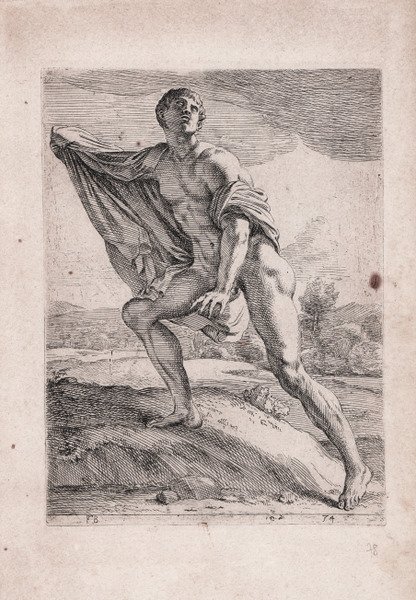

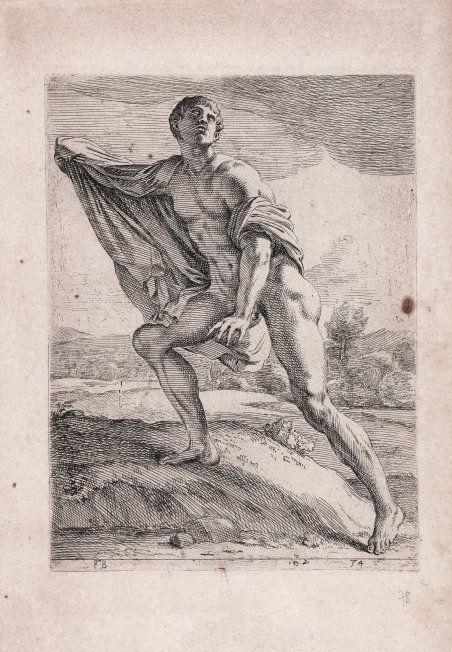
Unus ex filijs Niobes (Niobide Fiorentino)
Unus ex filijs Niobes (Niobide Fiorentino) | Gravures | Perrier François
Mode de Paiement
- PayPal
- Carte bancaire
- Virement bancaire
- Pubblica amministrazione
- Carta del Docente
Détails
- Année
- 1653
- Lieu d'édition
- Roma
- Format
- 170 X 225
- Graveurs
- Perrier François
Description
La scultura è una delle 12 rinvenute fortuitamente ' a Roma nei primi mesi del 1583 nella vigna appartenuta a Gabriele e Tomaso Tommasini, posta a breve distanza da San Giovanni in Laterano. la quasi totalità delle statue componeva un grandioso gruppo che illustrava una delle storie più tragiche del mito antico: l’uccisione dei figli di Niobe. ' Il centro focale del gruppo è Niobe, che tenta di proteggere la figlia più piccola, e dirige lo sguardo atterrito e supplichevole verso il cielo. I Niobidi, sin dalla fine del XVI secolo, furono sistemati nei giardini di Villa Medici sul Pincio per poi essere trasferiti a Firenze nel 1770 sempre per volere del granduca Pietro Leopoldo. Tavola tratta dal celebre ' Segmenta nobilium signorum et statuarum, quae temporis dentem invidium evasere Urbis aeternae ruinis erepta Typis aeneis ab ce commissa Perpetuae venerationis monumentum, ' Roma, De’ Rossi, 1653 o ante 1691. Formatosi come pittore a Roma negli anni 1620-25 nella bottega di Giovanni Lanfranco, François Perrier dettò il Borgognone (donde il monogramma FPB, con F e P sovrapposte) operò nei primi anni Trenta nell’orbita di Simon Vouet a Parigi, dove ebbe come allievi Le Brun e Dufresnoy. Di nuovo a Roma per un decennio a partire dal 1635, vi realizzò due raccolte di acqueforti dall’antico, i ' Segmenta ' (1638) e le ' Icones et segmenta illustrium e marmore tabularum quae Romae adhuc extant… stampate al suo rientro a Parigi (1645). I ' Segmenta ' riproducono in cento tavole un’ampia silloge di statue antiche “risparmiate dall’invidioso dente del Tempo” presenti nelle principali collezioni romane; le ' Icones ' invece i più noti bassorilievi, in cinquantacinque tavole. Entrambe le opere furono progettate con la fondamentale collaborazione di Giovan Pietro Bellori, massima autorità teorica e storico-artistica del classicismo seicentesco, e di altri eruditi, e appartengono al genere degli atlanti di antiquarie romane diffusi in tutta Europa a partire dalla metà del Cinquecento. L’atlante del Perrier, concepito anzitutto come una sorta di ‘accademia cartacea’ per gli artisti – quasi una versione a stampa di un taccuino di modelli – supportata da una vasta erudizione antiquaria, ebbe una notevole fortuna, testimoniata dalle numerose ristampe e derivazioni lungo tre secoli. Le discrepanze di alcune tavole rispetto alla prima edizione dei ' Segmenta ' (molte risultano in controparte, e si riscontrano diffuse difformità nei tratteggi) corrispondono non a prove di stampa, come ipotizzato da alcuni, ma alla riedizione presso la stamperia romana De’ Rossi, inventariata col titolo di ' Statue insigni di Roma intagliate in acquaforte, e copiate da Francesco Perrier libro in 103 quarti fogli imperiali nel 1677 ' (Le regole della bellezza ' 2012, pp. 9-10) e in seguito ' Indice 1797, p. 4), realizzata con una nuova serie di matrici (oggi conservate presso la Calcografia di Stato) nell’impossibilità di riuso di quelle originali, rientrate in Francia col Perrier. Bellissima prova, impressa su carta vergata coeva, rifilata al rame, in ottimo stato di conservazione. Bibliografia Lorenzo Fatticcioni, ' Le regole della bellezza. Saperi antiquari e teorie dell'Arte nei Segmenta nobilium Signorum et Statuarum di François Perrier, (2012); Gerardo de Simone, ' François Perrier, Segmenta nobilium signorum et statuarum, Roma, De' Rossi 1653; ' con disegni della bottega Baratta ' (2016). The sculpture is one of 12 found fortuitously in Rome in early 1583 in the vineyard that belonged to Gabriele and Tomaso Tommasini, located a short distance from St. John Lateran. almost all of the statues made up a grandiose group illustrating one of the most tragic stories of ancient myth: the slaying of Niobe's children. The focal center of the group is Niobe, who attempts to protect her youngest daughter, and directs her terrified and pleading gaze heavenward. The Niobes, since the late 16th century, were placed in the gardens of Villa Medici on the Pincio and then moved to Florence in 1770, again at the behest of Grand Duke Peter Leopold. Translated with DeepL.com (free version) Plate taken from the famous ' Segmenta nobilium signorum et statuarum, quae temporis dentem invidium evasere Urbis aeternae ruinis erepta Typis aeneis ab ce commissa Perpetuae venerationis monumentum, Rome, De' Rossi, 1653 or ante 1691. Trained as a painter in Rome in the years 1620-25 in the workshop of Giovanni Lanfranco, François Perrier dictated the Borgognone (whence the monogram FPB, with F and P superimposed) operated in the early thirties in the orbit of Simon Vouet in Paris, where he had as students Le Brun and Dufresnoy. Back in Rome for a decade starting in 1635, he produced two collections of etchings from antiquity, the ' Segmenta ' (1638) and the ' Icones et segmenta illustrium e marmore tabularum quae Romae adhuc extant. printed on his return to Paris (1645). The ' Segmenta ' reproduce in one hundred plates a wide collection of ancient statues "spared by the envious tooth of Time" present in the main Roman collections; the Icones instead the most famous bas-reliefs, in fifty-five plates. Both works were designed with the fundamental collaboration of Giovan Pietro Bellori, the greatest theoretical and historical-artistic authority of seventeenth-century classicism, and other scholars, and belong to the genre of atlases of Roman antiquities spread throughout Europe from the mid-sixteenth century. Perrier's atlas, conceived above all as a sort of 'paper academy' for artists - almost a printed version of a notebook of models - supported by a vast antiquarian erudition, had a considerable fortune, testified by the numerous reprints and derivations over three centuries. The discrepancies of some plates with respect to the first edition of the ' Segmenta ' (many are in counterpart, and there are widespread differences in the hatching) correspond not to proofs, as assumed by some, but to the re-edition at the Roman printing house De 'Rossi, inventoried under the title of ' Statue insigni di Roma intagliate in acquaforte, e copiate da Francesco Perrier libro in 103 quarti fogli imperiali nel 1677 ' (cf, ' Le regole della bellezza ' 2012, pp. 9-10) and later in the ' Indice 1797, p. 4), made with a new set of plates (now preserved at the Rome Calcografia) in the impossibility of reusing the original ones, returned to France with Perrier. Beautiful proof, printed on contemporary laid paper, trimmed in copper, in excellent condition. Bibliografia Lorenzo Fatticcioni, ' Le regole della bellezza. Saperi antiquari e teorie dell'Arte nei Segmenta nobilium Signorum et Statuarum di François Perrier, (2012); Gerardo de Simone, ' François Perrier, Segmenta nobilium signorum et statuarum, Roma, De' Rossi 1653; ' con disegni della bottega Baratta ' (2016). Cfr.