Illustrated manuscript on paper in Italian and Latin. Italy, first half of the 18th century
Illustrated manuscript on paper in Italian and Latin. Italy, first half of the 18th century
Metodi di Pagamento
- PayPal
- Carta di Credito
- Bonifico Bancario
- Pubblica amministrazione
- Carta del Docente
Dettagli
- Autore
- COLLECTION OF PROPHETIC TEXTS
- Soggetto
- Manoscritti
- Stato di conservazione
- Buono
- Lingue
- Italiano
- Legatura
- Rilegato
- Condizioni
- Usato
Descrizione
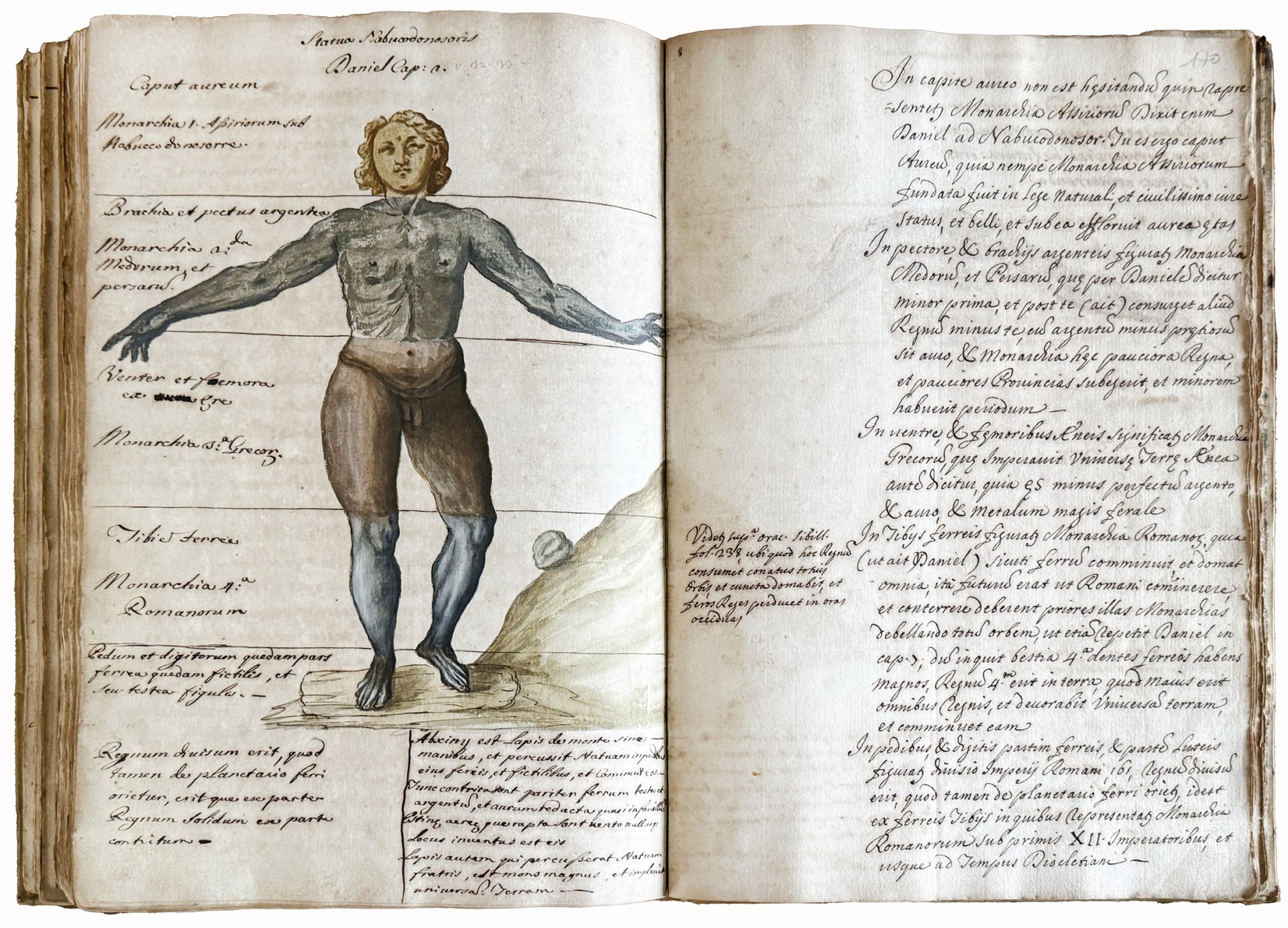
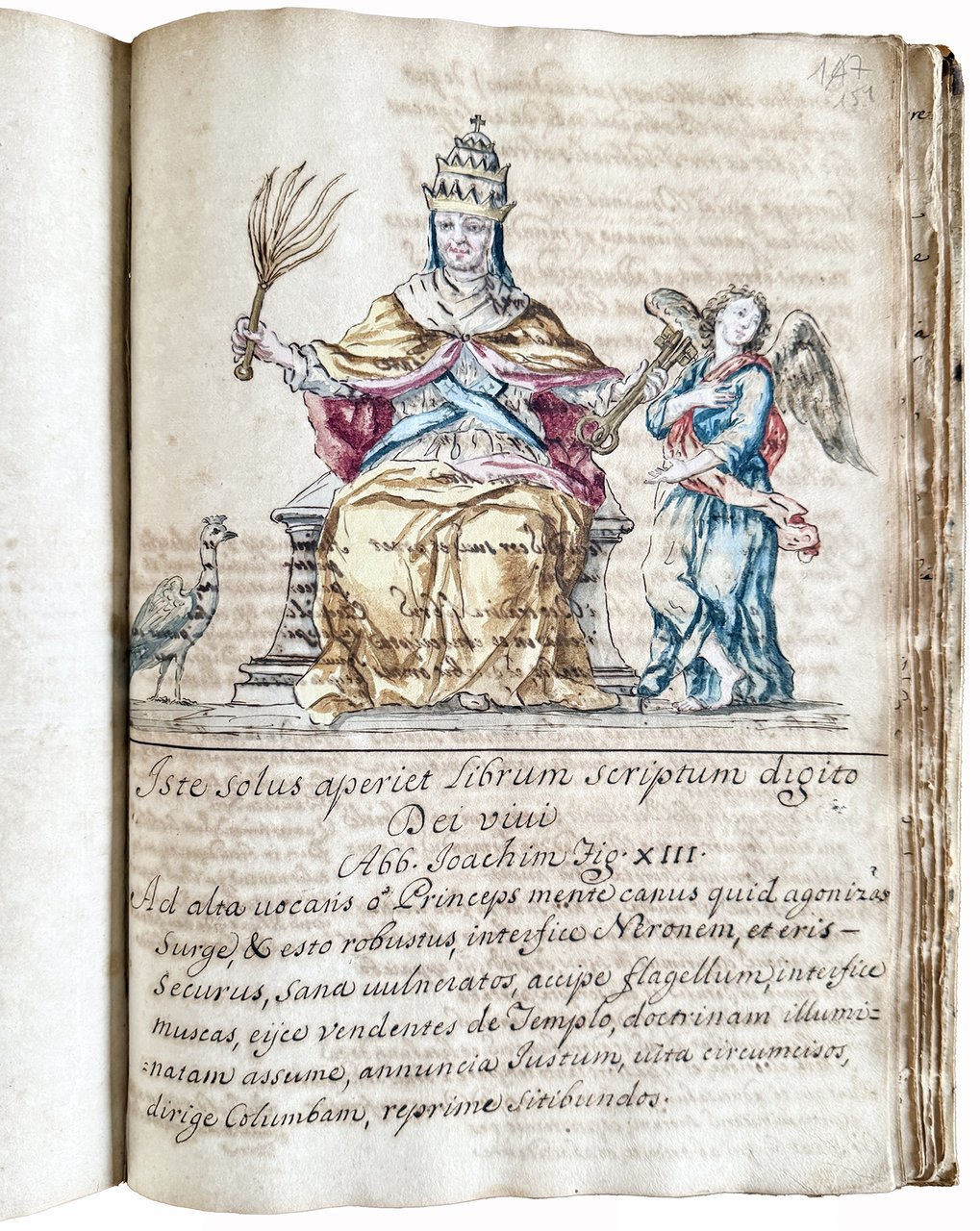
Folio (335x223 mm). [205] leaves, 17 of which are blank. With 8 ink drawings in the text in contemporary coloring (ll. [151]r, [174]v, [180]r, [182]r, [184]r, [188]r, [190]r, and [192]r). Text written in an elegant and clear handwriting by two different hands with later annotations by a third hand. Watermark: snake within an elaborate wreath with a hanging Greek cross-shaped ribbon at the bottom. Contemporary full vellum, marbled paper pastedowns. Slightly uniformly browned, hole to l. [38] with loss of text, overall in very good condition.
The series of texts contained in the manuscript opens with a free Italian translation of Nostradamus's twelve “Centuries”, written on the left-hand side of the page so as to leave the right-hand side free for comments (many quatrains have not been transcribed, seemingly deliberately, and the spaces left blank). The other texts included in the volume are:
Nostradamus vaticinia de futuris Pontificibus;
Prophetiae N. Arabi;
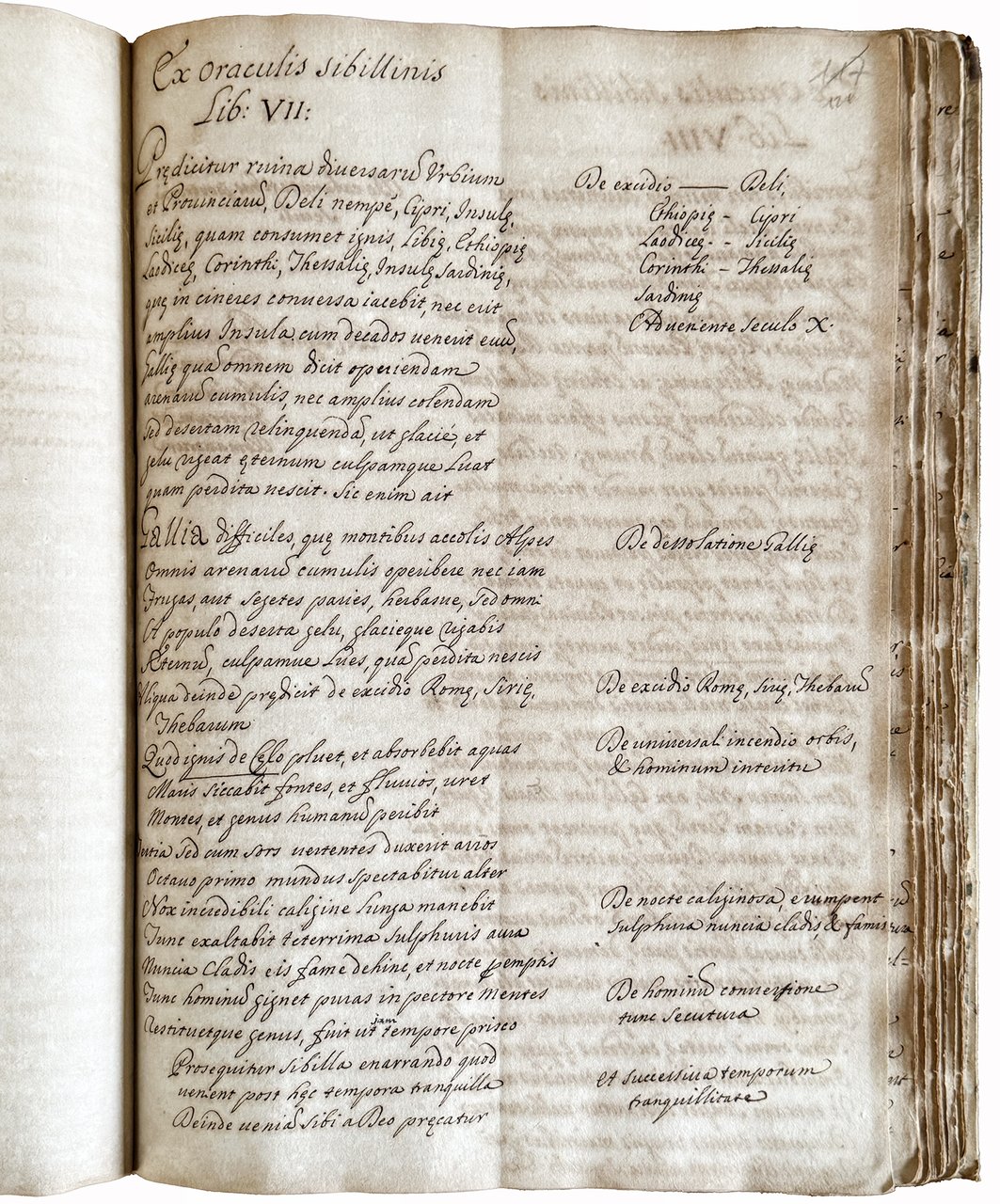
Ex oraculis Sibillinis lib. II-III-V-VII-VIII;
Esdrae lib. IV cap. XV;
Oracolo della Sibille Eritrea fatto ad Instanza de Principi Greci qundo le addimandarono consiglio sopra l'impresa di Troia. Tradotta dal greco in latino e dal latino in vilgare da Gio. Garintio;
Ex revellationibus Divi methodij Episcopi Barensis et Martiris (compreso un capitolo De miraculis Antichristi);
Niersis Patriarchae Armeni Vaticinium (De armeni Vastatione eius futura redemptione e manibus Turcarum);
Ex Prognosticis Vincenti Viterbij repertis in libro antiquissimo;
Oraculum Turcicum;
Antonij Torquati Astrologi Ferrariensis vaticinium;
Ex sepolcrali inscriptione Constantini Magni Vaticinium;
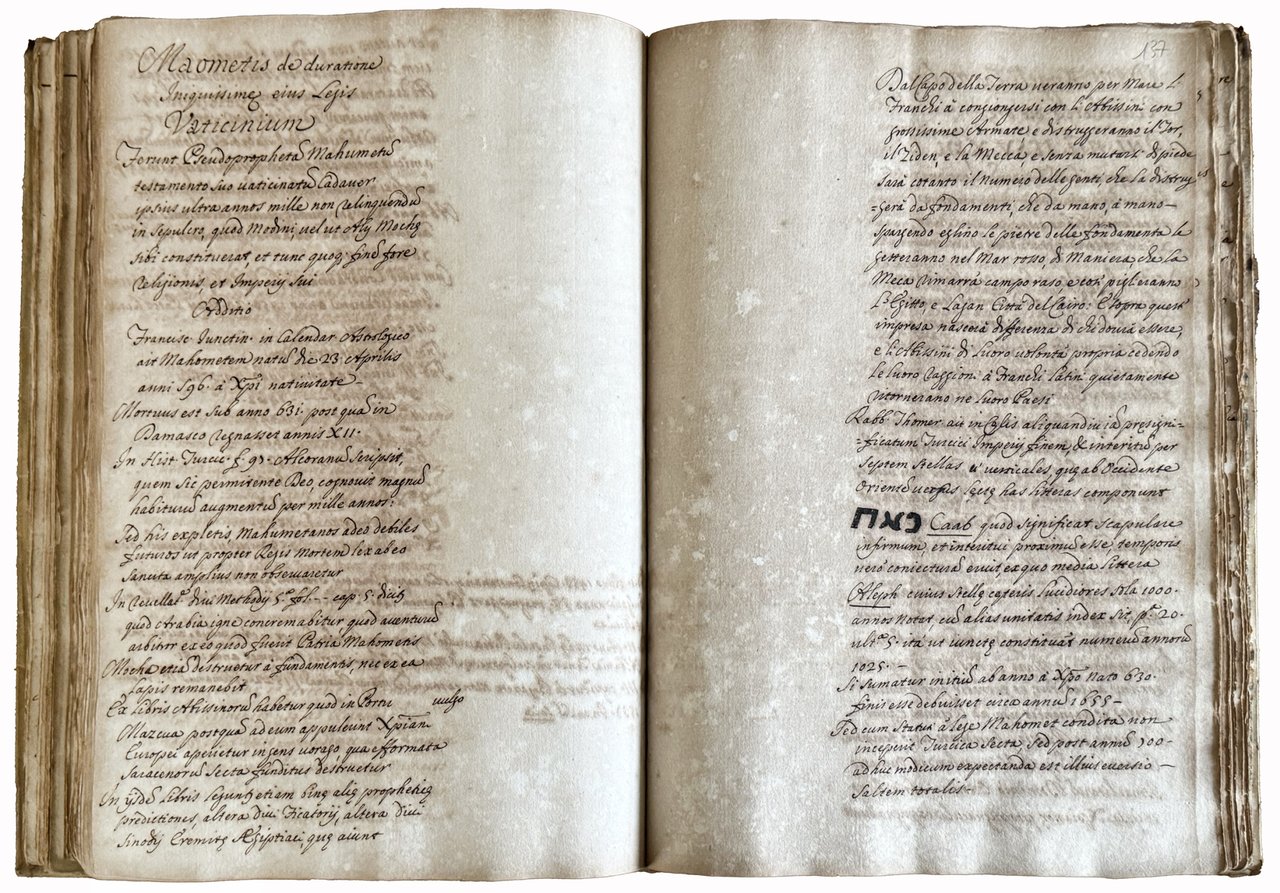
Maometis de duratione iniquissime eius legis vaticinium;
Divi Angeli Carmelitae revellatio ex ore Domini Nostri Iesu Christi;
Divi Francisci Paulani De Sancta congregatione Crucigerorum;
di Fr. Roberti ord. Predicatorum vaticinium;
Ex M.S. Petr. Palatini de Regno Galliae vaticinium;
De Leopoldo Caesare vaticinium I Ven. P. Martini Stridonij;
De eodem vaticinium II Anselmi Marsicani;
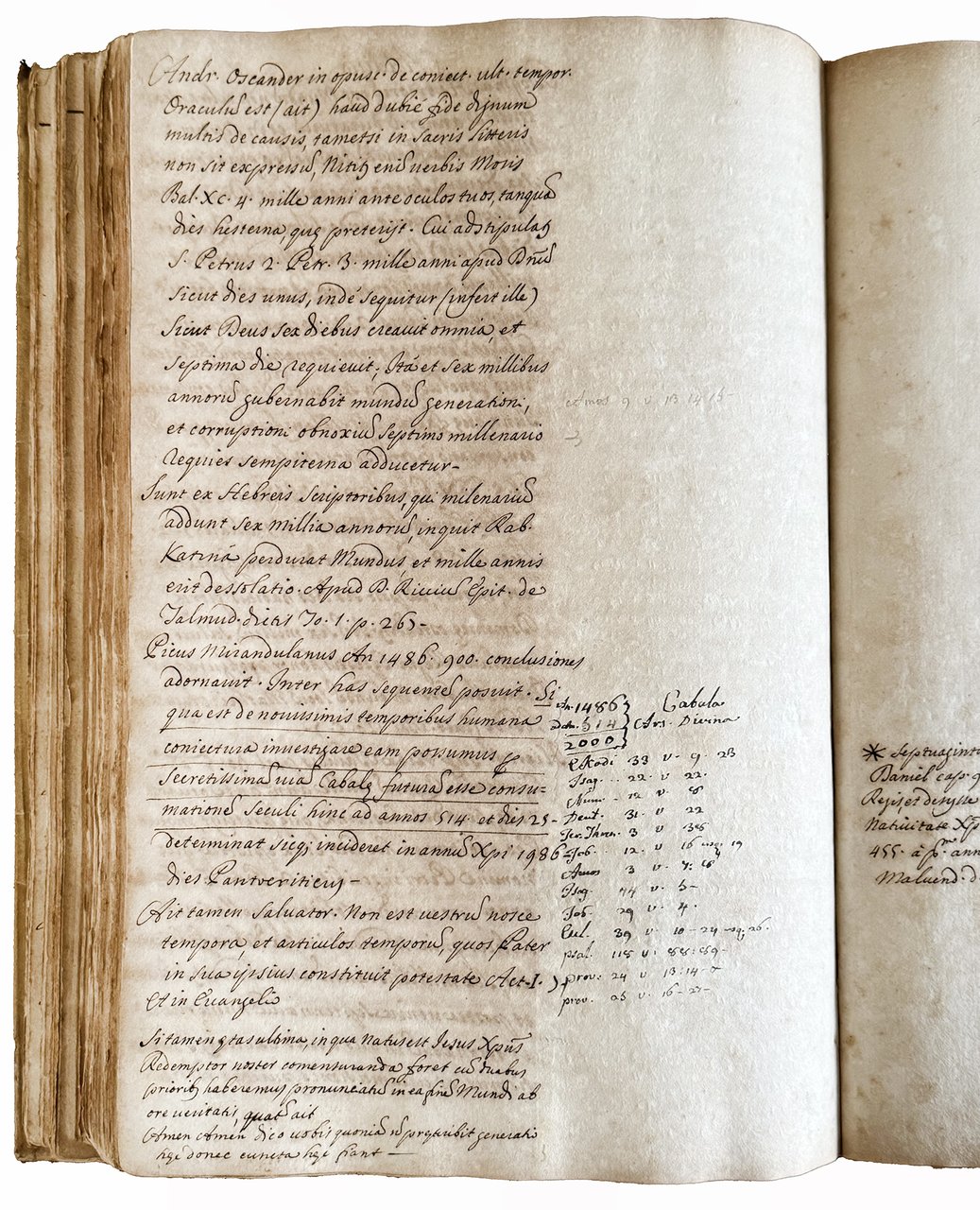
De Aquarum diluvio et pluvia ignita futuris in eunte seculo XVIII vaticinia;
De nativitate Christi vaticinium Card. Baronius;
De adventu Christi salvatoris Prophetia ex orac. Sibillinis;
De fine mundi prophetia ex oraculo Heliae apud Hebreos;
De futura Universali Monarchia;
Visio Aquilae ascendentis de Mari Esdras lib. IV.C.XI.& XII;
De Xpianis prophetia;
De signis venturis ante consumationem seculi;
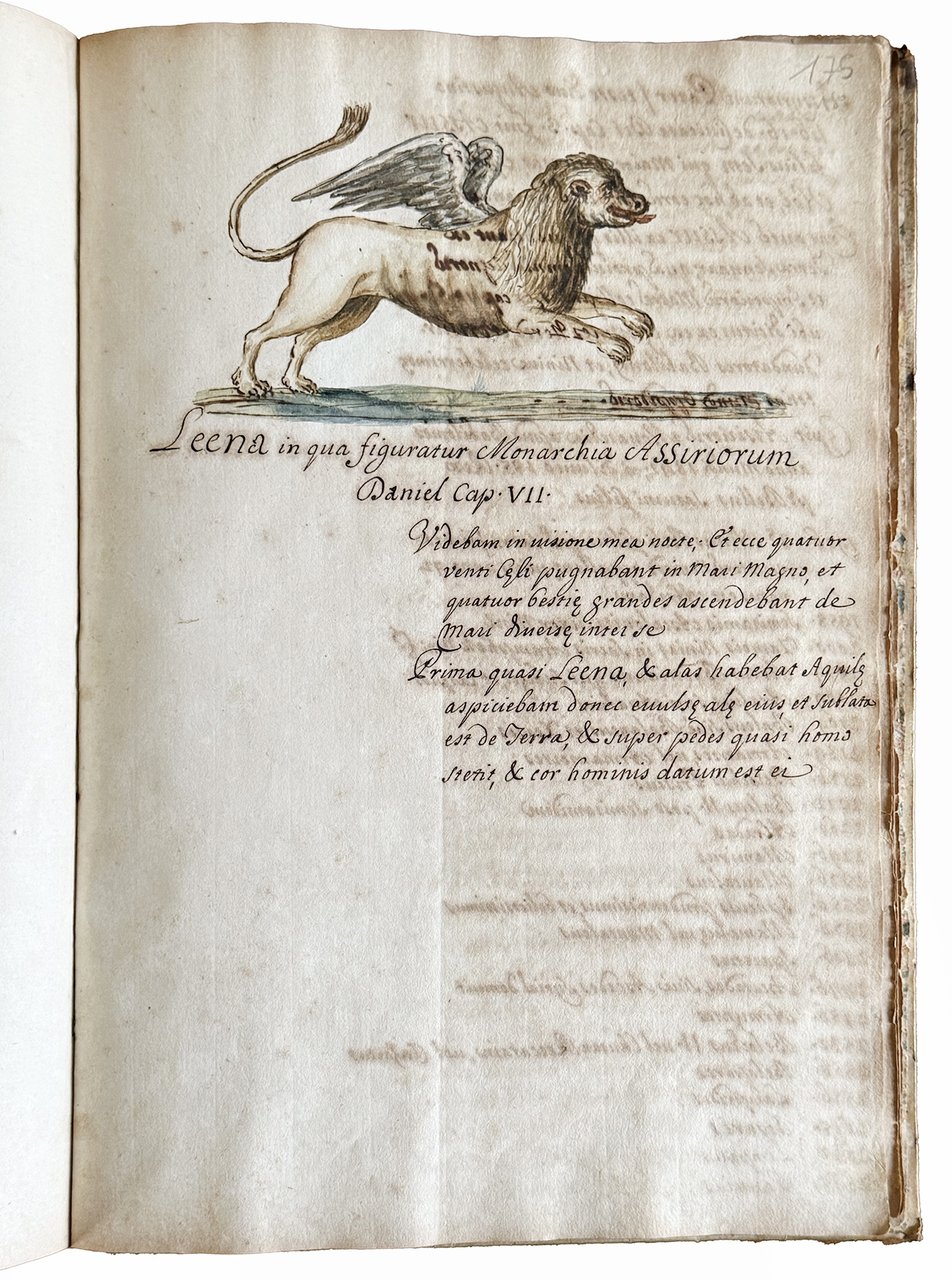
Leena in qua figuratur Monarchia Assiriorum (Daniel cap. VII);
Ursa in qua figuratur Monarchia Medorum & Persarum (Daniel cap. VII);
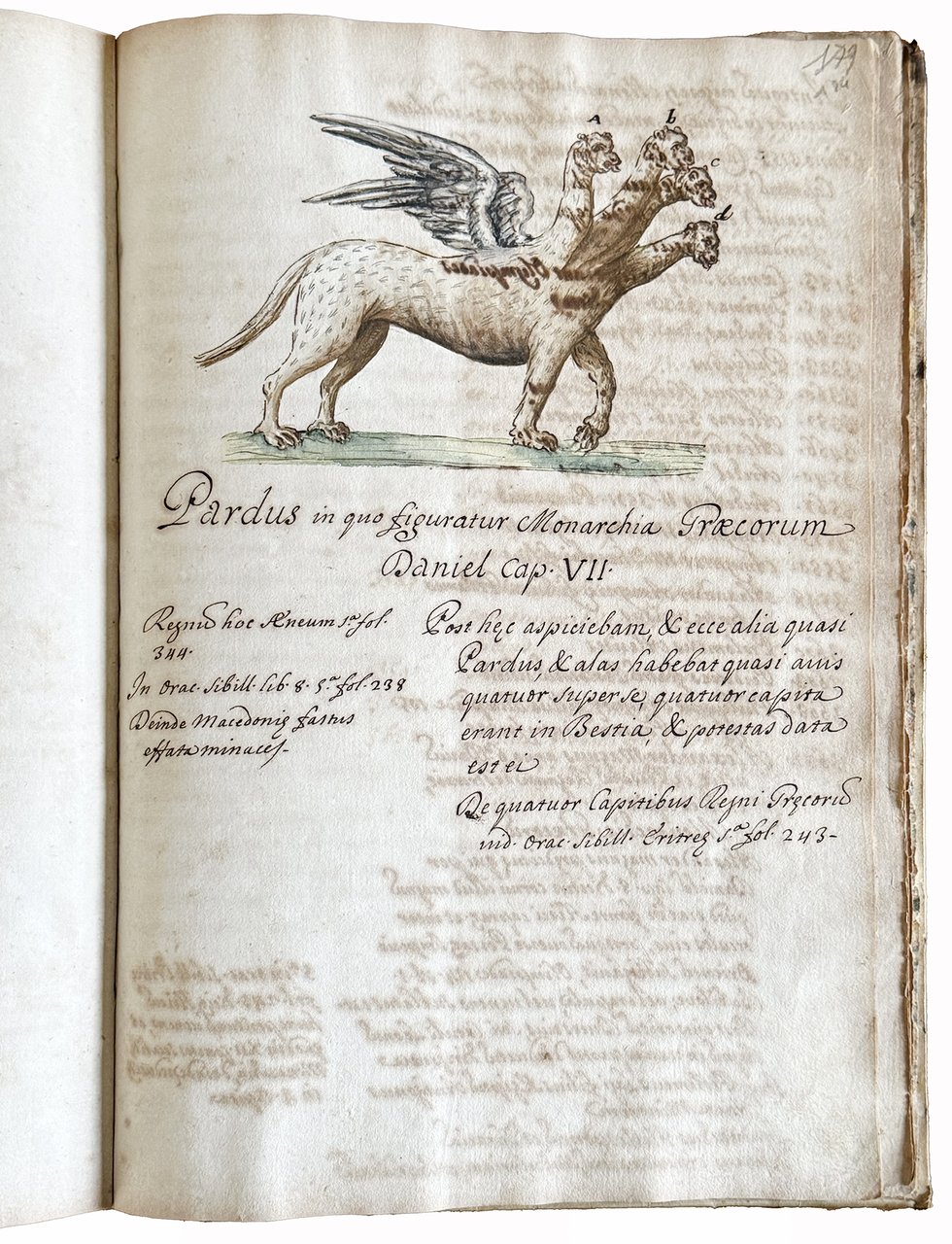
Pardus in quo figuratur Monarchia Graecorum (Daniel cap. VII);
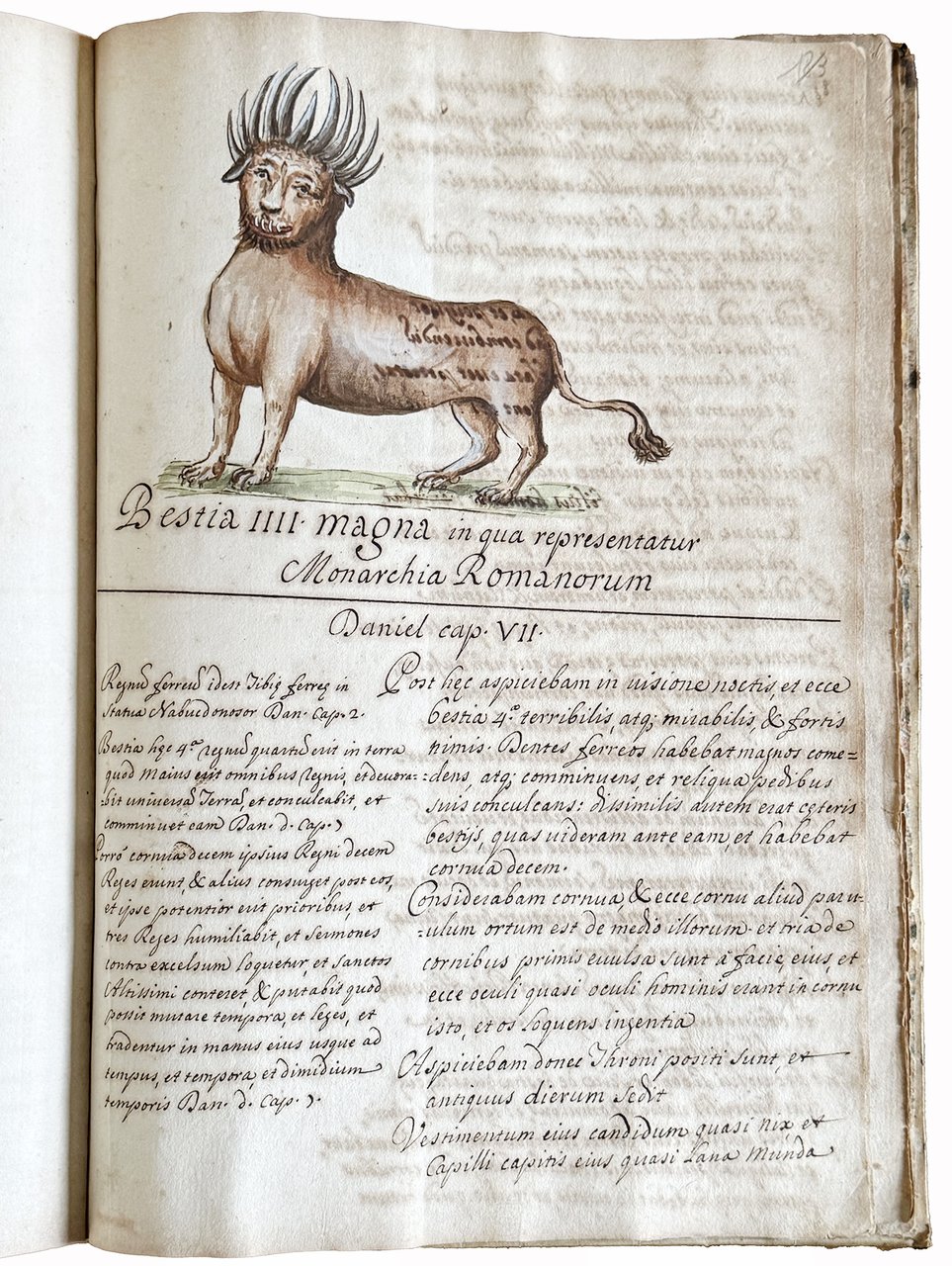
Bestia IIII magna in qua representatur Monarchia Romanarum (Daniel cap. VII);
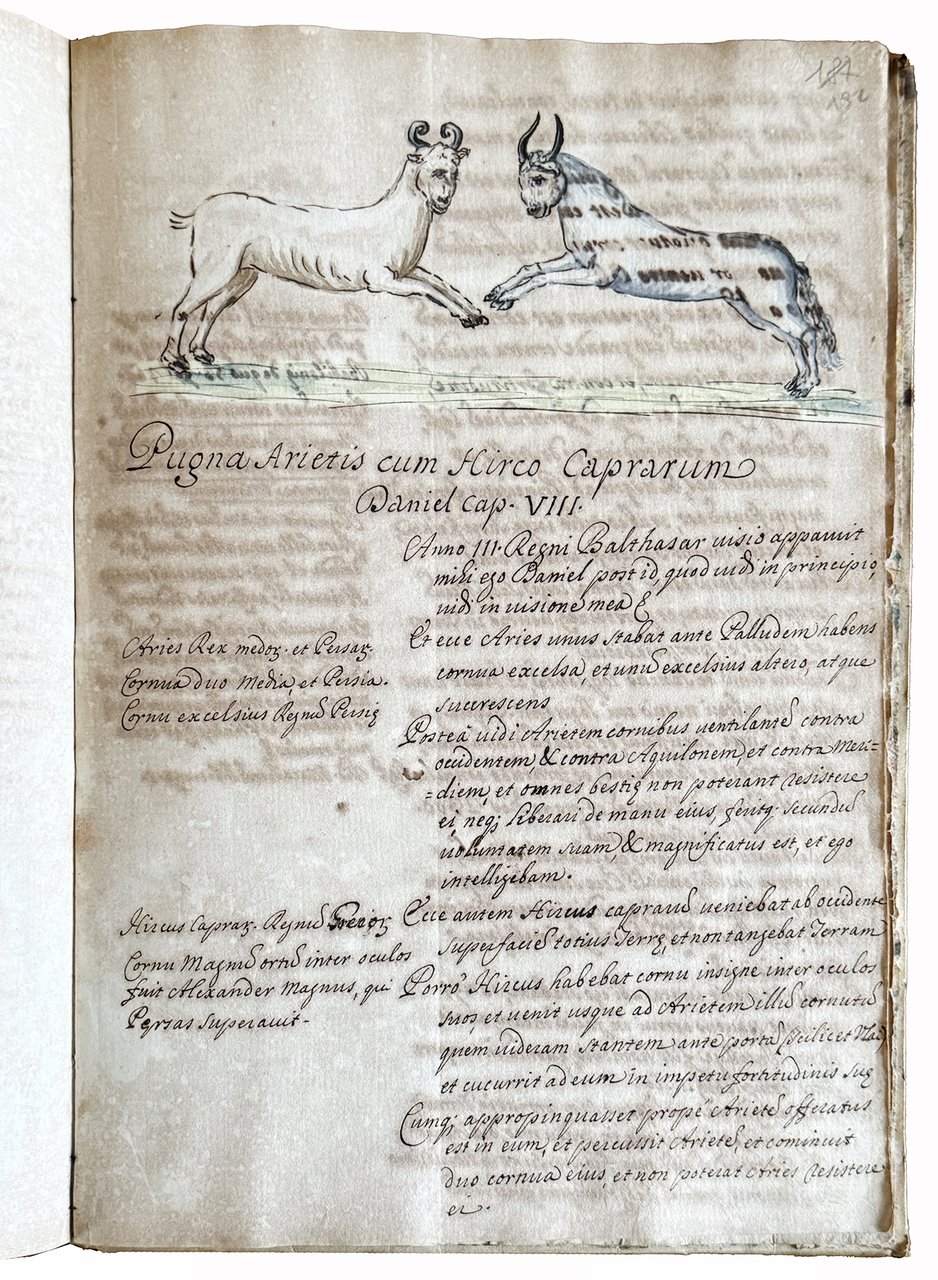
Pugna Arietis cum Hirco Caprarum (Daniel cap. VIII);
Prophetia Sibillae Tiburtinae Olimpiade XLVII a IX numine.
The figures show a series of prophetic representations, the first of which relates to Joachim of Fiore's 13th Prophecy, which reads: “Iste solus aperiet librum scriptum digito Dei vivi” (‘He alone will open the book written by the finger of the living God'). This is followed by several figures relating to the biblical Book of Daniel. The first (‘Statua Nabucodonsoris'), taken from chapter 2, depicts the great statue that King Nebuchadnezzar saw in a dream, where the head represents King Nebuchadnezzar himself and the limbs represent the kingdoms that would succeed him. This is followed by representations of the four beasts seen in Daniel's dream (chapter 7, 1-8): the winged lion (Babylon), the bear (Persia), the winged leopard with four heads (Greece), the fourth beast (Rome), and the battle between the ram and the goat (Dan. 8, 1-27). Another image, taken from the Book of Revelation (12:4), shows the red dragon with seven heads.
