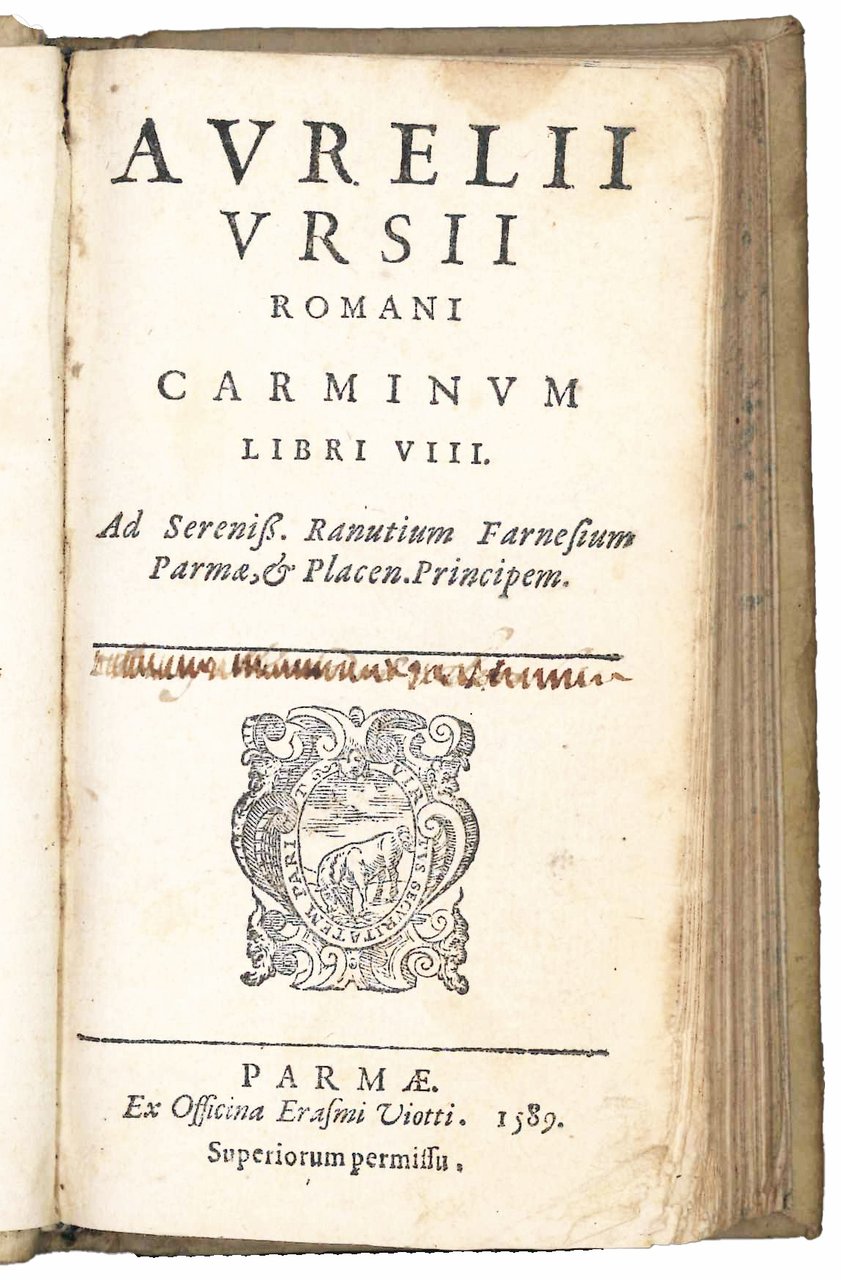
Aurelii Vrsii Romani Carminum libri VIII
Aurelii Vrsii Romani Carminum libri VIII | Libri antichi e moderni | ORSI, Aurelio (ca. 1547-1591)
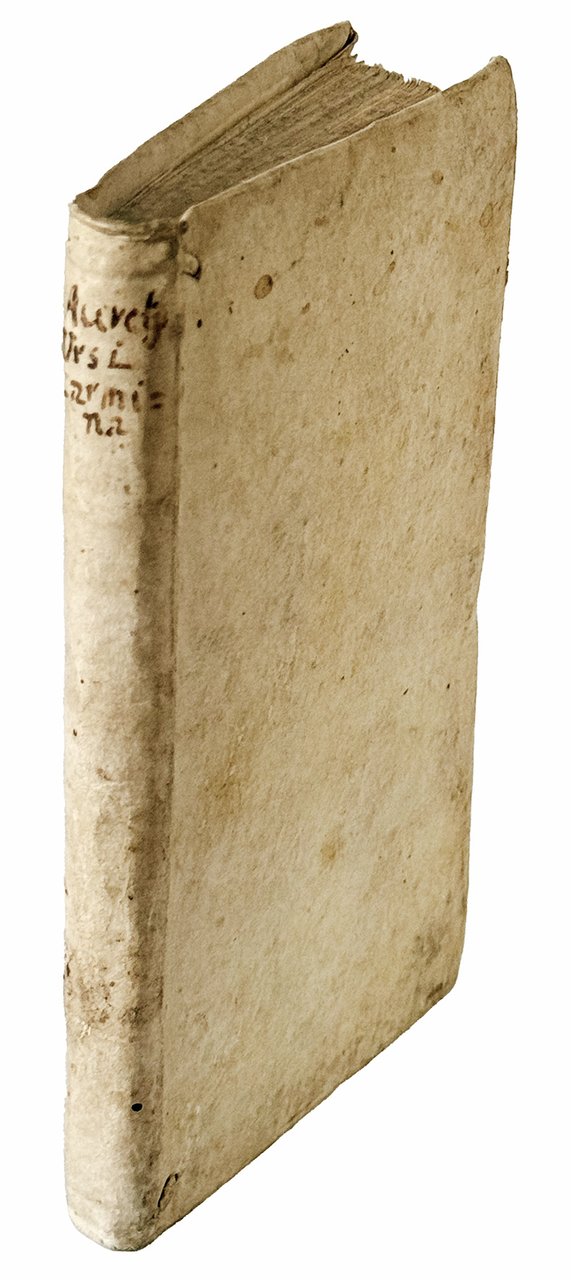
Aurelii Vrsii Romani Carminum libri VIII
Aurelii Vrsii Romani Carminum libri VIII | Libri antichi e moderni | ORSI, Aurelio (ca. 1547-1591)
Metodi di Pagamento
- PayPal
- Carta di Credito
- Bonifico Bancario
- Pubblica amministrazione
- Carta del Docente
Dettagli
- Anno di pubblicazione
- 1589
- Luogo di stampa
- Parma
- Autore
- ORSI, Aurelio (ca. 1547-1591)
- Editori
- Erasmo Viotti
- Soggetto
- Quattro-Cinquecento
- Stato di conservazione
- Buono
- Lingue
- Italiano
- Legatura
- Rilegato
- Condizioni
- Usato
Descrizione
WITH A DESCRIPTION OF VILLA PERETTINA
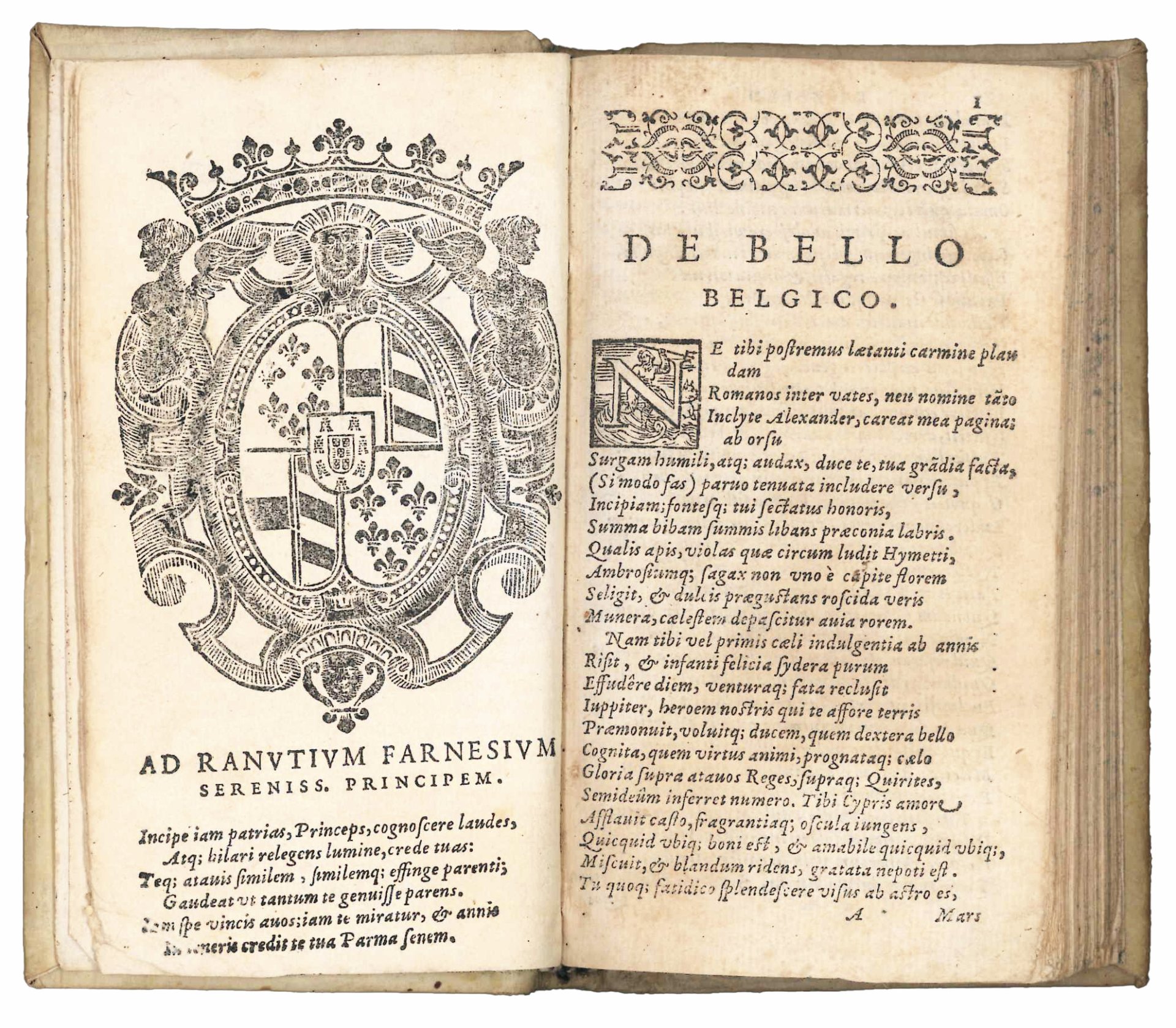
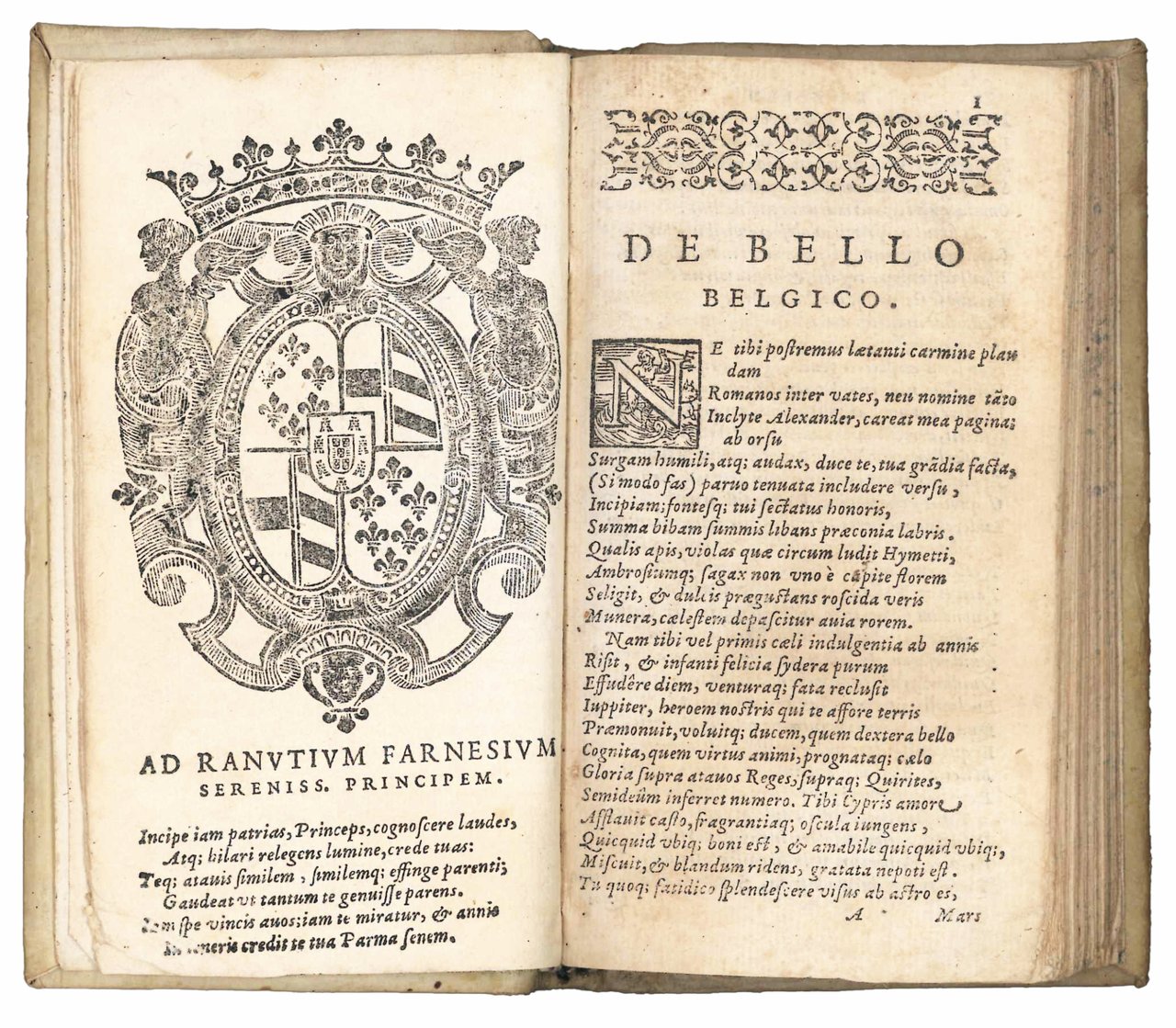
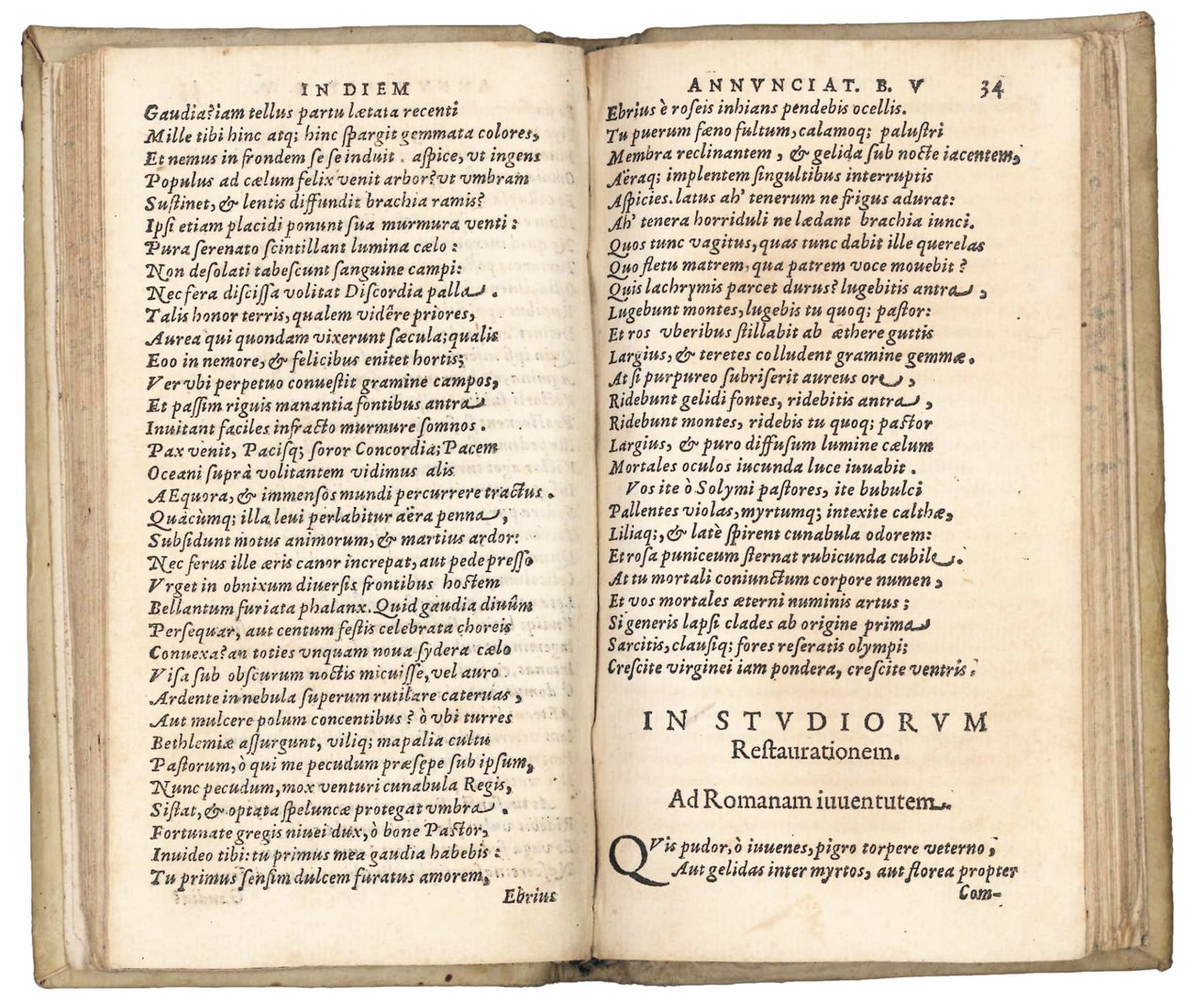
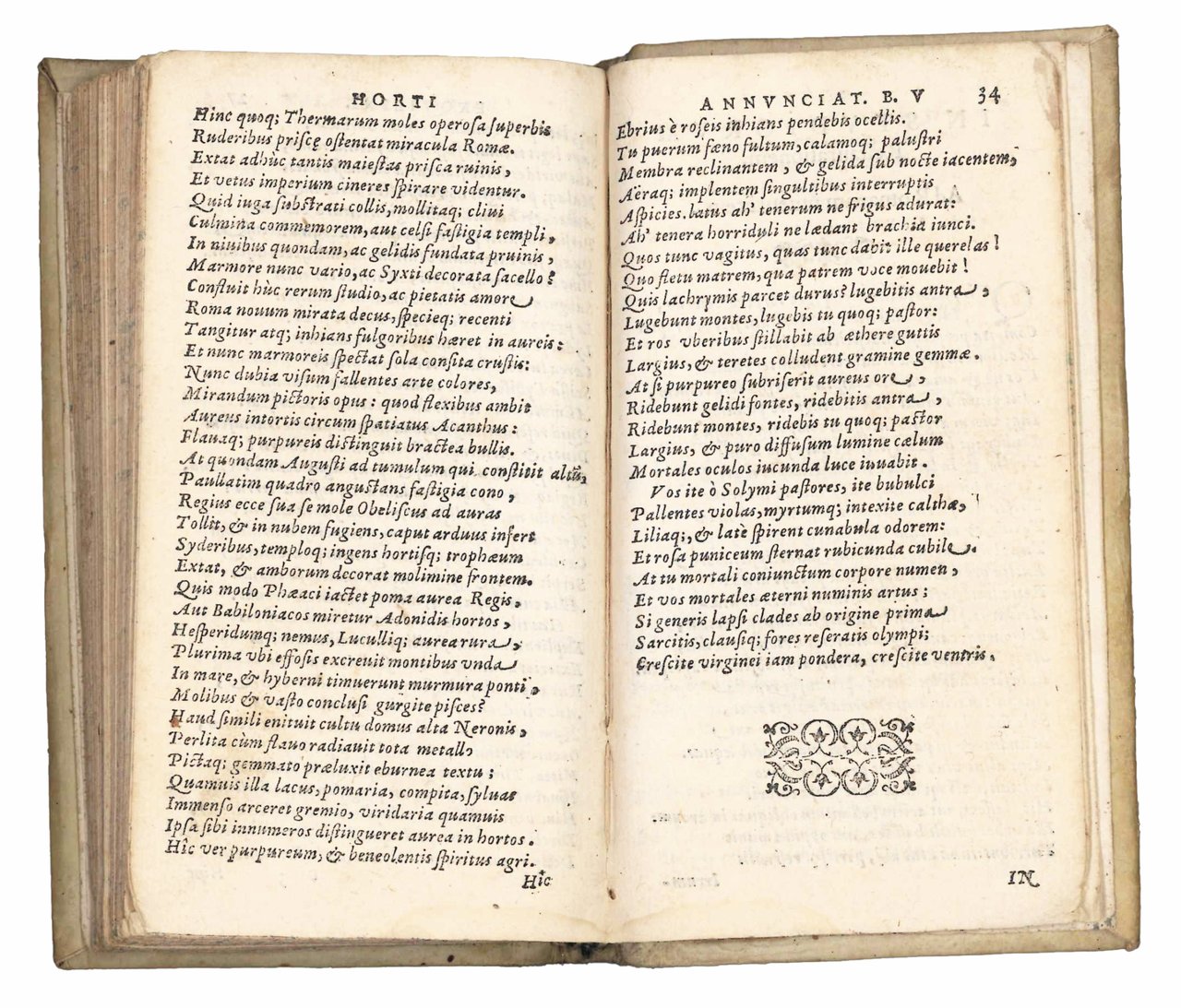
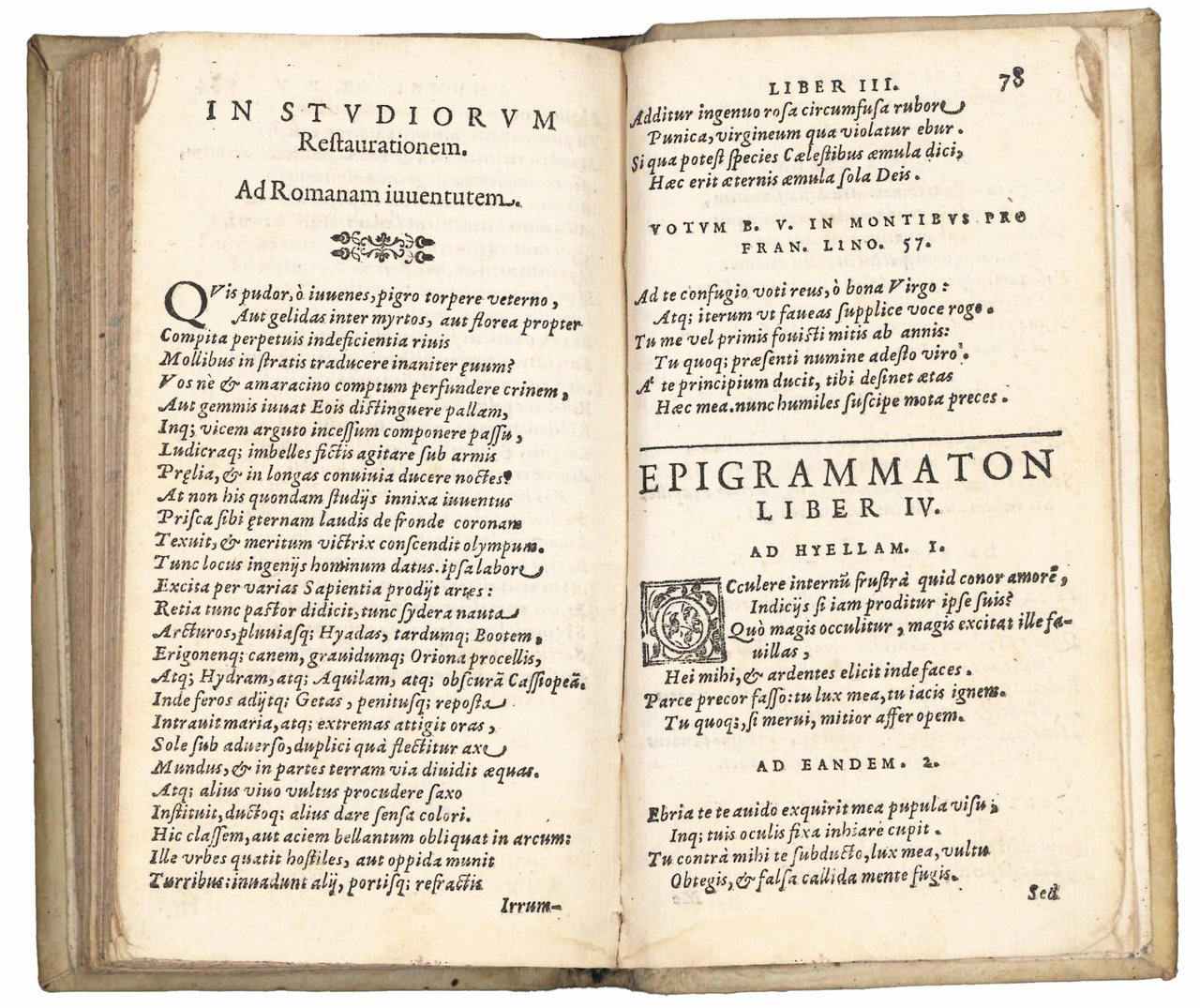
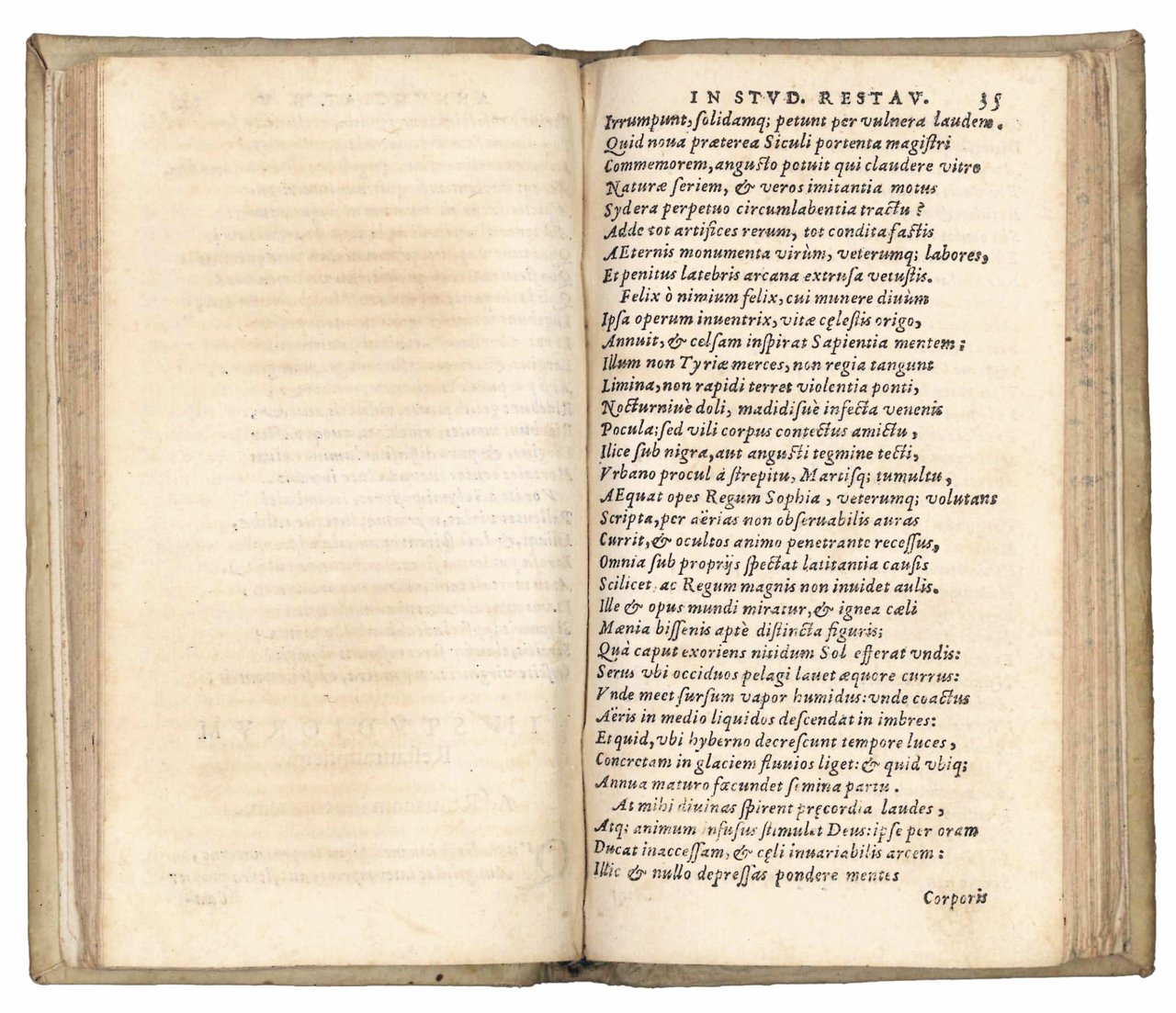
12mo (137x73 mm). [6], 82 leaves. Collation: ¶6 A-F12 G10. The printer left leaves C3r and C10v blank by mistake, so they were reprinted together with ll. C3v and C10r and inserted between ll. G5 and G6. In doing so, l. C10r was completely reset. Woodcut arms of the dedicatee Ranuccio Farnese on l. ¶6v. Woodcut initials. Roman and italic types. 18th-century stiff vellum, inked title on spine, sprinkled edges. Some staining and light browning, a few marginal tears, all in all a good copy.
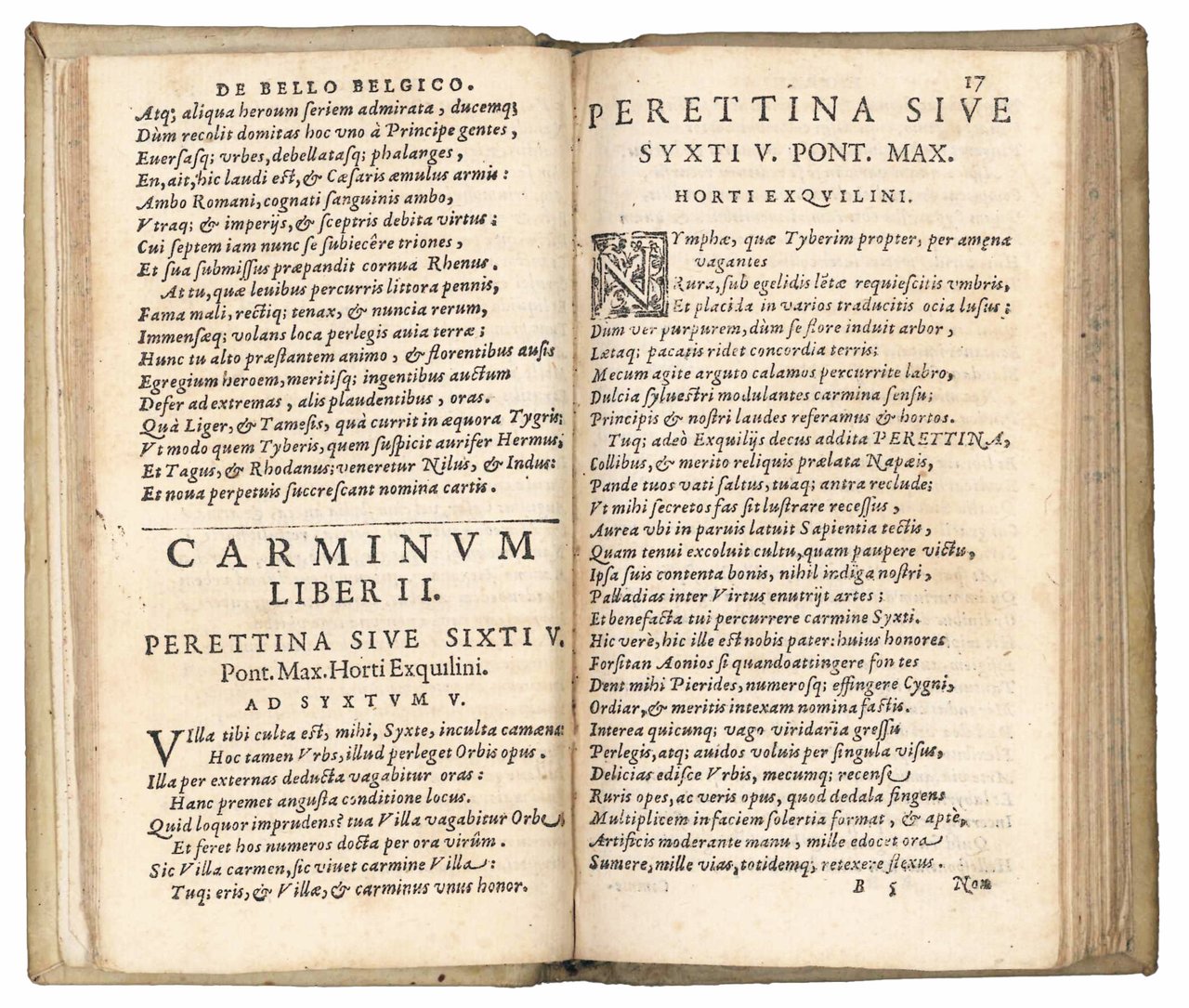
First edition of Aurelio Orsi's collected poems dedicated by him to Ranuccio Farnese. The edition opens with preliminary verses in praise of Orsi by Maffeo Barberini, Lorenzo Frizolio, Girolamo Fiorelli, Melchiorre Crescenzi, Latino Doni, and Giacomo de' Cavalieri. Orsi's Carmina were reprinted in Bologna in 1594 and in Brescia in 1595. They include the poems De bello belgico (already appeared in Perugia in 1586 without the author's authorisation) on the capture of Antwerp (17 August 1585) and Perettina (already appeared in Rome in 1588), in which he describes Cardinal Felice Peretti Montalto's (the future pope Sixtus V) Villa Perettina, which was completed in 1581 and no longer exists.
The title Perettina refers both to the villa and its splendid gardens and to the nymph who guards them. Having moved away from the epic style of De bello Belgico, with Perettina Orsi returns to the classical and humanistic tradition of Latin poetry dedicated to villas and loci amoeni. The poem celebrates Peretti's architectural feat, which constituted the largest modern architectural complex within the Aurelian Walls, linked to the restoration of the Roman aqueduct, which took the name Acqua Felice from the pope and was intended to serve the villa and certain areas of the city. The description focuses on the part of the villa where the first palace is located, as the second had not yet been built on the square of the Baths of Diocletian; the account is limited to six rooms, the chapel, and the gardens. It is unclear whether this was a deliberate choice by the author or if he intended to continue the work. Accompanying the Perettina is a collection of epigrams celebrating two other urban projects carried out by Peretti after he became pope. The first is dedicated to the statue of Moses placed in the central arch of the Acqua Felice aqueduct on the Quirinal Hill (now in Largo S. Susanna), whose design, by Prospero Antichi, dated back to 1587 and was completed in 1588. Four other epigrams celebrate the obelisk erected by Sixtus V in the center of St. Peter's Square in 1586 (previously published in Sequuntur carmina a variis auctoribus in obeliscum conscripta et in duos libros distributa, Rome, 1586).
The collection also contains, among other things, a poem In studiorum restaurationem dedicated “to the Roman youth”; a wedding epithalamium for the 1585 marriage of Marco Pio di Savoia, Lord of Sassuolo, to Clelia Farnese (the illegitimate daughter of Cardinal Alessandro Farnese); various poems dedicated to members of the Farnese family; as well as compositions on Lorenzo Gambara's Colombiade; on the deaths of Latino Latini, Berardino Rota, Alessandro Piccolomini, and Vittoria Accoramboni; on Castore Durante's herbarium; to Cavalier d'Arpino; to Margherita Sarrocchi; and on statues, fountains, and buildings. Book IV, on the other hand, consists entirely of love poems.
Aurelio Orsi was born in Stabia, now Faleria, in the province of Viterbo, between 1547 and 1557. In 1569, he entered the Roman Seminary through the intercession of Cardinal Alessandro Farnese. His brother was Prospero Orsi, a painter who also worked primarily for the Farnese family. Orsi earned his doctorate in philosophy in 1576 and then in theology in 1580. Upon completing his studies, he was welcomed into Cardinal Farnese's court and, until his patron's death (March 2, 1589), lived mostly in the palace at Caprarola, where he distinguished himself for his talents a