De modo divitiis adhibendo homini Christiano, doctissimi Isidori Clarii monachi ad Cives Brixianos salutaris Oratio
De modo divitiis adhibendo homini Christiano, doctissimi Isidori Clarii monachi ad Cives Brixianos salutaris Oratio | Libri antichi e moderni | CLARIO, Isidoro (1495-1555)

De modo divitiis adhibendo homini Christiano, doctissimi Isidori Clarii monachi ad Cives Brixianos salutaris Oratio
De modo divitiis adhibendo homini Christiano, doctissimi Isidori Clarii monachi ad Cives Brixianos salutaris Oratio | Libri antichi e moderni | CLARIO, Isidoro (1495-1555)
Metodi di Pagamento
- PayPal
- Carta di Credito
- Bonifico Bancario
- Pubblica amministrazione
- Carta del Docente
Dettagli
- Anno di pubblicazione
- 1540
- Luogo di stampa
- Milano
- Autore
- CLARIO, Isidoro (1495-1555)
- Editori
- Francesco Minizio Calvo
- Soggetto
- Quattro-Cinquecento
- Stato di conservazione
- Buono
- Lingue
- Italiano
- Legatura
- Rilegato
- Condizioni
- Usato
Descrizione
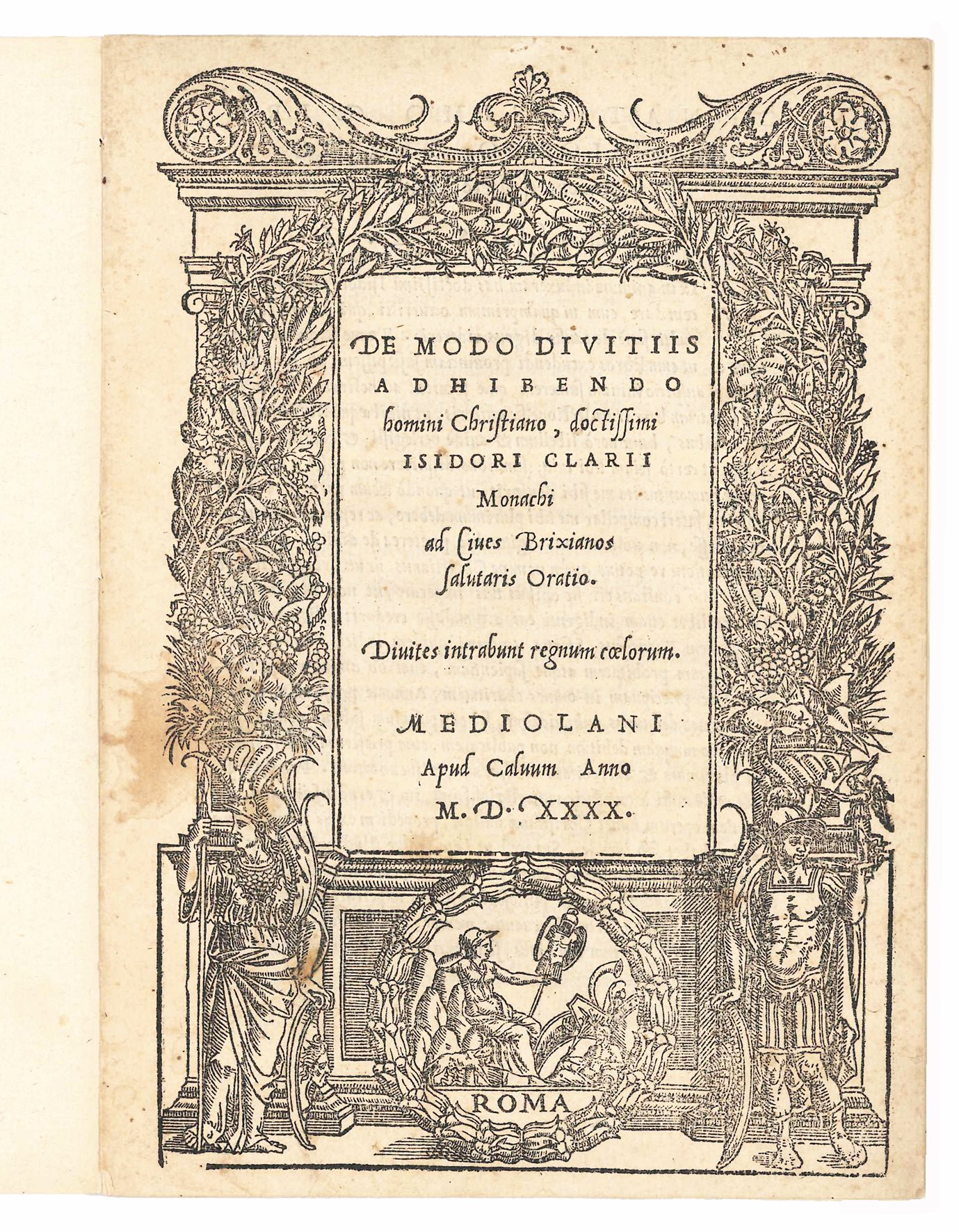
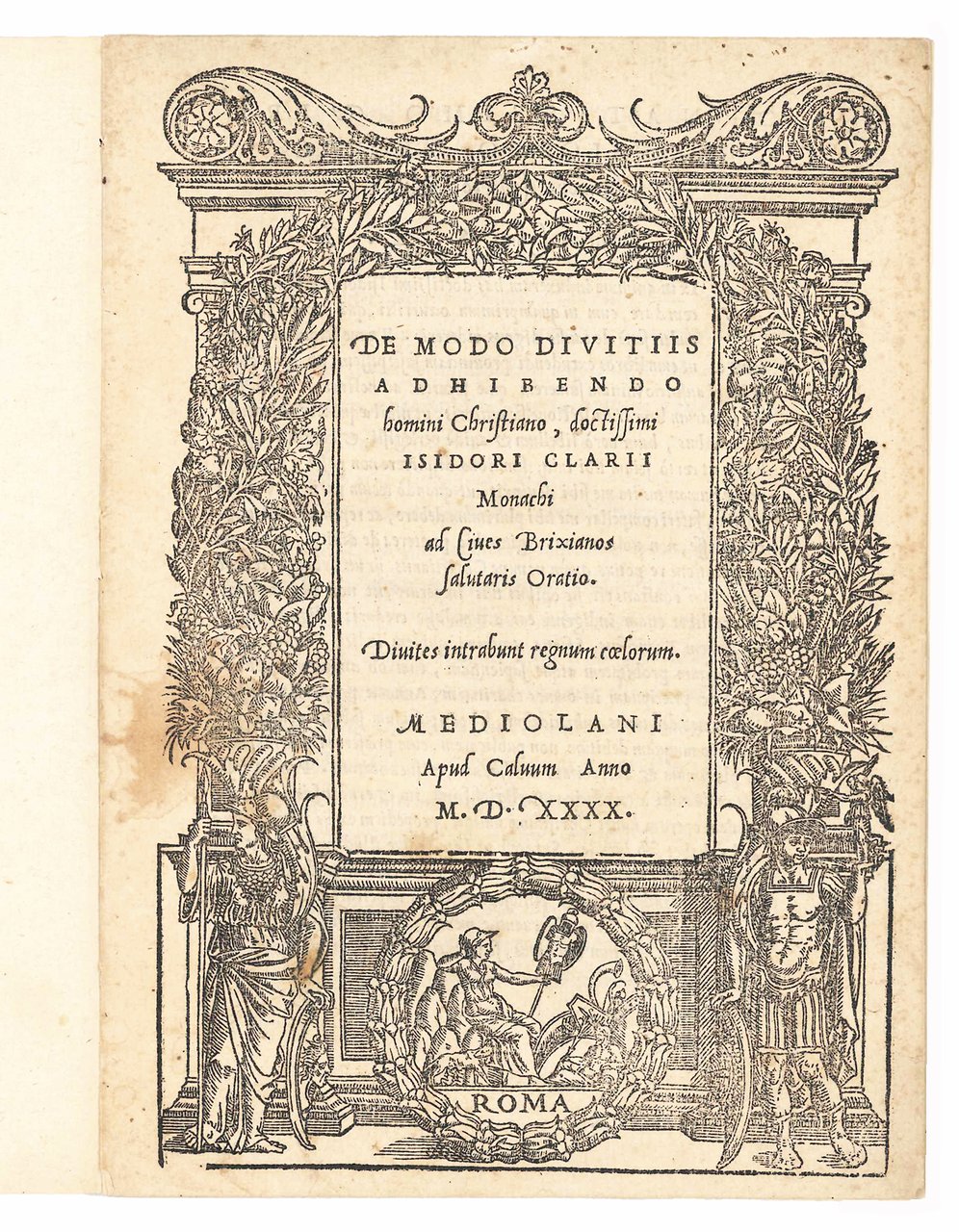
4to (200x140 mm). [20] leaves. Collation: A-E4. Title page within an elaborate woodcut frame with the printer's device at the bottom. Modern marbled wrappers (worn). Italic type. Small pale staining to the title page, round worm holes to the outer margin of some leaves, all in all a good copy.
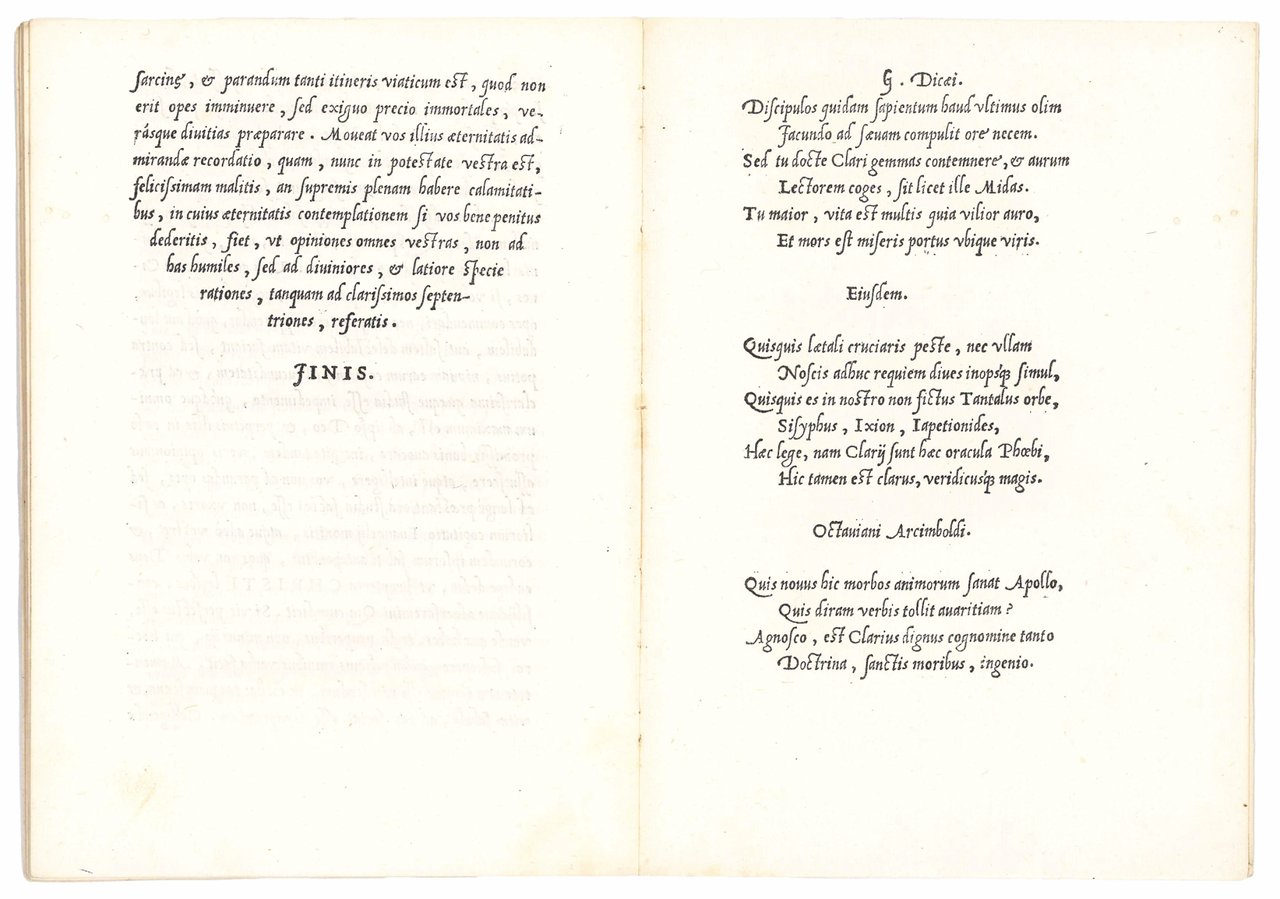
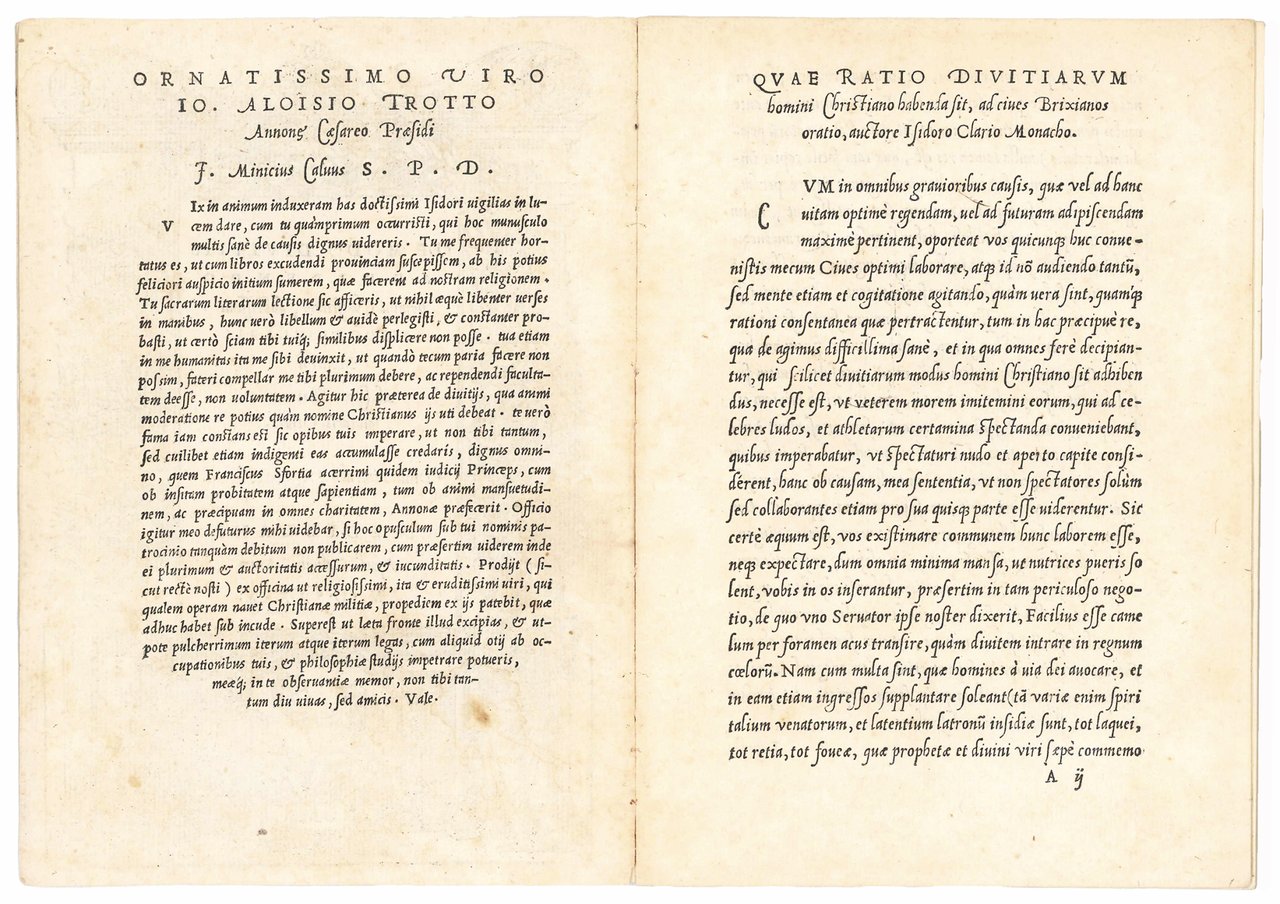
First edition, dedicated by Calvo to Giovanni Luigi Trotti, president of the imperial annona. The oration was reprinted in Isidori Clarii Epistolae ad Amicos (Modena, 1545, pp. 233-285).
“In 1540, Isidoro Clario was the new abbot of monastery of San Jacobo da Pontida in Bergamo. This was a time of religious crisis and the Congregation was expounding its doctrine of salvation. Also, in 1540, his native Brescia was suffering severe inflation, poverty and famine. Clario wrote De Modo Divitiis Adhibendo Homini Christiano... ad Cives Brixianos, Oratio, an open letter to the rich citizens of Brescia on social welfare and civic responsibility. His letter was much more than the usual humanist biblical exhortation to Christian charity, for it was based upon the Cassinese doctrine of salvation, including regeneration and restoration of imago dei. The Oratio set out the doctrine of salvation: sin, grace (beneficio di Cristo), faith and good works bringing about the regeneration of broken humanity, restoring the image of God in mankind. In this work Clario placed particular emphasis upon that final step of transformation. The Oratio describes how ordinary selfish life has unopened eyes. It is a life of uncertainty and confusion (incerta atque occulta), a kind of illness (morbus tantus). In contrast, a life that was living (‘vivante' was a common Cassinese adjective) is transformed life, being really alive. Clario set out to describe how humans ought to live such a joyful life without ‘pidocchierie' - rigid, mean-spirited pettiness or coldness. He used words of vivacity and energy such as ‘embrace', ‘throw', ‘great effort', to describe this exuberant life ‘fulfilled with joy'. His Oratio depicted in words the same theme that Correggio's frescoes in Parma depicted visually. Clario was not idealistically urging the rich to help the poor but describing in practical terms the restoration of the imago dei from which charity flows, which in turn enables the processes of regeneration in other people, particularly the poor. Consequently, when rich people enter deeply into the restoration of the imago dei, themselves living vibrantly and helping their neighbours, they too can enter the kingdom of heaven” (B. Collett, Definition of humanity in the early sixteenth century: Correggio, Isidoro Clario, Zarlino and the restoration of “imago dei”, in: “Isidoro Clario 1495ca-1555 umanista teologo tra Erasmo e la Controriforma. Un bilancio nel 450° della morte”, F. Formenti & G. Fusari, eds., Brescia, 2006, pp. 120-121; see also F. Buzzi, Ragione e carità. L'uso cristiano delle ricchezze secondo Isidoro Clario, in: “op. cit.”, pp. 125-150).
Taddeo Cucchi was born in Chiari, near Brescia, hence the name Clario by which he is universally known. He took his religious vows in Parma in 1517 at the Benedictine monastery of St. John the Evangelist and assumed the name Isidoro. During those years, his teachers were Angelo Claretti and Luciano degli Ottoni, and he maintained friendships with Giambattista and Teofilo Folengo. In 1531-1532, he stayed at the monastery of St. Euphemia in Brescia. In 1536-1537, he was in Rome, where he accompanied Abbot Gregorio Cortese, appointed by Paul III as a member of the commission for the reform of the Roman Curia. During the winter, he composed an oration Adhortatio ad concordiam, which was published in Milan in 1540. In 1541, his Vulgata editio Veteris ac Novi Testamenti was published in Venice; it aimed to improve the text of the Vulgate by comparing it with the original Hebrew and Greek texts and was included in the Index of Prohibited Books of 1559. Again in 1542, he published the Commentari in Epistolas Pauli ad Romanos et ad Gala