De Vasis Linguae Salivabus atque sanguiferis epistola.
De Vasis Linguae Salivabus atque sanguiferis epistola. | Libri antichi e moderni | TREW, Christoph Jakob (1695-1769)
De Vasis Linguae Salivabus atque sanguiferis epistola.
De Vasis Linguae Salivabus atque sanguiferis epistola. | Libri antichi e moderni | TREW, Christoph Jakob (1695-1769)
Metodi di Pagamento
- PayPal
- Carta di Credito
- Bonifico Bancario
- Pubblica amministrazione
- Carta del Docente
Dettagli
- Anno di pubblicazione
- 1734
- Luogo di stampa
- Nuremberg
- Autore
- TREW, Christoph Jakob (1695-1769)
- Editori
- Tip. Ioannis Ernesti Adelbulneri [Adelbulner, Johann Ernst]
- Soggetto
- settecento
- Stato di conservazione
- Buono
- Lingue
- Italiano
- Legatura
- Rilegato
- Condizioni
- Usato
Descrizione
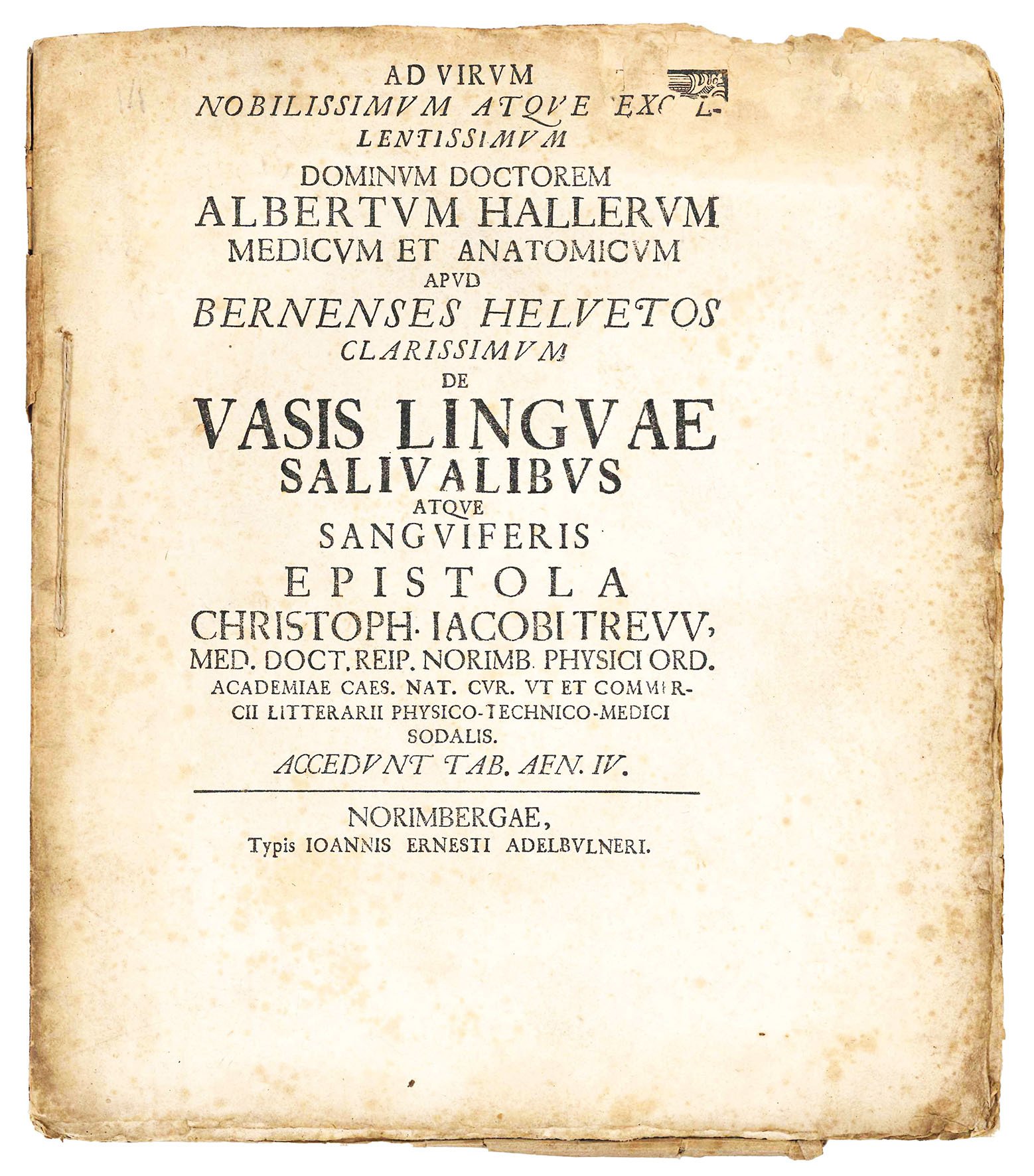
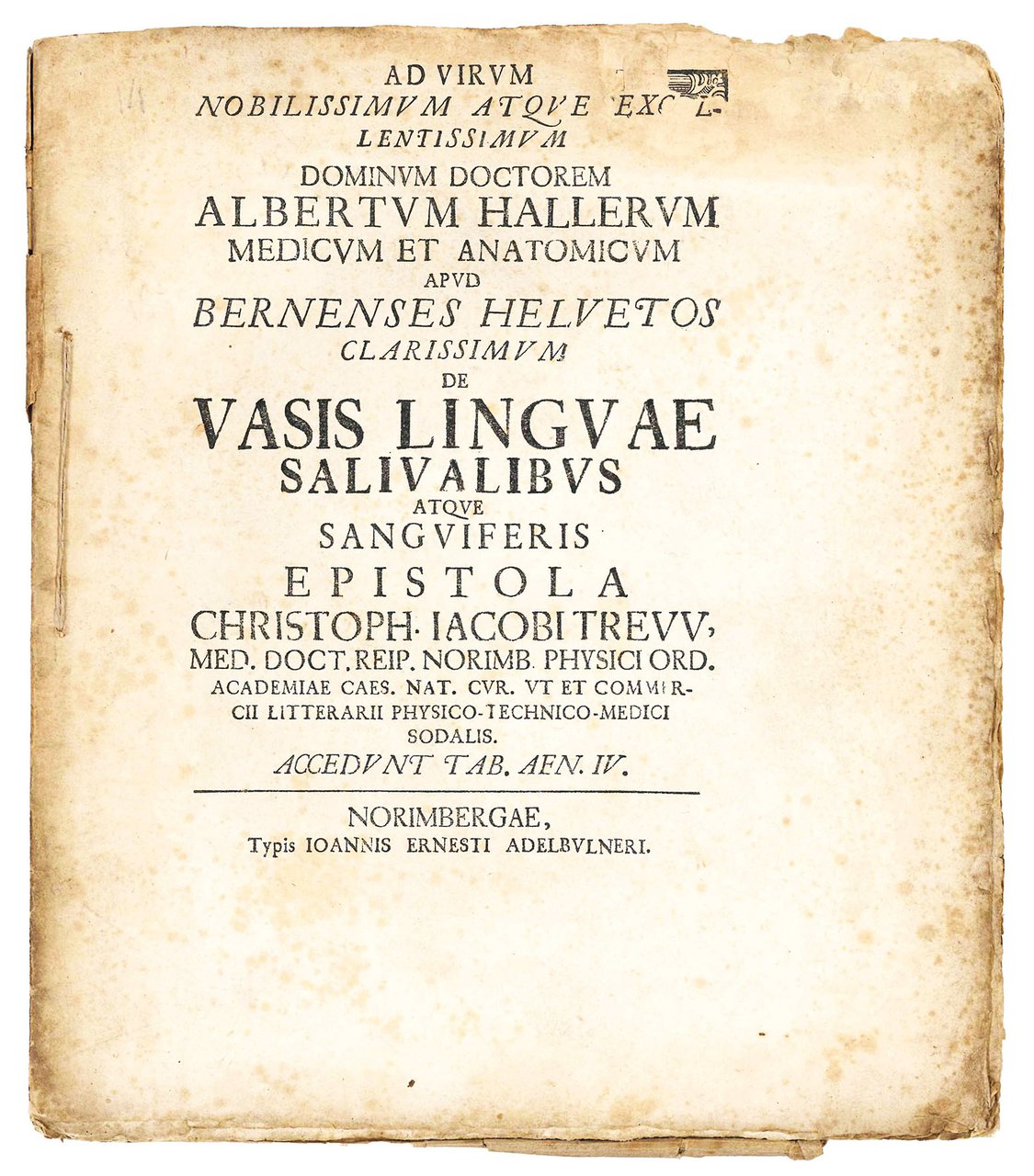
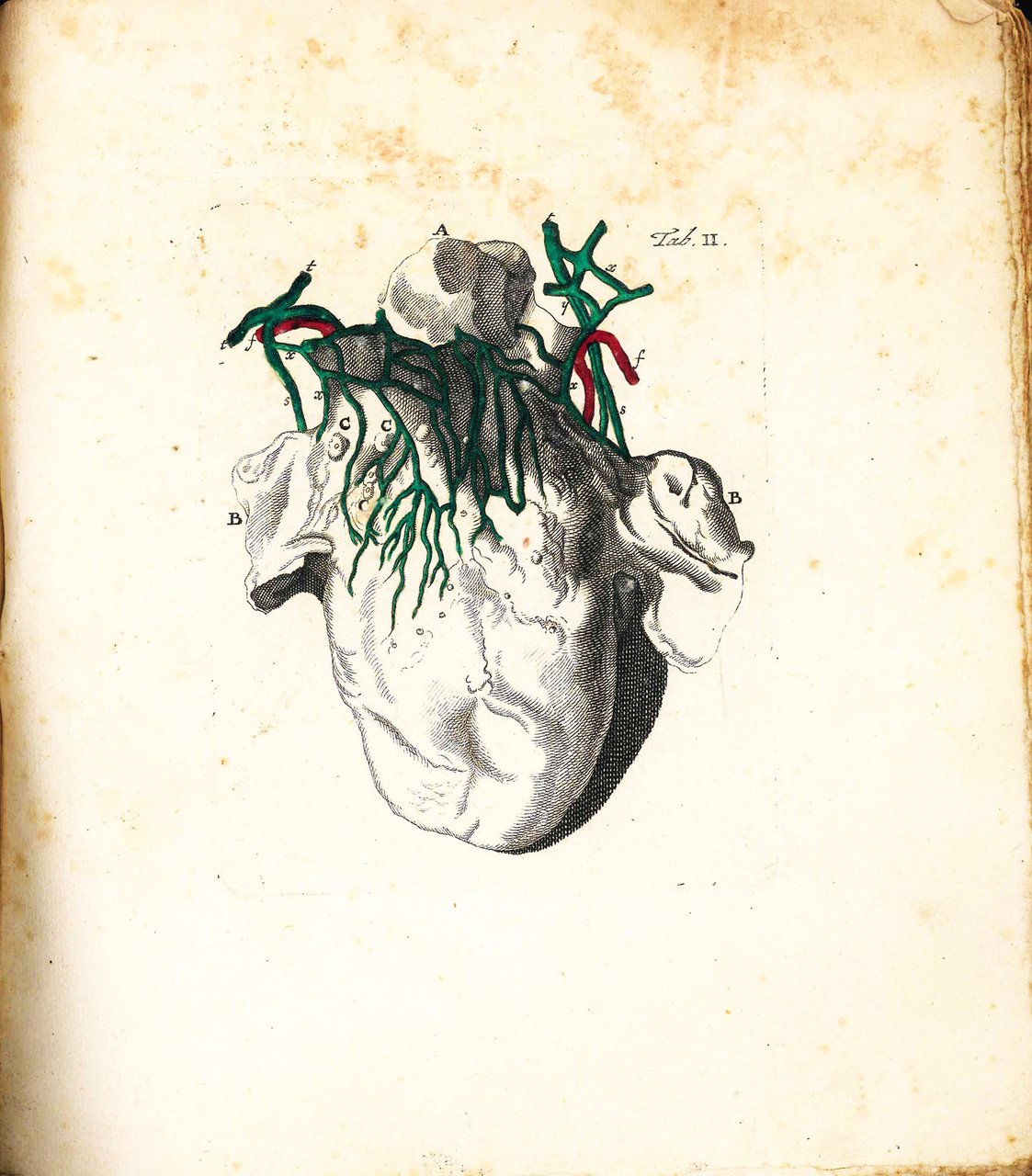
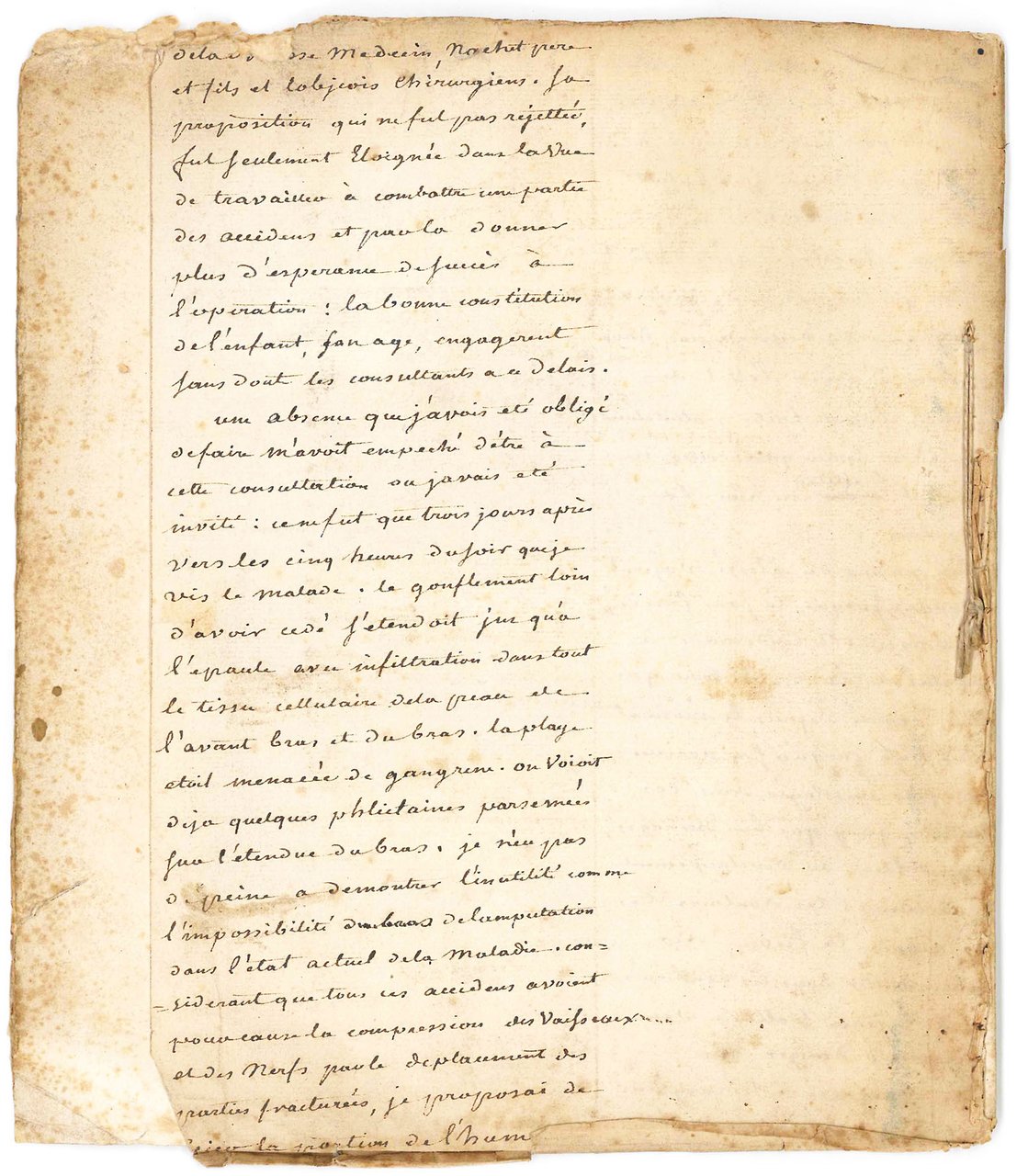
4to (240 x 210 mm). 12 pp. and 4 engraved folding plates. Collation: A⁴ - B². Unbound. Woodcut ornaments and historiated initials; four engraved folding plates of anatomical sections, in some cases enriched by bright colors highligthing different blood vessels. Extra leaf inserted at the very end of the volume with a handwritten French text regarding a medical case. Author's dedication on the title page to the famous Helvetian doctor Albrecht von Haller (Bern October 16, 1708 - December 12, 1777, widely recognized as one of the founders of modern physiology, trained as a physician, he made groundbreaking contributions to anatomy, botany, and experimental science, combining careful observation with systematic experimentation at a time when scientific methods were still developing. Haller is especially known for his work in physiology, where he introduced the important distinction between the ability of muscles to respond to stimuli and the responsiveness of nerves, helping lay the foundation for later research in neurophysiology). Some browning and foxing, paper loss to the upper right margin of the first leaves slighlty affecting a few letters on the title page.
First edition. In this text, Trew focuses on the anatomical structure of the tongue, describing in detail both its salivary ducts and its vascular system. The work is significant within the development of anatomy because it contributes to a more precise understanding of how the tongue is supplied with blood and how saliva is distributed, which are essential aspects for functions such as taste, speech, and digestion. The study reflects the broader 18th-century shift toward careful dissection and empirical observation, moving away from purely theoretical descriptions of the human body. Like many works of its time, it combines textual explanation with attention to structural detail, helping to refine medical knowledge and laying groundwork for later advances in physiology and oral anatomy.
Christoph Jacob Trew was an 18th-century German physician, naturalist, and scholar, born on April 26, 1695, in Lauf an der Pegnitz and died on July 18, 1769, in Nuremberg. He is best known for his work in medicine and botany, as well as for his role in promoting scientific illustration during the Enlightenment. He developed a strong passion for medicine, botany and natural history, building extensive collections of plant specimens and collaborating with leading scientists of his time. He maintained connections with important figures such as Albrecht von Haller and supported the exchange of scientific knowledge across Europe. One of his most significant contributions was his involvement in the production of beautifully illustrated botanical works. He sponsored and edited publications that combined scientific accuracy with artistic excellence, helping to elevate botanical illustration as both a scientific and aesthetic discipline. Through these efforts, Trew played a key role in documenting plant diversity and making scientific knowledge more accessible during the 18th century.
Italian Union Catalogue, IT\ICCU\TO0E\087140; OCLC, 257725641.