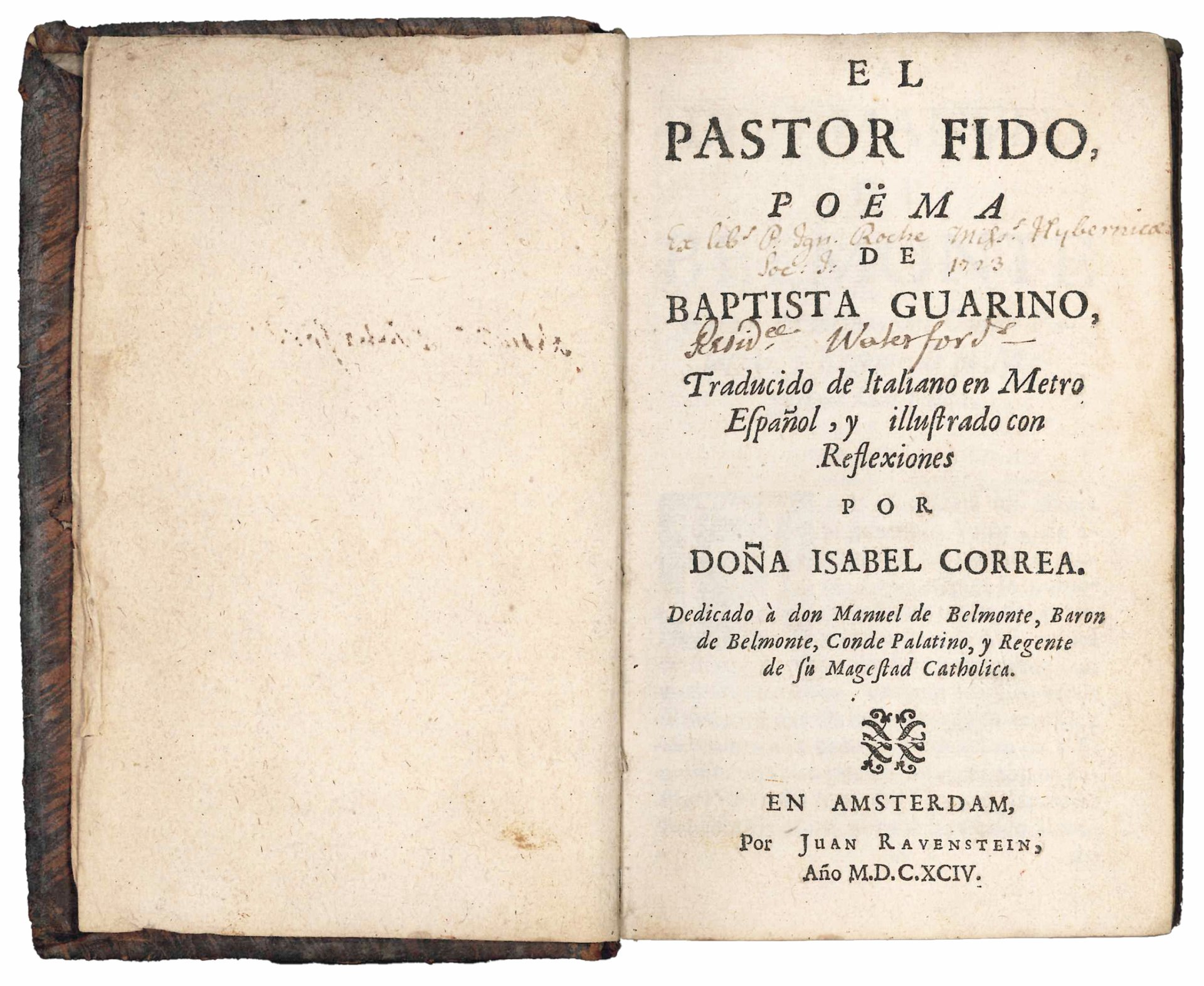
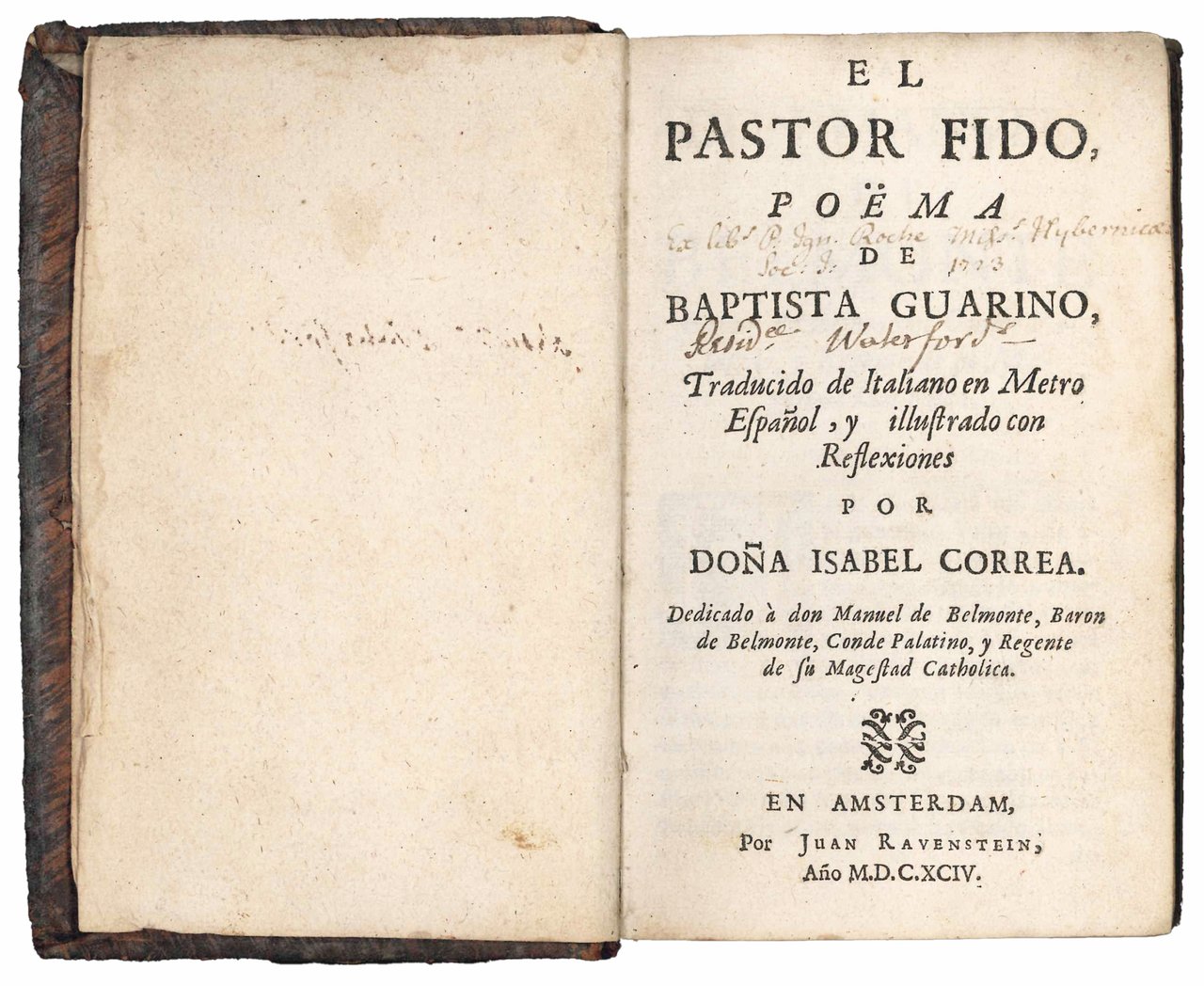
El pastor fido, poëma de Baptista Guarino, traducido de italiano en metro español, y illustrado con reflexiones por Doña Isabel Correa. Dedicado à don Manuel de Belmonte, [...]
El pastor fido, poëma de Baptista Guarino, traducido de italiano en metro español, y illustrado con reflexiones por Doña Isabel Correa. Dedicado à don Manuel de Belmonte, [...] | Libri antichi e moderni | GUARINI, Battista (1538-1612)-CORREA, Isabel Rebeca (b. ca. 16
El pastor fido, poëma de Baptista Guarino, traducido de italiano en metro español, y illustrado con reflexiones por Doña Isabel Correa. Dedicado à don Manuel de Belmonte, [...]
El pastor fido, poëma de Baptista Guarino, traducido de italiano en metro español, y illustrado con reflexiones por Doña Isabel Correa. Dedicado à don Manuel de Belmonte, [...] | Libri antichi e moderni | GUARINI, Battista (1538-1612)-CORREA, Isabel Rebeca (b. ca. 16
Metodi di Pagamento
- PayPal
- Carta di Credito
- Bonifico Bancario
- Pubblica amministrazione
- Carta del Docente
Dettagli
- Anno di pubblicazione
- 1694
- Luogo di stampa
- Amsterdam
- Autore
- GUARINI, Battista (1538-1612)-CORREA, Isabel Rebeca (b. ca. 16
- Editori
- Johannes van Ravesteyn
- Soggetto
- seicento
- Stato di conservazione
- Buono
- Lingue
- Italiano
- Legatura
- Rilegato
- Condizioni
- Usato
Descrizione
THE FREE ADAPTATION OF IL PASTOR FIDO INTO SPANISH BY A SEPHARDIC POETESS
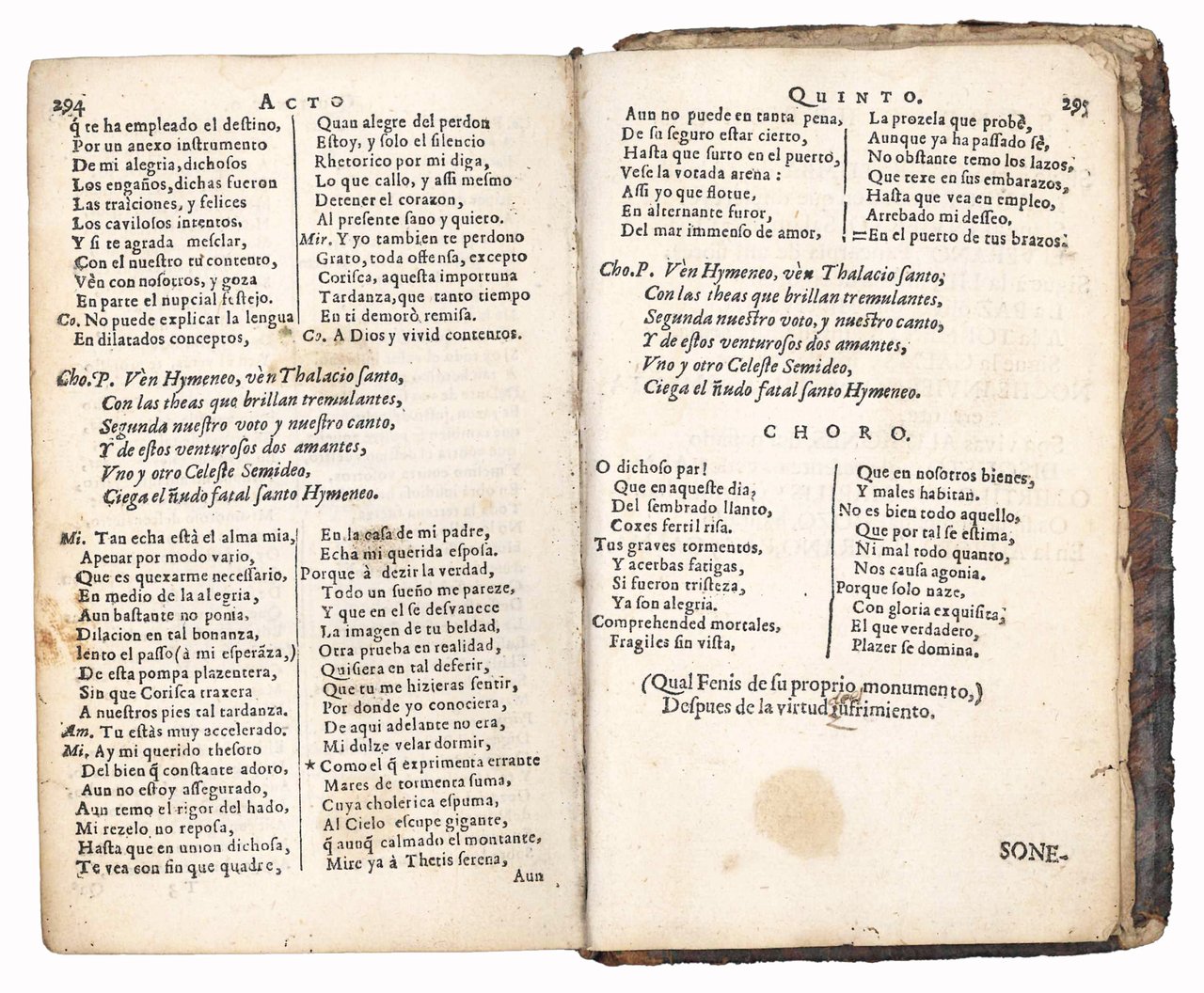
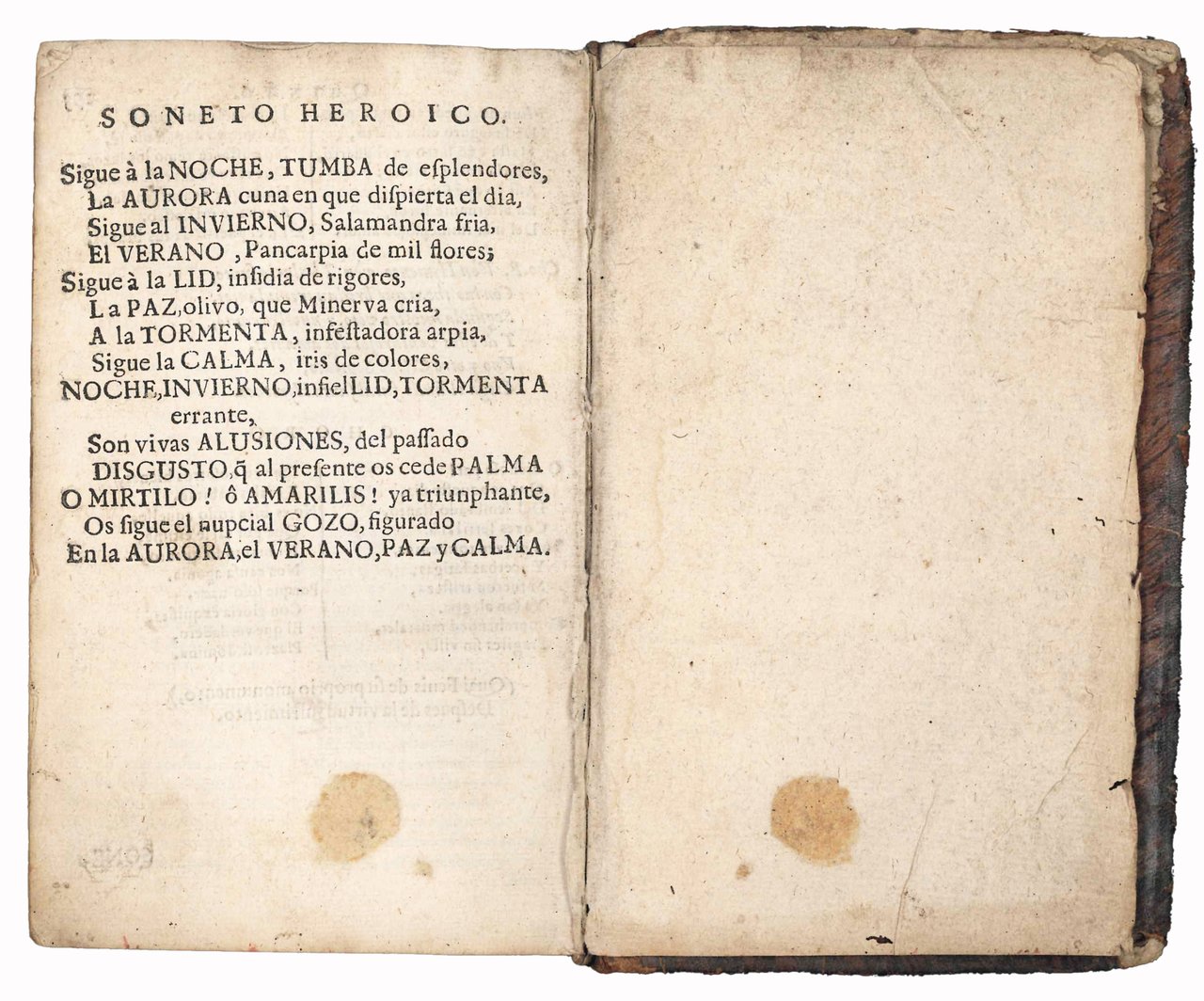
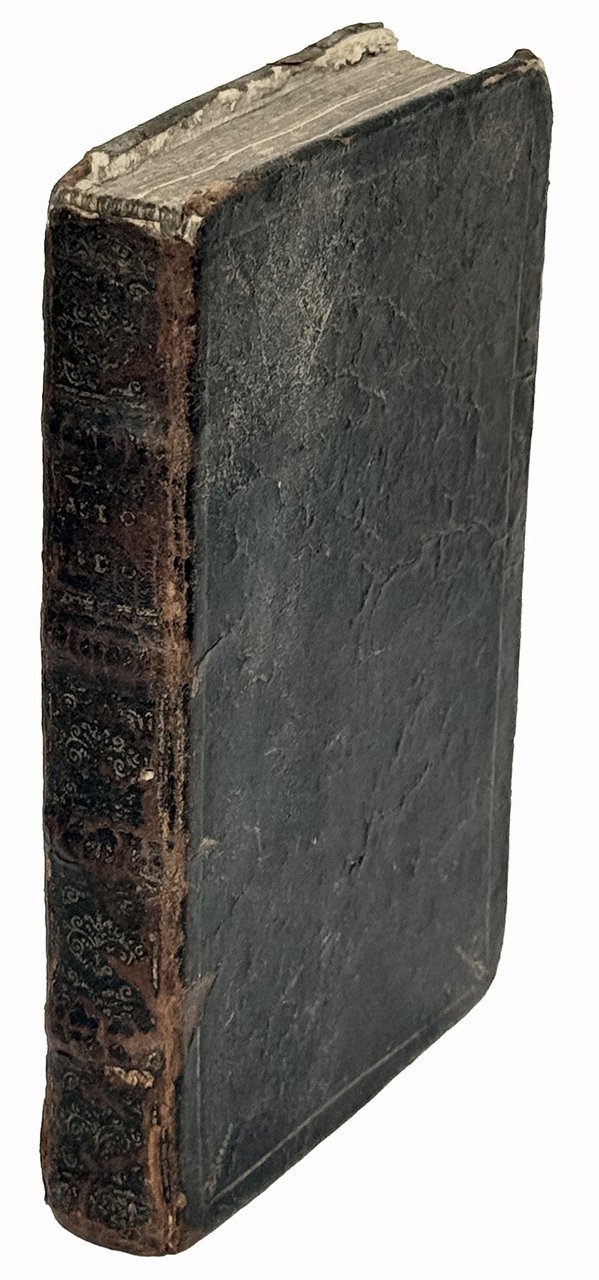
8vo (160x95 mm). 295, [3] pp. Collation: A-S8 T4 χ1. The final leaf with the errata is bound here between pp. 16 and 17. Woodcut printer's device of Pierre Bellère's heirs printed on l. A6v as a tail-piece. Woodcut initials and tail-pieces. Contemporary full leather gilt (rather worn and rubbed). On the title page ownership entry of the Irish Jesuit priest Ignatius Roche (d. 1739) (“Ex lib.s P. Ign. Roche Miss.s Hybernicae Soc: J: 1723”) and below in a later hand “Resid Waterfords”. Small holes to ll. K3 and O6 slightly affecting the text, some occasional pale staining, all in all a good copy.
Extremely rare first edition, in the rarer van Ravesteyn issue, of Isabel Correa's Spanish adaptation of Guarini's Pastor fido. The edition was in fact shared by two printing houses: Johannes van Ravesteyn's in Amsterdam and the brothers Cornelis and Henricus Verdussen's in Antwerp. The Antwerp edition appears to be more prevalent in libraries worldwide.
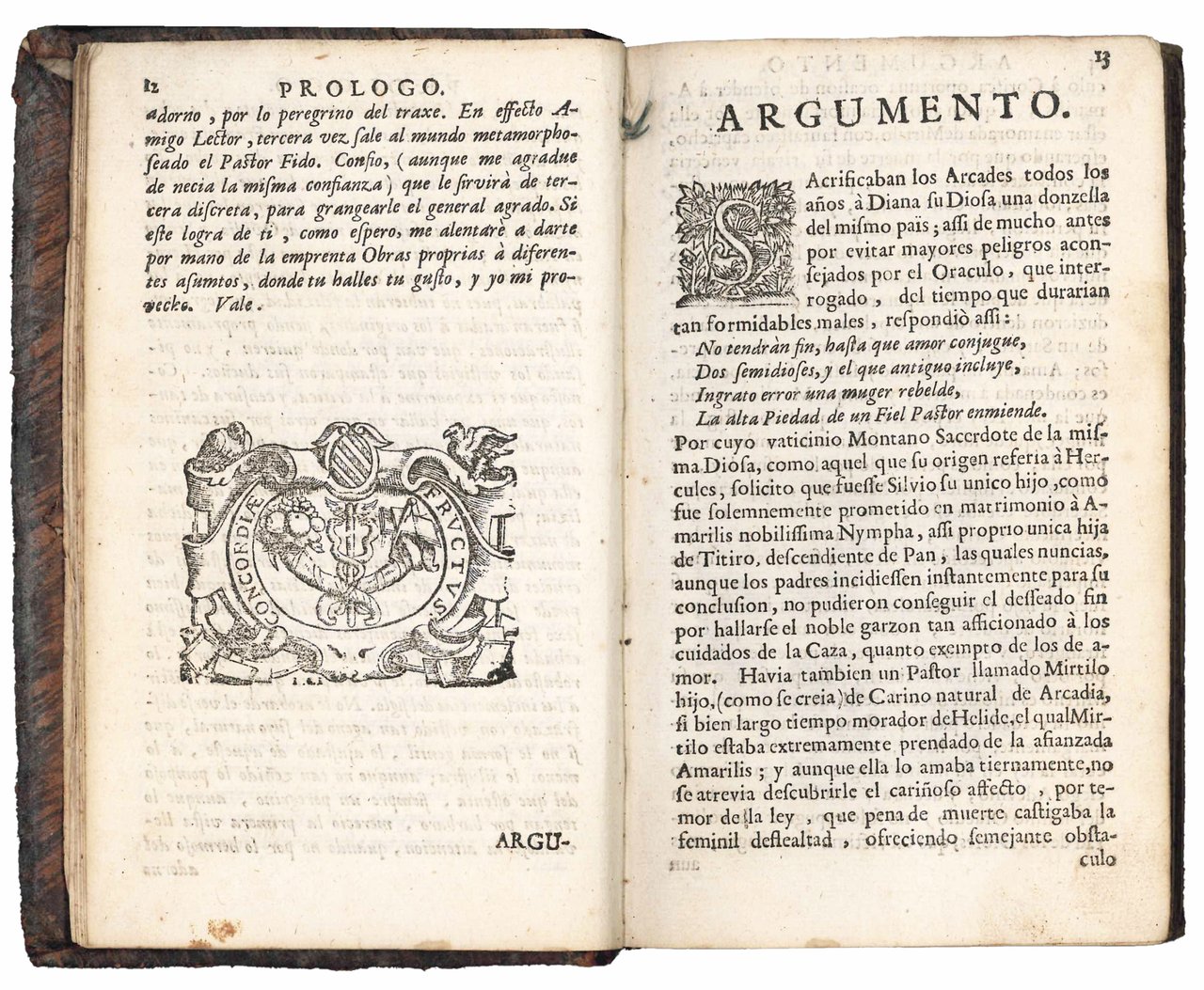
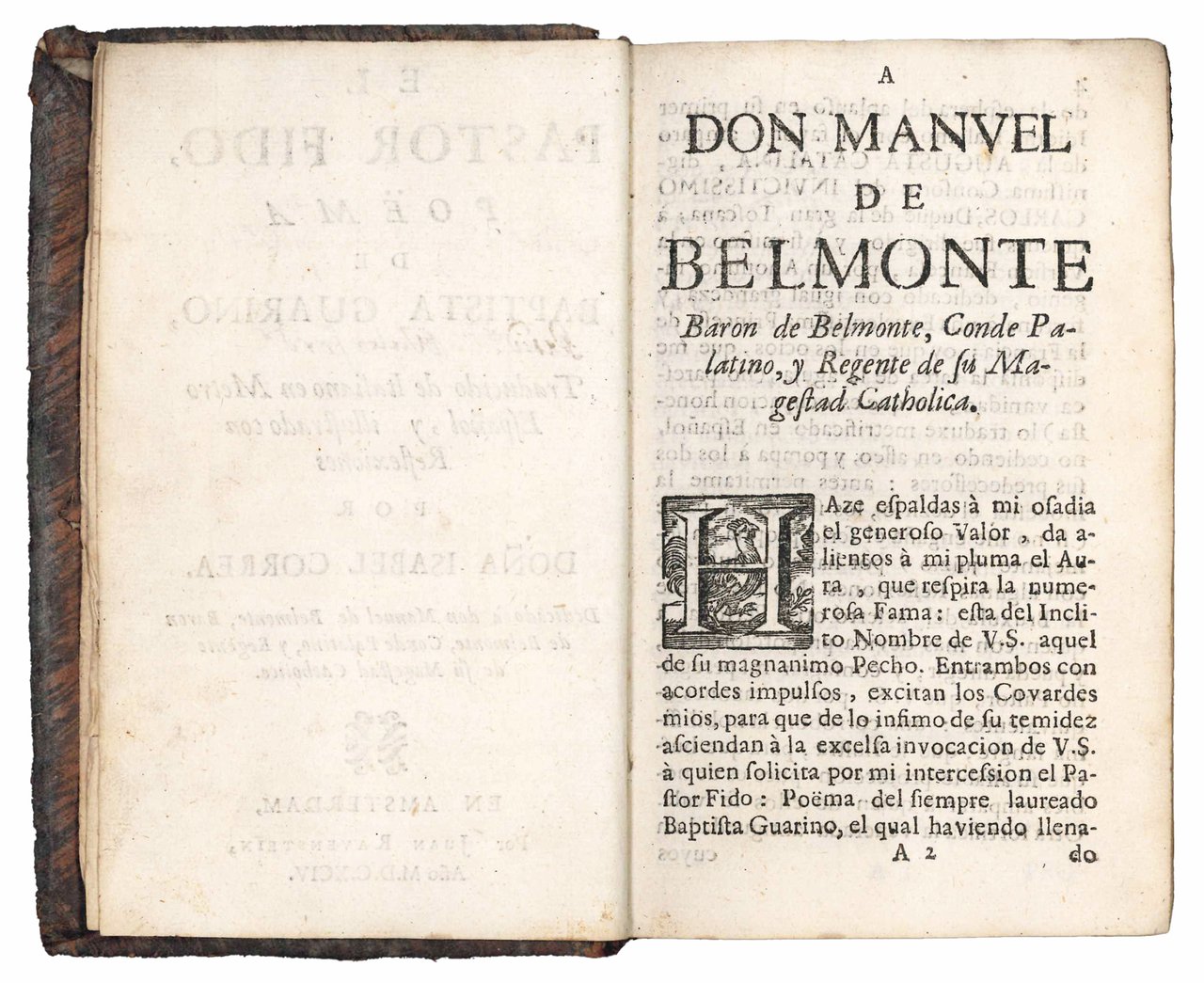
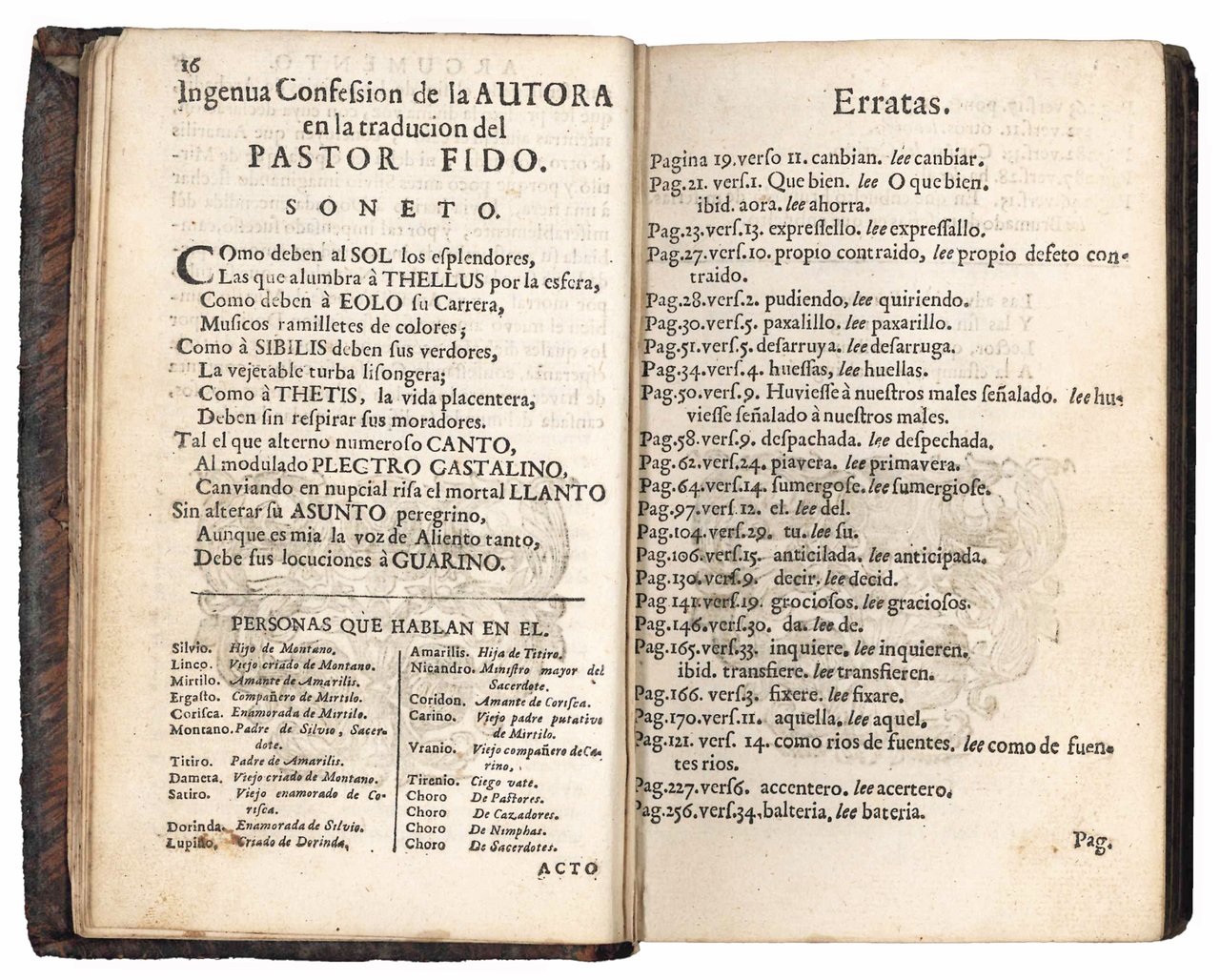
Isabel Correa was a Sephardic Jew who lived in Amsterdam. She dedicated her translation to Manuel de Belmonte, Baron of Belmonte. The edition includes a preface to the reader, a plot summary, a sonnet by the translator and a list of errata concluding with an apologetic short poem. The dedication to Manuel Belmonte, also known as Isac Núñez, who was a patron of the Academy of the Sitibundos in 1676 and of the Floridos in 1685 (both based in Amsterdam), indicates the strong ties Correa had with the city's Sephardic literary circles.
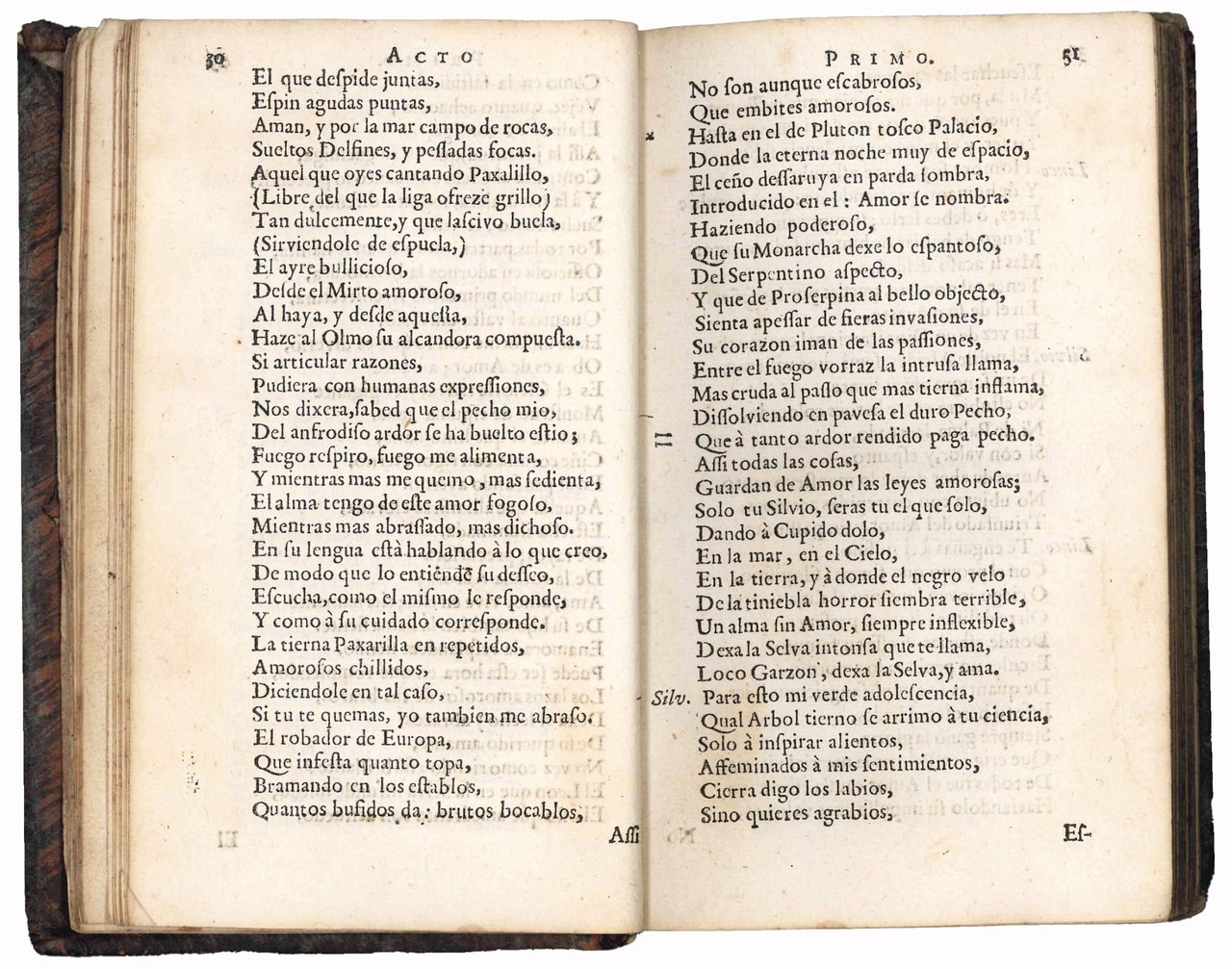
The author explains that Guarini's work was previsouly translated into Spanish by Cristóbal Suárez de Figueroa in 1609, but that her translation not only surpasses that of Suárez de Figueroa, but also the French translation of the abbot Torche, as she enriched the work with verses on the theme of love of her own creation. The added verses, as indicated in the dedication, are marked with an asterisk and two parallel lines. She inserted 450 verses, which she refers to as “reflexiones”, the majority of which (362) appear in the first act.
In her prologue to the reader Correa also asserts the importance of women's writing, situating herself within a long tradition of female authors from antiquity to her contemporary Doña María de Guadalupe Lancastre y Cárdenas, Duchess of Aveiro (1630-1715), who is said to have composed an epitome of China. While no such work is known to exist, the Duchess's remarkable personality and erudition undoubtedly supported evangelisation in the Far East and the Americas (L. de Moura Sobral, María Guadalupe de Lencastre (1630-1715). Paintings, Books, and Artistic Interests of an Iberian Duchess, in: “Quintana”, 8, 2009, pp. 61-73).
Isabel Correa, a Jewish writer born in Lisbon, Portugal, spent most of her life in the Netherlands, specifically in Brussels, Antwerp and, later, Amsterdam. She lived in the Sephardic community there as the wife of Don Nicolás de Oliver y Fullana, and was a friend of the poet De Barrios. Proficient in the most refined European languages and skilled in all the liberal arts, she was a member of the Poetic Academy founded in Amsterdam by Don Manuel de Belmonte. De Barrios asserts that she also composed a book of ‘Various Poems' (cf. M. Kayserling, Biblioteca Española-Portugueza-Judaica, Nieuwkoop, 1961, p. 39).
“Published in Amsterdam in 1694, Isabel Correa's translation is part of the literary output of the Sephardic community in the city. As I have noted in another study, this work by Correa, produced towards the end of the century, was a significant attempt to raise the standard of Sephardic literature in Amsterdam, bringing it in line with contemporary Spanish literature and European literary trends. The translation was published in Amsterdam (and Antwerp) alongside other works by various Sephardic authors. These works were written in Spanish for religious purposes and for family celebrations. They largely lacked any wider reach, being in