Catalogo delle opere date finora alla luce da Giovanni Battista Piranesi
Catalogo delle opere date finora alla luce da Giovanni Battista Piranesi | Stampe | PIRANESI Giovan Battista
Catalogo delle opere date finora alla luce da Giovanni Battista Piranesi
Catalogo delle opere date finora alla luce da Giovanni Battista Piranesi | Stampe | PIRANESI Giovan Battista
Metodi di Pagamento
- PayPal
- Carta di Credito
- Bonifico Bancario
- Pubblica amministrazione
- Carta del Docente
Dettagli
- Anno di pubblicazione
- 1761
- Formato
- 405 X 295
- Incisori
- PIRANESI Giovan Battista
Descrizione
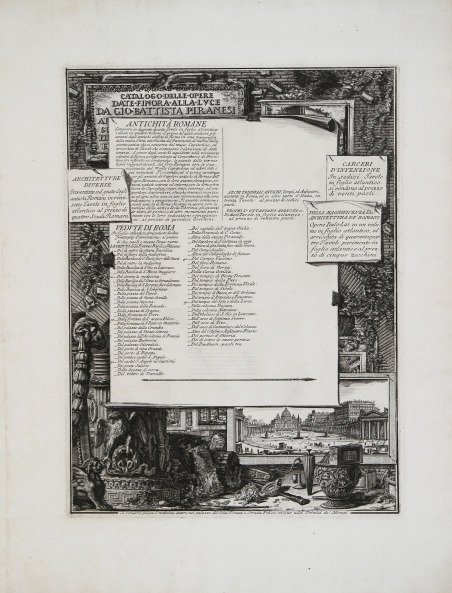
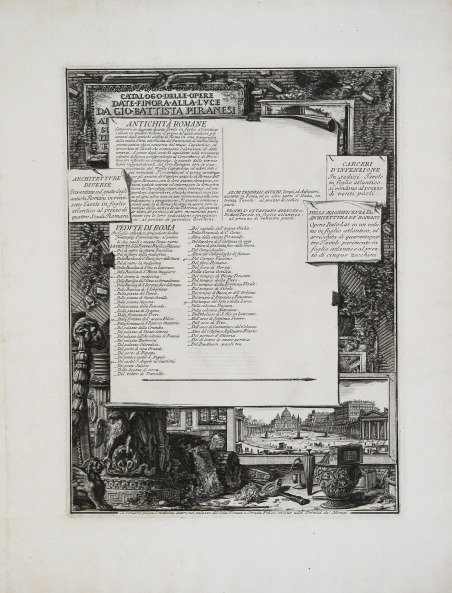
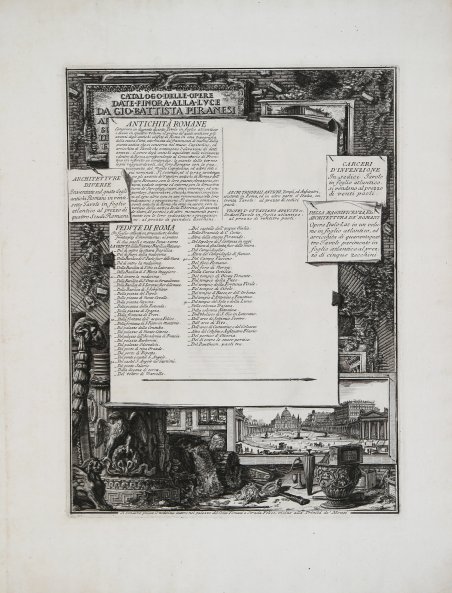
Acquaforte e bulino, circa 1761, firmata in lastra in alto a sinistra. Esemplare nel terzo stato di trentasei descritto dal recentissimo saggio di Andrew Robison (marzo 2022) databile al 1761. Rispetto al secondo stato del Catalogo, vi appaiono le seguenti modifiche: la presenza tra le Vedute di Roma della veduta del Pantheon (Del Pantheon, paoli tre); la serie delle Carceri è stata completata e comprende 16 tavole in vendita a 20 paoli; i Trofei di Ottaviano sono composti da 10 fogli in vendita per 23 paoli. Solo nove impressioni di questa tiratura del Catalogo (compreso questo esemplare) sono note a Robison. Magnifica prova, impressa ad inchiostro bruno su carta vergata coeva priva di filigrana, con ampli margini, in eccellente stato di conservazione. Abitudine comune di molti editori nel diciottesimo secolo era quella di redigere e dare alle stampe cataloghi o listini prezzi delle opere grafiche che offrivano in vendita, allo scopo pubblicitario di promulgarle, facilitarne le ordinazioni, ricevere sottoscrizioni. Il Piranesi non si limitò ad un semplice catalogo scritto, realizzandone uno illustrato, meglio conosciuto come catalogo inciso, che pubblicò per la prima volta nel 1761. L’occasione fu quella della nuova sede di Palazzo Tomati, dove andò a stabilirsi proprio nel 1761. Il primo catalogo conteneva l’elenco delle 59 vedute della serie Vedute di Roma prodotte sino ad allora, comprendendo anche la lista dei libri e delle altre stampe realizzate; tale catalogo venne di volta in volta aggiornato con l’aggiunta del nuovo materiale in vendita, producendo un notevole numero di stati differenti, di cui ben 36 sono ora noti. Il catalogo inciso costituisce un elemento fondamentale per la datazione delle opere del Piranesi, strumento insostituibile di studio e ricerca, la cui analisi degli stati permette di datare approssimativamente tutte le opere tarde dell’artista. Nella realizzazione di questa opera, che a ragione viene considerata come l’ennesimo capolavoro, il Piranesi studia soprattutto l’aspetto decorativo che la stessa doveva assumere. La tecnica usata è la stessa di quella che ritroviamo in alcuni suoi libri; su uno sfondo architettonico egli dà vita ad un effetto trompe oeil, disegnando degli spilli che fermano alcuni cartigli contenenti titoli delle sue opere. Il primo piano è costituito da rovine e frammenti scultorei, mentre lo spazio bianco è volutamente inserito per aggiungere in seguito altre voci. Gli esemplari del catalogo sono notevolmente più rari delle altre incisioni, probabilmente sia per la scarsa tiratura, sia perché considerati effimero materiale pubblicitario, e quindi non conservati. Alcune prove recano incise dediche ad amici e protettori dell’artista, altre annotazioni a penna di voci pubblicate da poco, aggiunte a mano autografa. ' Esemplare di straordinaria bellezza. ' Bibliografia Andrew Robison, Piranesi’s Catalogo delle Opere, in The Burlington Magazine, n. 164 (2022), pp. 230-245, III/XXXVI; H. Focillon, ' Giovan Battista Piranesi 1720-1778 ' (1918): n. 1; A. M. Hind, ' Giovanni Battista Piranesi. A critical study with a list of his published works and detailed catalogues of the Prisons and Views of Rome ' (1922): p. 6. Etching with engraving, circa 1761, signed on plate at upper left. Example in the third state of thirty-six described in Andrew Robison's very recent essay (March 2022) dated 1761. Compared to the second state of the Catalogo, the following changes appear: the presence among the Vedute di Roma of the view of the Pantheon (Del Pantheon, paoli tre); the series of the Carceri has been completed and includes 16 plates on sale for 20 paoli; the Trofei di Ottaviano consist of 10 sheets on sale for 23 paoli. Only nine impressions from this issue of the Catalogo (including this example) are known to Robison. Magnificent proof, printed with dark ink on contemporary laid paper without watermark, wide margins, in excellent conditions. A common custom among many editors in the eighteenth century was to compile and print catalogues or price lists of the graphic works they sold with the promotional intent of advertising them, uphold orders and obtain subscriptions. Piranesi did not limit himself to a common written catalogue but even published an illustrated one, better known as the engraved catalogue, which he issued for the first time in 1761. This happened in the circumstance of his moving to new premises at the Tomati Palace. The first catalogue included the list of the fifty-nine views belonging to the collection Vedute di Roma, which he had created up to then, together with an inventory of other published books that featured his prints. This catalogue was constantly updated by adding new items that were put on sale, giving rise to a number of different states, of which 36 are currently known. The engraved catalogue is of primary importance for the dating of Piranesi's works, an essential means of study and research as the analysis of its states allows the approximate chronological classification of all of the artist's later works. When creating this work, which is correctly considered as another of his masterpieces, Piranesi focused his studies on its decorative aspects. He used the same technique that can be found in some of his books, creating a trompe-l'oeil effect on an architectural background, depicting pins which seemed to fasten a number of cartouches with titles pertaining to his works. The foreground consisted of ruins and sculptural fragments while an additional white space was included on purpose to allow for the addition of new items in the future. The items included in this catalogue are considerably rarer than Piranesi's other engraving, probably because they were printed in a smaller number, as well as for the reason that they were considered as short-lived promotional material, and therefore were not preserved. Some of these bear dedications to the artist's friends and benefactors, while, on other ones, pen-written notes enumerating the latest items, often by the artist's own hand, can be seen. Exceptionally and extremely rare example of the Piranesi’s Catalogo delle Opere. Bibliografia Andrew Robison, Piranesi’s Catalogo delle Opere, in The Burlington Magazine, n. 164 (2022), pp. 230-245, III/XXXVI; H. Focillon, ' Giovan Battista Piranesi 1720-1778 ' (1918): n. 1; A. M. Hind, ' Giovanni Battista Piranesi. A critical study with a list of his published works and detailed catalogues of the Prisons and Views of Rome ' (1922): p. 6. Cfr.