Il fumatore alla finestra
Il fumatore alla finestra | Stampe | OSTADE Adriaen van
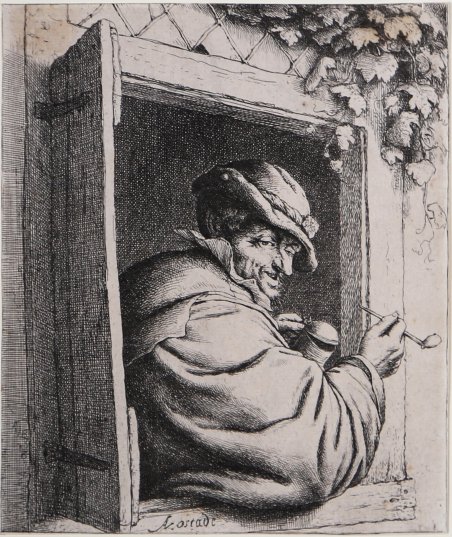
Il fumatore alla finestra
Il fumatore alla finestra | Stampe | OSTADE Adriaen van
Metodi di Pagamento
- PayPal
- Carta di Credito
- Bonifico Bancario
- Pubblica amministrazione
- Carta del Docente
Dettagli
- Anno di pubblicazione
- 1667
- Formato
- 151 X 180
- Incisori
- OSTADE Adriaen van
Descrizione
Acquaforte, 1667 circa, firmata in basso a sinistra 'Av. ostade'. Esemplare nel terzo stato, di quattro, con i ritocchi a puntasecca sulla manica destra (secondo di tre per Dutuit). Godefroy indica dubitativamente come data il 1667. Magnifica prova, impressa su carta vergata coeva, con filigrana non identificata (una lettera con altro carattere), rifilata ai margini, in ottimo stato di conservazione. Il dipinto che ha ispirato questa incisione era nella collezione di William Baillie. Adriaen van Ostade, o Adriaen Hendricx (10 dicembre 1610 – 2 maggio 1685), è stato un pittore e incisore olandese. Era il figlio più grande di Jan Hendricx Ostade e fratello maggiore di Isaak van Ostade. Secondo Jacobus Houbraken, dal 1627 van Ostade fu allievo di Frans Hals, al tempo maestro anche di Adriaen Brouwer e Jan Miense Molenaer. Pittore di scene di genere, prediligeva le figure di contadini, interni rustici e avventori di taverne. ' Apprezzato anche per i disegni acquerellati e le incisioni, eseguì dipinti di genere spesso di piccolo formato con effetti di luce quasi rembrandtiani, in cui appaiono figure argute e lievemente caricaturali. Ostade fu contemporaneo dei pittori fiamminghi David Teniers il Giovane e Adriaen Brouwer. Come loro, si dedicò alla delineazione della vita ordinaria, raffigurando scene di taverna, fiere di paese e quartieri di campagna. Tra Teniers e Ostade il contrasto sta nella diversa condizione delle classi agricole del Brabante e dell'Olanda e nell'atmosfera e nelle abitazioni proprie di ciascuna regione. Il Brabante ha più sole e più comodità; Teniers, di conseguenza, è argentea e scintillante, e le persone che dipinge sono esemplari di cultura. L'Olanda, nelle vicinanze di Haarlem, sembra aver sofferto molto a causa della guerra; l'aria è umida e nebulosa, e le persone ritratte da Ostade sono basse e sfortunate, segnate dall'impronta delle avversità nei tratti e nell'abbigliamento. La grandezza di Ostade sta nel fatto che spesso ha colto il lato poetico della classe contadina nonostante la sua rozzezza. Ha dato la luce magica di un raggio di sole ai loro sport umili, ai loro litigi, persino ai loro più tranquilli stati d'animo di divertimento; ha rivestito i ruderi dei cottage con una vegetazione colorata. Bibliografia Hollstein 10.III (IV); Dutuit 10 II/III; Bartsch I.355.10; Godefroy, p. 62 n. 10. Etching, 1667 circa, signed with the artist's name 'Av. ostade' at lower left. Example of the third state of four, with fine cross-hatchings on the sleeve at the level of the tankard. Godefroy doubtfully dates the plate at 1667. The original painting that inspired this print was formerly in the collection of William Baillie. Adriaen van Ostade, or Adriaen Hendricx (December 10, 1610 - May 2, 1685), was a Dutch painter and engraver. He was the oldest son of Jan Hendricx Ostade and older brother of Isaak van Ostade. According to Jacobus Houbraken, from 1627 van Ostade was a pupil of Frans Hals, at the time also a master of Adriaen Brouwer and Jan Miense Molenaer. A painter of genre scenes, he favored figures of peasants, rustic interiors and tavern patrons. ' Also appreciated for his watercolor drawings and etchings, he executed often small-scale genre paintings with almost Rembrandtian lighting effects, in which witty and slightly caricatured figures appear. Ostade was a contemporary of Flemish painters David Teniers the Younger and Adriaen Brouwer. Like them, he devoted himself to the delineation of ordinary life, depicting tavern scenes, village fairs, and country quarters. Between Teniers and Ostade the contrast lies in the different condition of the agricultural classes in Brabant and Holland and in the atmosphere and dwellings peculiar to each region. Brabant has more sunshine and comfort; Teniers, consequently, is silvery and glittering, and the people it paints are exemplars of culture. Holland, in the vicinity of Haarlem, seems to have suffered greatly from the war; the air is humid and hazy, and the people portrayed by Ostade are short and unfortunate, marked by the imprint of adversity in their features and clothing. Ostade's greatness lies in the fact that he often captured the poetic side of the peasant class despite its roughness. He gave the magical light of a ray of sunshine to their humble sports, their quarrels, even their quieter moods of amusement; he clothed cottage ruins with colorful vegetation. A fine impression, printed on contemporary laid paper, with watermark, trimmed at margins, in excellent condition. Bibliografia Hollstein 10.III (IV); Dutuit 10 II/III; Bartsch I.355.10; Godefroy, p. 62 n. 10. Cfr.