Scene della Vita di Cristo
Scene della Vita di Cristo | Stampe | Scuola Tedesca Anonimo -
Scene della Vita di Cristo
Scene della Vita di Cristo | Stampe | Scuola Tedesca Anonimo -
Metodi di Pagamento
- PayPal
- Carta di Credito
- Bonifico Bancario
- Pubblica amministrazione
- Carta del Docente
Dettagli
- Anno di pubblicazione
- 1490
- Formato
- 214 X 285
- Incisori
- Scuola Tedesca Anonimo -
- Descrizione
- Non descritta
Descrizione
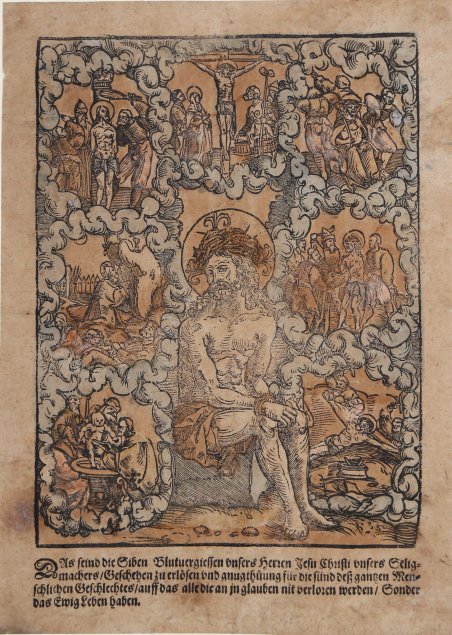
Xilografia, finemente acquarellata, 1490 circa. Bellissima prova, impressa su carta vergata priva di filigrana, con margini, pieghe di carta e piccoli restauri, perfettamente eseguiti, visibili al verso, qualche ossidazione, per il resto in buono stato di conservazione.La composizione presenta al centro la figura di Cristo seduto su una pietra, con i polsi legati e il capo coronato di spine e circondato dall’aureola. Intorno, 7 episodi della vita di Cristo, disposti su 3 lati, così che, rispettando la forte simbologia cristiana legata al numero 3, le illustrazioni sono 3 per ogni lato. Gli episodi, ad eccezione di uno raffigurante la Circoncisione di Gesù, sono tutti ispirati al ciclo della Passione di Cristo: Gesù nel giardino degli Ulivi; Gesù alla colonna; Gesù deriso dai soldati; Gesù spogliato delle vesti; Gesù inchiodato alla croce; e infine Gesù morente. La disposizione delle scene non segue un ordine cronologico, secondo un uso riscontrabile anche nell’iconografia cristiana più antica. L’opera non è censita dalle bibliografie consultate. Woodcut, 1490 circa. A beautiful impression, printed on laid paper without watermark, with margins, paper folds and small repairs perfectly executed, otherwise in excellent condition. In the centre of the composition is the figure of Christ seated on a stone, with his wrists tied and his head crowned with thorns and surrounded by a halo. Around him are seven episodes from the life of Christ, arranged on three sides, so that, in keeping with the strong Christian symbolism associated with the number 3, there are three illustrations on each side. The episodes, with the exception of one depicting the Circumcision of Jesus, are all inspired by the cycle of the Passion of Christ: Jesus in the Garden of Olives; Jesus at the Pillar; Jesus Mocked by the Soldiers; Jesus Stripped of His Clothes; Jesus Nailed to the Cross; and finally Jesus Dying. The arrangement of the scenes does not follow a chronological order, in accordance with a custom also found in older Christian iconography. The work is not mentioned in the bibliographies consulted. Cfr. Non descritta