Uomo mascherato con un elmo riccamente decorato
Uomo mascherato con un elmo riccamente decorato | Stampe | FONTAINEBLEAU Scuola di
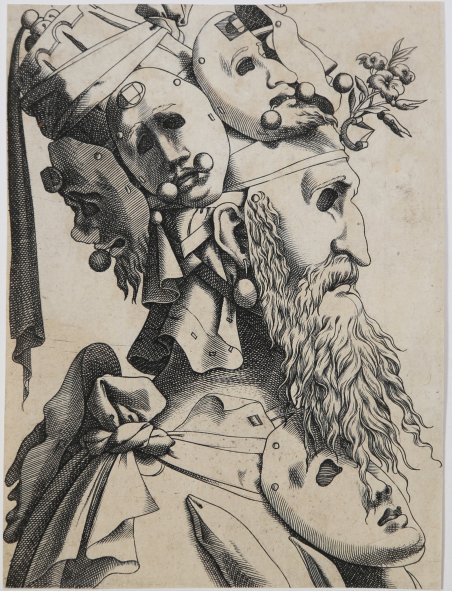
Uomo mascherato con un elmo riccamente decorato
Uomo mascherato con un elmo riccamente decorato | Stampe | FONTAINEBLEAU Scuola di
Metodi di Pagamento
- PayPal
- Carta di Credito
- Bonifico Bancario
- Pubblica amministrazione
- Carta del Docente
Dettagli
- Anno di pubblicazione
- 1549
- Formato
- 111 X 148
- Incisori
- FONTAINEBLEAU Scuola di
Descrizione
Bulino, 1545-1549 circa, privo di data e iscrizioni.Ottimo esemplare, inchiostrazione forte e uniforme, rifilato all'interno del segno del rame, in ottimo stato di conservazione.Questa stampa appartiene a una serie di dodici incisioni; sei delle quali mostrano due busti maschili ciascuno, e gli altri sei, busti femminili. È comune trovare questi busti stampati due per foglio e il set descritto serie di ventiquattro stampe. I disegni originali sono conservati a Parigi, nell'Ecole nationale superieure des Beaux-Arts (Mas. 1296, Rec. 19). Le stampe erano generalmente attribuite a René Boyvin; mentre Robert-Dumesnil pensava addirittura che i soggetti fossero di Rosso Fiorentino.Ma Yves Metman, sulla base di un documento del XVI secolo, propose di assegnare le stampe a Pierre Milan e di stabilire quale terminus ante quem il 1559 ("Un graveur inconnu de l'Ecole de Fontainebleau: Pierre Milan", in Bibliothèque d'Humanisme et Renaissance , Notes et documents, I, 1941, pp. 202-214.).Emmanuelle Brugerolles, invece, attribuisce i disegni a Léonard Thiry (Le dessin en France au XVIe siècle: dessins et miniatures des collections de l'Ecole des Beaux-Arts, 1994, pag 108); ipotizzando che Thiry avrebbe potuto usare un modello di Rosso poi adattato per l'incisione.Questo set ha ottenuto un notevole successo ed è stato riprodotto e copiato molte volte. EA Carroll ha suggerito che le maschere non fossero modelli di costumi come comunemente sostenuto, ma che potessero essere progetti per "immagini di maschere con pietre colorate, probabilmente per decorare le pareti o il pavimento di una stanza [.] a Fontainebleau" (Rosso Fiorentino: disegni, stampe e arti decorative, Washington, National Gallery of Art, 1987, pagina 215, nota 3). Engraving, 1545-1549 circa, unlettered.Excellent example, strong impression, trimmed inside the platemark, in very good condition.This print belongs to a series of twelve engravings; six of which show two male busts each, and the other six, female busts. It is common to find those prints cut in two and the set described as a series of twenty four prints. The original drawings are kept in Paris, in the Ecole nationale superieure des Beaux-Arts (Mas. 1296, Rec. 19). The drawings and the prints used to be unanimously attributed to René Boyvin and Robert-Dumesnil even thought the prints were after Rosso Fiorentino. But Yves Metman, using a 16th century document, proposed to give the prints to Pierre Milan and to set a terminus ante quem in 1559 ('Un graveur inconnu de l'Ecole de Fontainebleau: Pierre Milan', in Bibliothèque d'Humanisme et Renaissance, Notes et documents, I, 1941, pp. 202-214.). Emmanuelle Brugerolles attributed the drawings to Léonard Thiry (Le dessin en France au XVIe siècle: dessins et miniatures des collections de l'Ecole des Beaux-Arts, 1994, p. 108). She suggests that Thiry could have used a model given by Rosso, and adapted it for the engraving. This set is remarkable for his success; it has been reproduced and copied many times. E. A. Carroll suggested that those masks were maybe not models for costumes as most people assumed but that they could be projects for 'pictures of masks out of colored stones, probably to decorate the walls or pavement of a room [.] at Fontainebleau' (Rosso Fiorentino. Drawings, Prints, and Decorative Arts, Washington, National Gallery of Art, 1987, p. 215, footnote no. 3). Cfr.