Venere e Amore
Venere e Amore | Stampe | FIALETTI Odoardo
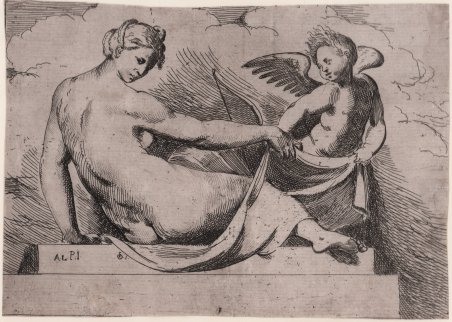
Venere e Amore
Venere e Amore | Stampe | FIALETTI Odoardo
Metodi di Pagamento
- PayPal
- Carta di Credito
- Bonifico Bancario
- Pubblica amministrazione
- Carta del Docente
Dettagli
- Anno di pubblicazione
- 1610
- Formato
- 200 X 141
- Incisori
- FIALETTI Odoardo
Descrizione
Acquaforte, 1610 circa, firmata in lastra in basso a sinistra con il monogramma “OF” e, a sinistra “ALPI”.Bell’esemplare, impresso su carta vergata coeva con filigrana non identificata, rifilato irregolarmente alla linea marginale, in ottimo stato di conservazione.La tavola appartiene alla serie “Quattro Divinità” (Bartsch XVII.270.20 a XVII.270.23), che mostra le figure dipinte dal Pordenone sulle finestre del piano nobile di Palazzo Tinghi, a Udine, intorno al 1532 – 1534.Cohen, nel commentare l’accuratezza delle incisioni di Fialetti, notò anche che sono aggiunti muri e nuvole che non ci sono nel modello originale.Bury afferma che probabilmente l’interesse alla realizzazione di queste traduzioni a stampa era legato non solo alla bellezza artistica ma anche alla vulnerabilità delle opere stesse, esposte all’esterno del palazzo. Odoardo Fialetti nacque a Bologna il 18 luglio 1573, figlio postumo del "Dottore Odoardo"; affidato al fratello maggiore, questi lo mise "a dozzena" presso la scuola del pittore G. B. Cremonini. Successivamente, all'età di nove anni, si trasferì col fratello prima a Padova e infine a Venezia, dove frequentò la bottega del Tintoretto. Trascorse probabilmente anche un periodo a Roma per perfezionare gli studi artistici. Più che per la sua attività di pittore, Fialetti è conosciuto per la vasta opera grafica, oggi costituita da circa 240 acqueforti nelle quali evidenti sono gli elementi di gusto carraccesco, in particolare di Agostino, soprattutto nella ricerca di un equilibrio tra il linguaggio grafico e le suggestioni pittoriche e coloristiche. Il ' corpus ' incisorio è molto vario nei soggetti e comprende incisioni sia di traduzione sia di propria invenzione. Tra le prime vanno menzionate due stampe, ' d'après ' Tintoretto, di soggetto religioso, ' Le nozze di Cana ' (dal dipinto nella sagrestia della chiesa della Salute) e un ' S. ' Sebastiano; una serie di undici pezzi di fregi con trofei su invenzione di Polidoro da Caravaggio; quattro soggetti mitologici dagli affreschi del Pordenone per palazzo Tinghi di Udine; due serie di grottesche, con motivi vegetali e animali uniti a figure mitologiche, derivate da invenzioni di Polifilo Giancarli e raccolte sotto il titolo di ' Disegni varii di Polifilo Zancarli A benefitio di qualsivoglia persona che faccia professione del disegno: queste tavole, come altre di tale genere, costituirono un vasto repertorio di modelli e di spunti decorativi ripresi testualmente dalle coeve botteghe di intagliatori e di ornatisti e largamente utilizzati in Francia fino al XIX secolo dalle manifatture ceramiche di Nevers. Etching, 1610 circa, signed lower left with monogram: 'OF' and inscribed at left: 'ALPI'.Good example, printed on contemporary laid paper, with watemark, trimmed close to platemark, very good condition.From from the series of Four Divinities (Bartsch XVII.270.20 to XVII.270.23),showing the figures painted by Pordenone, c.1532-4 above the windows of the piano nobile of the Palazzo Tinghi, Udine. Cohen in 1996, II, p. 681 commented on the accuracy of Fialetti's etchings but noted they are in reverse and exaggerate the horizontality and that they introduce walls and clouds that were not present in the original. Michael Bury in 2001 found it probable that an interest in making these prints was stimulated not only by an appreciation of the inventive originals, but also by their vulnerability because of their location on the exterior of a building. This is also indicated by the decaying walls behind three of the four figures. The date of the series cannot be established. Odoardo Fialetti was born in Bologna on July 18, 1573, posthumously son of the Doctor Odoardo Fialetti; entrusted to his older brother, this one put him at the school of the painter G. B. Cremonini. Subsequently, at the age of nine years, he moved with his brother first to Padua and then to Venice, where he attended the workshop of Tintoretto. He probably also spent a period in Rome to perfect his artistic studies. More than for his activity of painter, Fialetti is known for the vast graphic work, today constituted by about 240 etchings in which evident are the elements of Carracci's taste, in particular of Agostino, above all in the search of a balance between the graphic language and the pictorial and coloristic suggestions. The corpus of engravings is very varied in the subjects and includes engravings both of translation and of his own invention. Among the first, two prints should be mentioned, d'après Tintoretto, with a religious subject, Le nozze di Cana (from the painting in the sacristy of the church of La Salute) and a S. Sebastiano; a series of eleven pieces of friezes with trophies on an invention of Polidoro da Caravaggio; four mythological subjects from the frescoes of Pordenone for palazzo Tinghi in Udine; two series of grotesques, with vegetable and animal motifs united with mythological figures, derived from inventions of Polifilo Giancarli and collected under the title of Disegni varii di Polifilo Zancarli A benefitio di qualsivoglia persona che faccia professione del disegno: these plates, like others of this kind, constituted a vast repertory of models and decorative ideas taken from the contemporary workshops of carvers and ornamentists and widely used in France until the nineteenth century by the ceramic factories of Nevers. Cfr. Bartsch XVII.271.21; Bury 2001, no. 133.