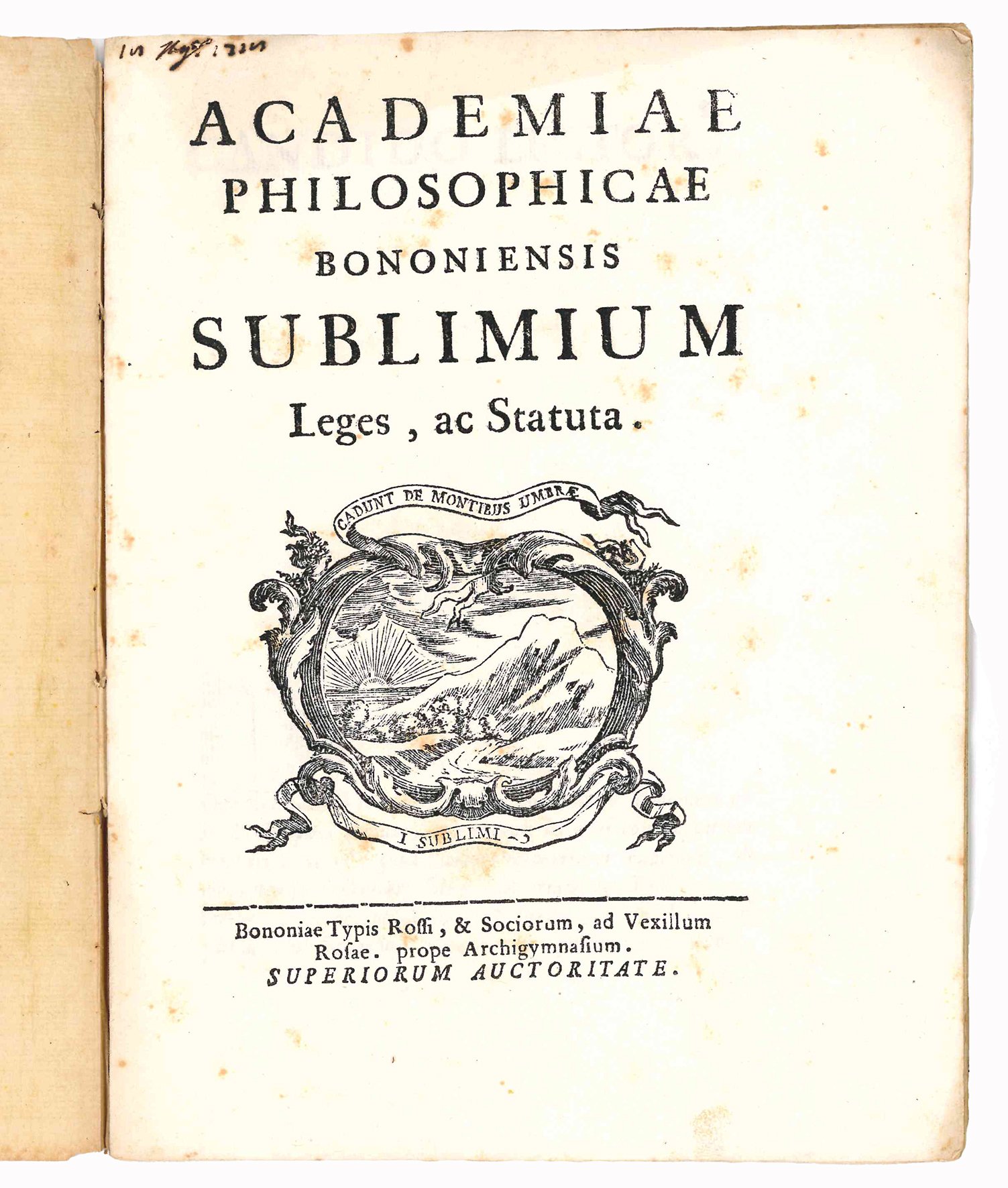
Academiae philosophicae Bononiensis Sublimium leges, ac statuta. Bononiae, typis Rossi, & sociorum, ad Vexillum Rosae. prope Archigymnasium (Datum Bononiae, hac die decima octava mensis Augusti 1718)

Academiae philosophicae Bononiensis Sublimium leges, ac statuta. Bononiae, typis Rossi, & sociorum, ad Vexillum Rosae. prope Archigymnasium (Datum Bononiae, hac die decima octava mensis Augusti 1718)
Formas de Pago
- PayPal
- Tarjeta de crédito
- Transferencia Bancaria
- Pubblica amministrazione
- Carta del Docente
Detalles
- Año de publicación
- 1718
- Lugar de impresión
- Bologna
- Autor
- ACCADEMIA DEI SUBLIMI-BOLOGNA
- Editores
- Rossi
- Materia
- settecento
- Conservación
- Bueno
- Idiomas
- Italiano
- Encuadernación
- Tapa dura
- Condiciones
- Usado
Descripción
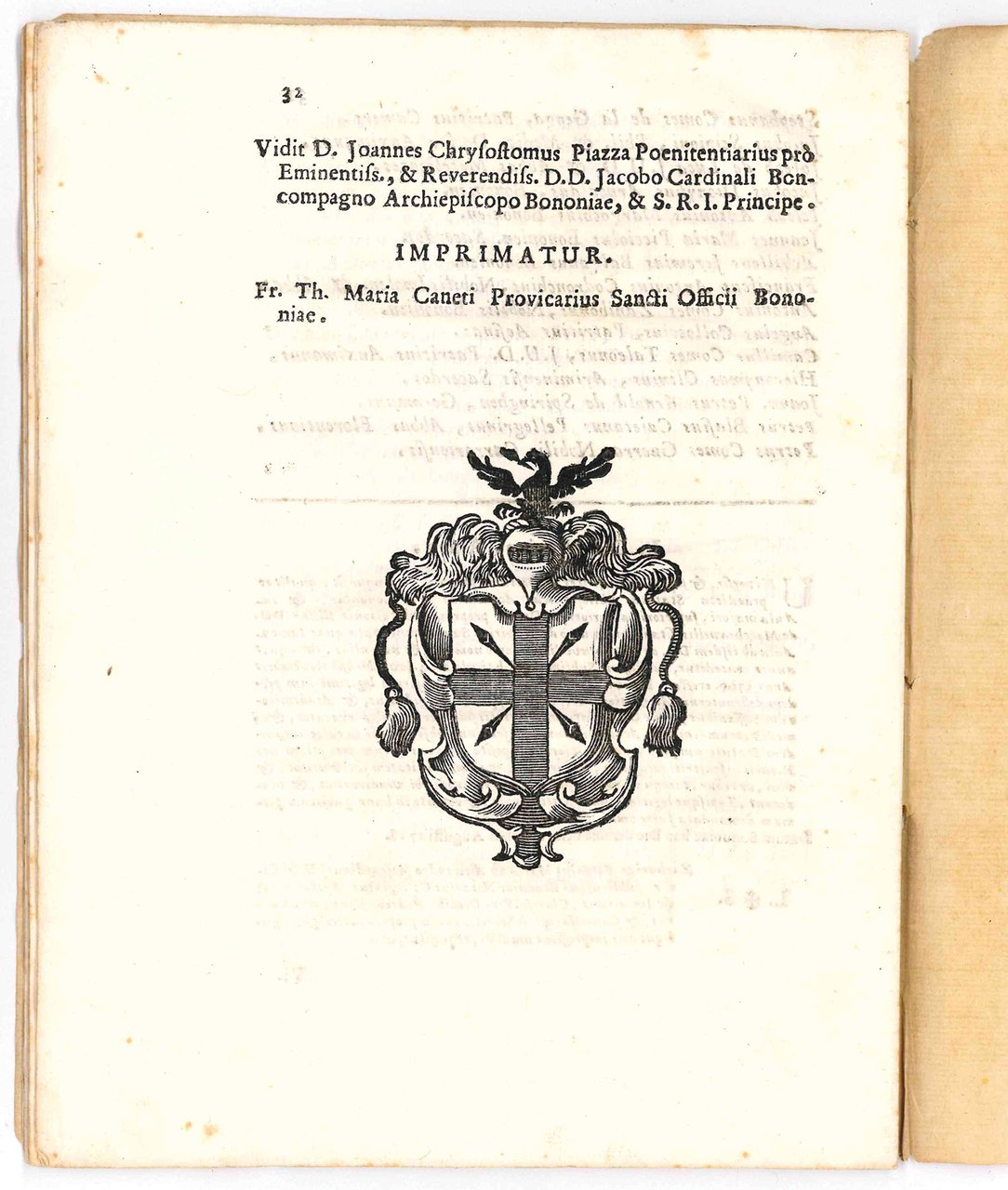
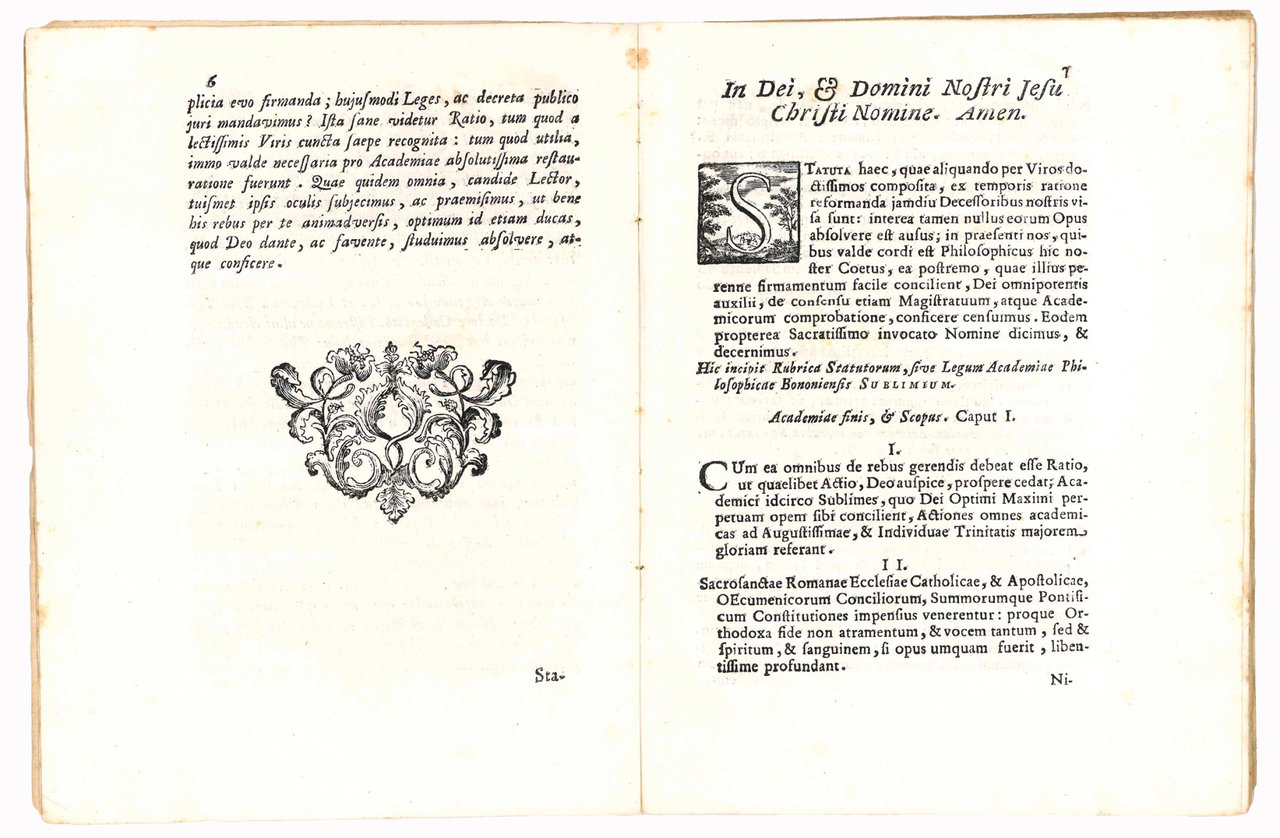
4to (231x177 mm). 32 p. Collation: A-D4. Accademia dei Sublimi's woodcut device on the title. Woodcut coat-of-arms at the end. Contemporary yellow wrappers. A good, wide-margined copy.
Extremely rare first edition of the statutes of the Accademia dei Sublimi, a philosophical academy founded in Bologna in the house of Alessandro Machiavelli on 17 March 1707. Since 1718, its censor was Bartolomeo Aldovrandi and its secretary Giuseppe Ferdinando Gugliemini, both professors of philophy. Besides the present, the only other publication appeared under the name of the academy is Applausi poetici degli Accademici Sublimi, which was published in Bologna in 1722 to celebrate the prince of the academy Giovanni Gregorio Gregori's graduation in medicine and philosophy. The patron of the academy was San Filippo Neri, to whom in 1711 Carlo Antonio Machiavelli, Alessandro's brother, dedicated an oration entitled L'innocenza custodita nel seno del mondo (cf. M. Maylender, Storia delle Accademie d'Italia, Bologna, 1930, V, pp. 277-278).
Alessandro Machiavelli was born in Bologna in 1693. He had two brothers, Carlo Antonio and Filippo Collatio, and two sisters, Maria Elisabetta and Maria Laura, all of whom were involved in some way in his literary activities. Machiavelli graduated in civil and canon law from the University of Bologna in 1723. In the same year, he obtained a lectureship in civil law (which he held until 1758, when he moved to canon law) and, admitted to the College of Judges and Lawyers, began his legal career, which gave him access to important positions, from tribune of the plebs to consultant to the Holy Office. Also in 1723, he became a member of the Academy attached to the Bologna Institute of Sciences, where he read two dissertations on unusual natural specimens.
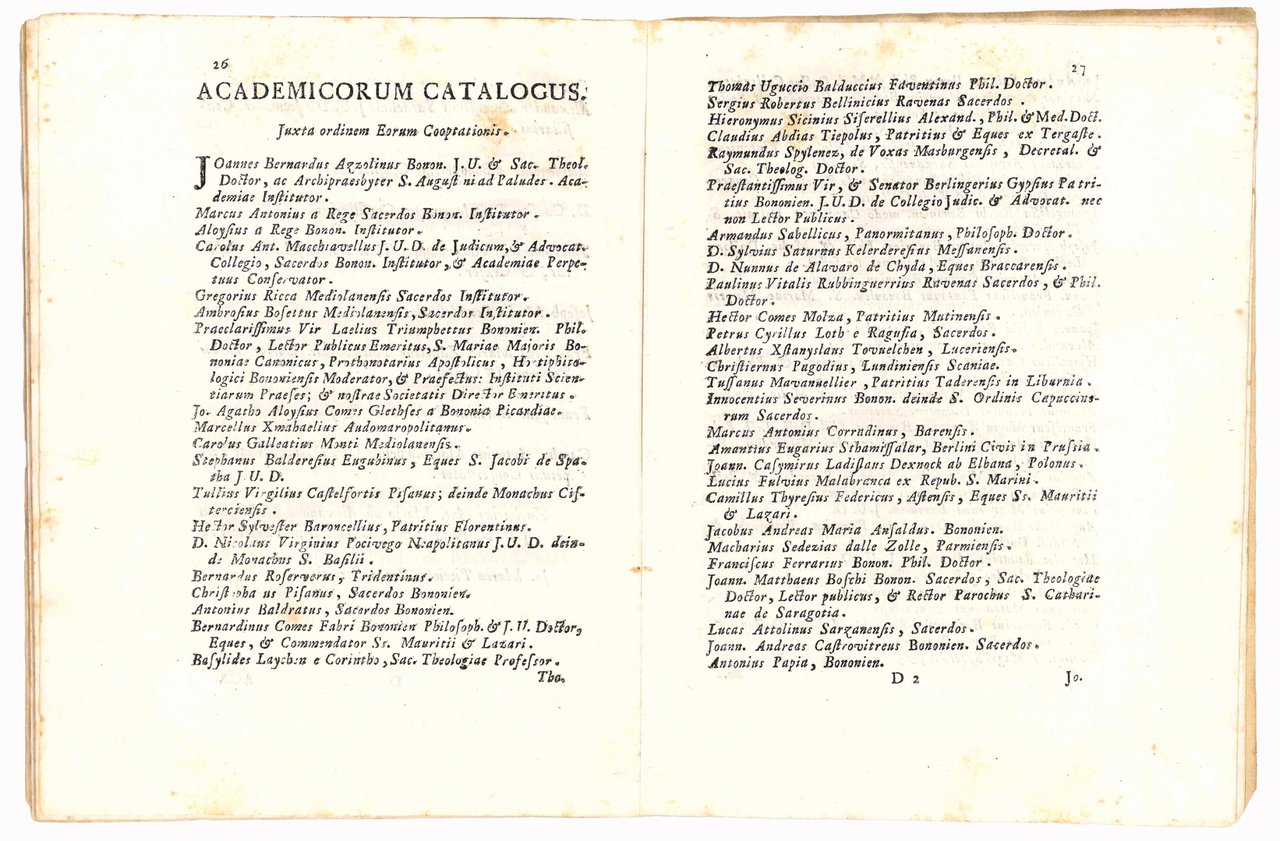
One of his first initiatives was the foundation, in his early adolescence (1707), of the philosophical Accademia dei Sublimi, which used to meet in his family home. It was not until 1718 though that its statutes (Academiae philosophicae Bononiensis sublimium leges ac statuta) were printed, together with a list of members (including figures who were already important at the time, or who went on to become so). The Platonic inspiration of the academy and its symbolism is made explicit in De ideis. Tractatus philosophicus (Bologna, 1716), a small volume dedicated to the Bolognese Senate and illustrated with engravings by Elisabetta Macchiavelli. It is Machiavelli's first work and collects the dissertations he recited in front of the Sublimi, whose name derives directly from Plato, who in the ‘Timaeus' had defined philosophy as “sublime, atque maximum dei munus”. In the following years, Machiavelli shifted his interests from philosophy to local history, writing several works that attracted criticism for their extravagance and lack of reliability, and isolated him from Bologna's cultural institutions. Machiavelli died in Bologna in 1766 and was buried in the parish church of Ss. Vitale e Agricola, where his brother Carlo Antonio had also been laid to rest in 1761 (cf. M. Cavazza, Macchiavelli, Alessandro, in: “Dizionario Biografico degli Italiani”, vol. 67, Rome, 2006).
Italian Union Catalogue, IT\ICCU\UBOE\029013.
