Libros antiguos y modernos
FILELFO, Francesco (1398-1481) & POLIZIANO, Angelo (1454-1
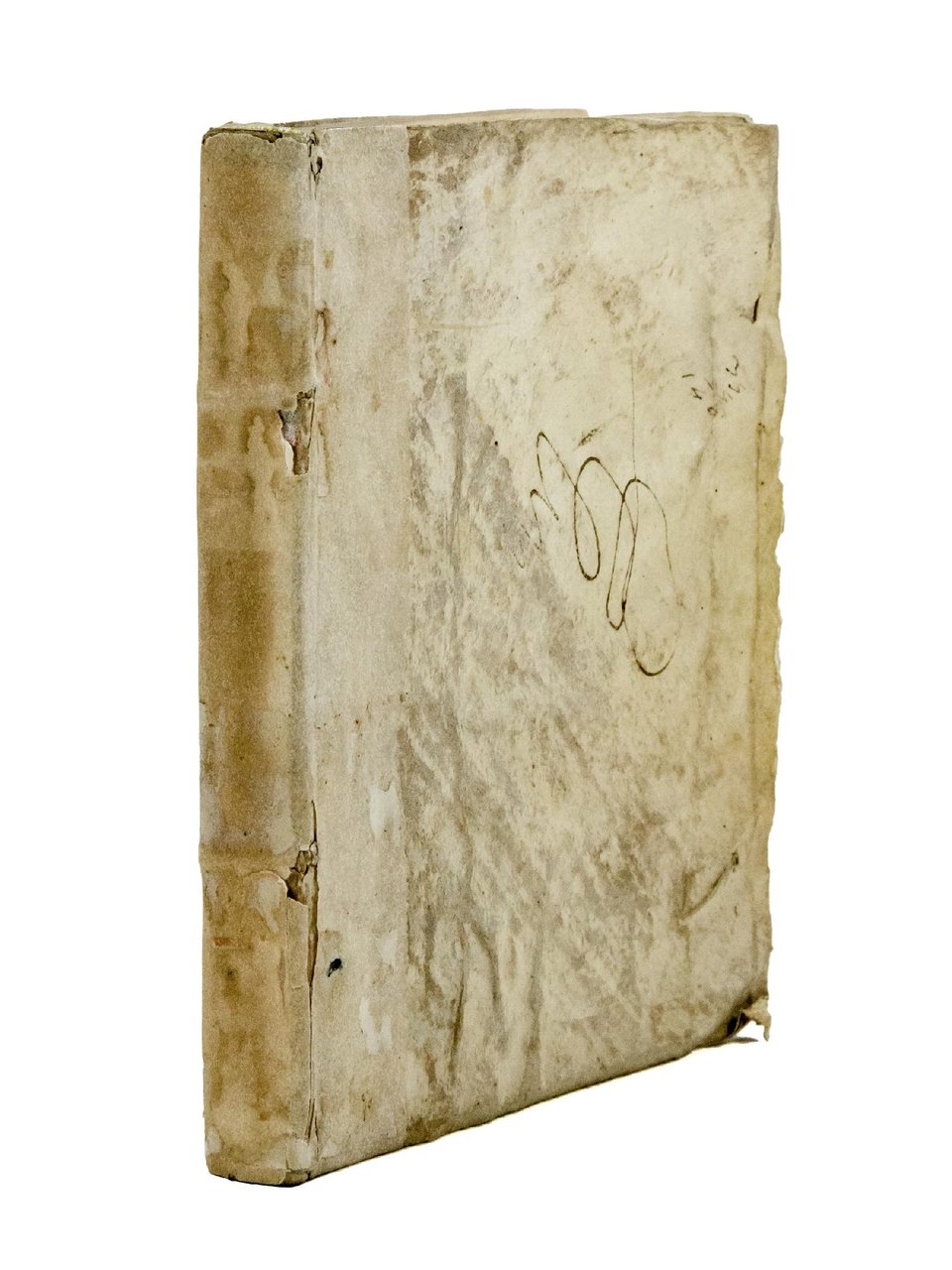
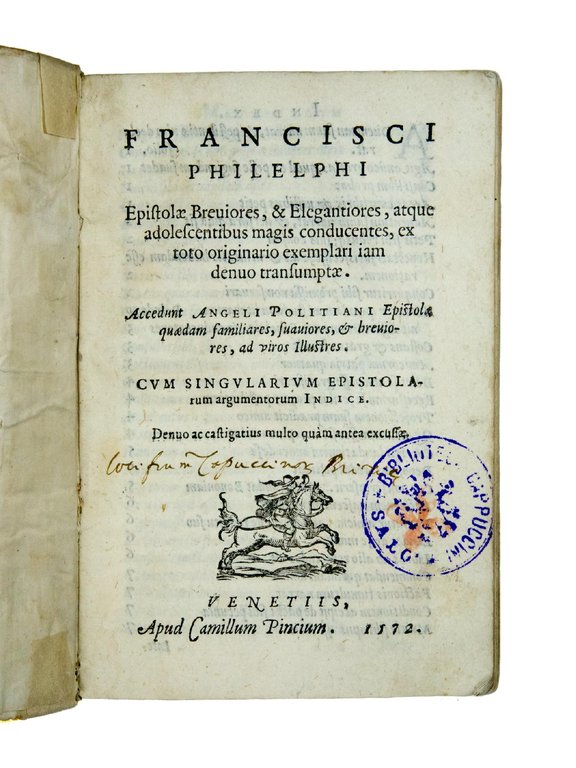
Epistolae breviores, & elegantiores, atque adolescentibus magis conducentes, ex toto originario exemplari iam denuo transumptae. Accedunt Angeli Politiani epistolae quaedam familiares, suaviores, et breviores, ad viros illustres
Camillo Pinzi, 1572
450,00 €
Govi Libreria Antiquaria
(Modena, Italia)
Los gastos de envío correctos se calculan una vez añadida la dirección de envío durante la creación del pedido. El vendedor puede elegir uno o varios métodos de envío: standard, express, economy o in store pick-up.
Condiciones de envío de la Librería:
Para los productos con un precio superior a 300 euros, es posible solicitar un plan de pago a plazos al Maremagnum. El pago puede efectuarse con Carta del Docente, Carta della cultura giovani e del merito, Administración Pública.
Los plazos de entrega se estiman en función de los plazos de envío de la librería y del transportista. En caso de retención aduanera, pueden producirse retrasos en la entrega. Los posibles gastos de aduana corren a cargo del destinatario.
Pulsa para saber másFormas de Pago
- PayPal
- Tarjeta de crédito
- Transferencia Bancaria
-

-
 Descubre cómo utilizar
tu Carta del Docente -
 Descubre cómo utilizar
tu Carta della cultura giovani e del merito
Detalles
Descripción
Adams, F-1002; Edit 16, CNCE 18997.
THIS schoolbook edition was reprinted in Italy in the same form at least seven times starting in 1539 (Venezia, Heirs of Ottaviano Scoto). The last sixteenth century edition was published in Venice by Camillo Pinzi in 1578.
Born in Tolentino, near Ancona, Francesco Filelfo studied in Padua under Gasparino Barzizza and Paolo Veneto. He then started a successful career as a private tutor of wealthy families in Padua, Vicenza, and Venice. In 1421 he was appointed secretary to the Venetian ambassador in Constantinople, where he received many diplomatic assignments from the emperor and deepened his knowledge of Greek at the school of John Chrysoloras, whose daughter he married. In 1427 he came back to Venice with a considerable load of Greek manuscripts. In 1428 he was appointed professor of moral philosophy in Bologna, but moved to Florence a year later. His lectures at the local Studio became very popular, but his arrogance earned him many enemies. In May 1433, as Filelfo was walking to his lectures at the Studio, a thug attacked him and slashed his face. Filelfo blamed the attack on Cosimo de' Medici, and when Cosimo was exiled by the Albizzi party in 1433, he urged the signoria of Florence to pronounce the sentence of death on him. When Cosimo returned to Florence, Filelfo's position in that city was no longer tenable. He claimed that one attempt on his life had already been made; and now he readily accepted an invitation from the state of Siena.
In Siena, however, he did not remain more than four years. His fame as a professor had grown great in Italy, and he regularly received tempting offers from princes and republics. He decided to accept the most alluring of these, made by the duke of Milan, Filippo Maria Visconti; and in 1440 he was received with honor by his new master in the capital of Lombardy. During his stay in Milan, he composed the Convivia mediolanensia, the famous commentary to Petrarch's Canzoniere, and the celebratory poem on Francesco Sforza (Sphortias).
Subsequently he was invited to teach Greek in Rome by Pope Sixtus IV. In his last years, Filelfo reconciled with Lorenzo de' Medici, and returned to the Studio Fiorentino. Two weeks after his arrival, at the age of 83, he succumbed to dysentery, and was buried at the age of 83 in the Church of the Annunziata (cf. G. Resta, Francesco Filelfo tra Bisanzio e Roma, in: “Francesco Filelfo nel quinto centenario della morte. Atti del XVII Convegno di Studi Maceratesi, Tolentino, Settembre 27-30, 1981”, Padova, 1986, pp. 1-60).
