L'Odissea d'Homero tradotta in volgare fiorentino da M. Girolamo Baccelli
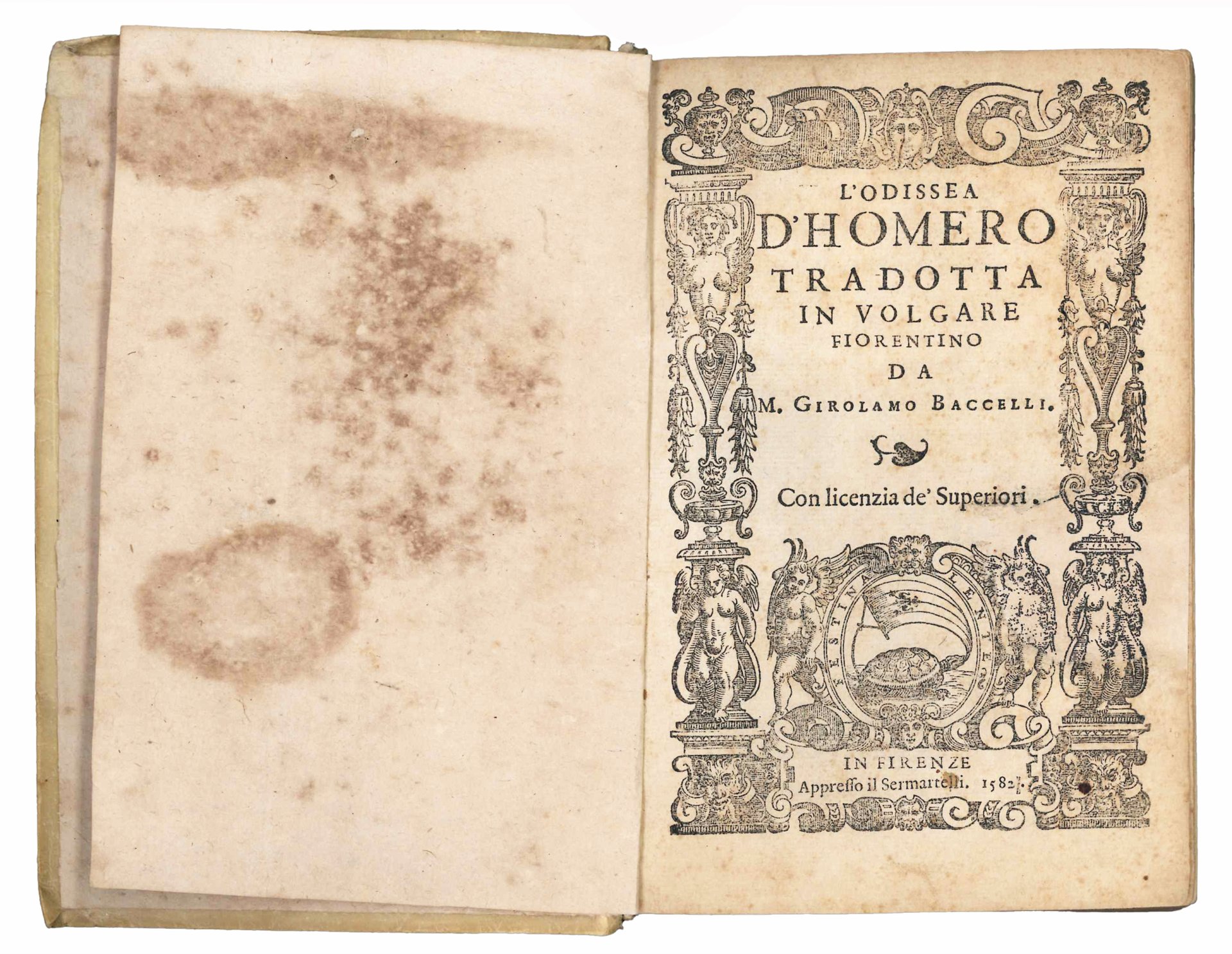
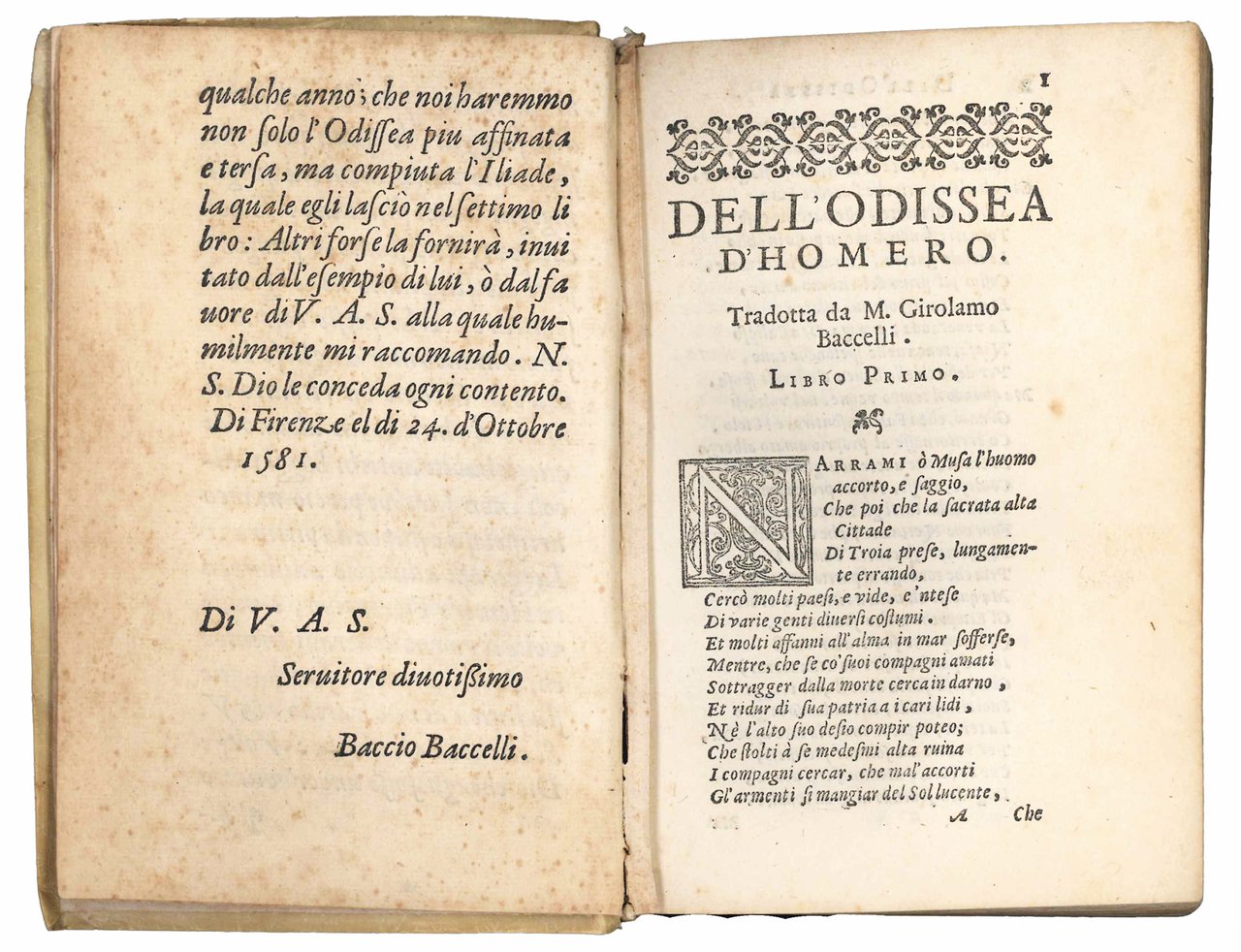
L'Odissea d'Homero tradotta in volgare fiorentino da M. Girolamo Baccelli
Formas de Pago
- PayPal
- Tarjeta de crédito
- Transferencia Bancaria
- Pubblica amministrazione
- Carta del Docente
Detalles
- Año de publicación
- 1582
- Lugar de impresión
- Firenze
- Autor
- HOMERUS (fl. 8th BC)-BACCELLI, Girolamo, tr. (1514-1581)
- Editores
- Bartolomeo Sermartelli
- Materia
- Quattro-Cinquecento
- Conservación
- Bueno
- Idiomas
- Italiano
- Encuadernación
- Tapa dura
- Condiciones
- Usado
Descripción
THE FIRST COMPLETE ITALIAN TRANSLATION OF HOMER'S ODYSSEY
8vo (161x104 mm). [8], 678 [i.e. 670], [2] pp. Pages 665-672 omitted in pagination. Collation: †4 A-Ss8 Tt-Vv4. Roman and italic types. Printer's device on the title page and at the end. Title page within a woodcut border. Decorative woodcut initials. Colophon and register on l. Vv4v. Contemporary flexible vellum, inked title on spine (traces of ties, spine a bit darkened). Occasionally foxed and browned, but a very good, crispy copy.
First edition, dedicated by the translator Giacomo Baccelli to Don Francesco de' Medici, of the first complete Italian translation of Homer's Odyssey.
Girolamo Baccelli, a native from Florence, devoted himself passionately to medicine and literary studies. He was a member of the Accademia Fiorentina, where he gave various lectures from 1541 onwards, reaching the position of consul in 1552. After 1555, the year in which he married Nannina di Paolo Mei, there is no further precise information about Baccelli. He must have died around 1581.
Baccelli was the first of Homer's vulgarizers to provide a complete translation of the Odyssey. This version, written in free verse, reveals no unified method: passages that are translated almost literally are followed by others that render the Greek text with a certain degree of approximation. Above all, Baccelli's work deviates from the original in the descriptive passages, where the translator felt the need to freely rework the text based on the aesthetic canons of the Mannerist style of his time. His preference for elegant vocabulary and refined expression is in keeping with a tradition dating back to Petrarch and can be explained by his sophisticated literary taste. Baccelli also translated the Iliad into free verse, but stopped at Book 7 (cf. Dizionario Biografico degli Italiani, vol. 5, Rome, 1963, s.v.).
Edit 16, CNCE 22973; USTC, 835828; Gamba, 1540.
