Politics and Awe in Rudyard Kipling's Fiction
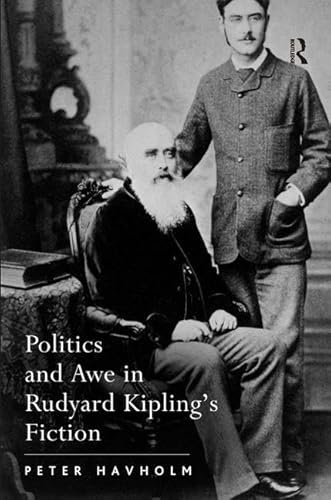
Politics and Awe in Rudyard Kipling's Fiction
Formas de Pago
- PayPal
- Tarjeta de crédito
- Transferencia Bancaria
- Pubblica amministrazione
- Carta del Docente
Detalles
- Autor
- Havholm, Peter
- Editores
- Ashgate Publishing, Aldershot, Hants 2008
- Descripción
- As New
- Descripción
- H
- Sobrecubierta
- True
- Conservación
- Como nuevo
- Encuadernación
- Tapa dura
- Copia autógrafa
- False
- Primera edición
- False
Descripción
8vo, hardcover in dj. 11 preliminary pages, 187 pages, section of black and white illustrations, fine condition with dust-wrapper. There has been a resurgence of interest in Kipling among critics who struggle to reconcile the multiple pleasures offered by his fiction with the controversial political ideas that inform it. Peter Havholm takes up the challenge, piecing together Kipling's understanding of empire and humanity from evidence in Anglo-Indian and Indian newspapers of the 1870s and 1880s and offering a new explanation for Kipling's post-1891 turn to fantasy and stories written to be enjoyed by children. By dovetailing detailed contextual knowledge of British India with informed and sensitive close readings of well-known works like 'The Man Who Would Be King',' Kim', 'The Light That Failed', and 'They', Havholm offers a fresh reading of Kipling's early and late stories that acknowledges Kipling's achievement as a writer and illuminates the seductive allure of the imperialist fantasy. About the Author: Peter Havholm is Professor of English at The College of Wooster in Ohio, USA, where he teaches English literature, literary theory, and new media and has won the Sears Award for Innovation in Teaching. He has published in Critical Inquiry, Computers and the Humanities, Academic Computing, The Journal of Commonwealth and Postcolonial Studies, Children's Literature, and The Kipling Journal and has received the EDUCOM/NCRIPTAL Award for Distinguished Curricular Innovation.
