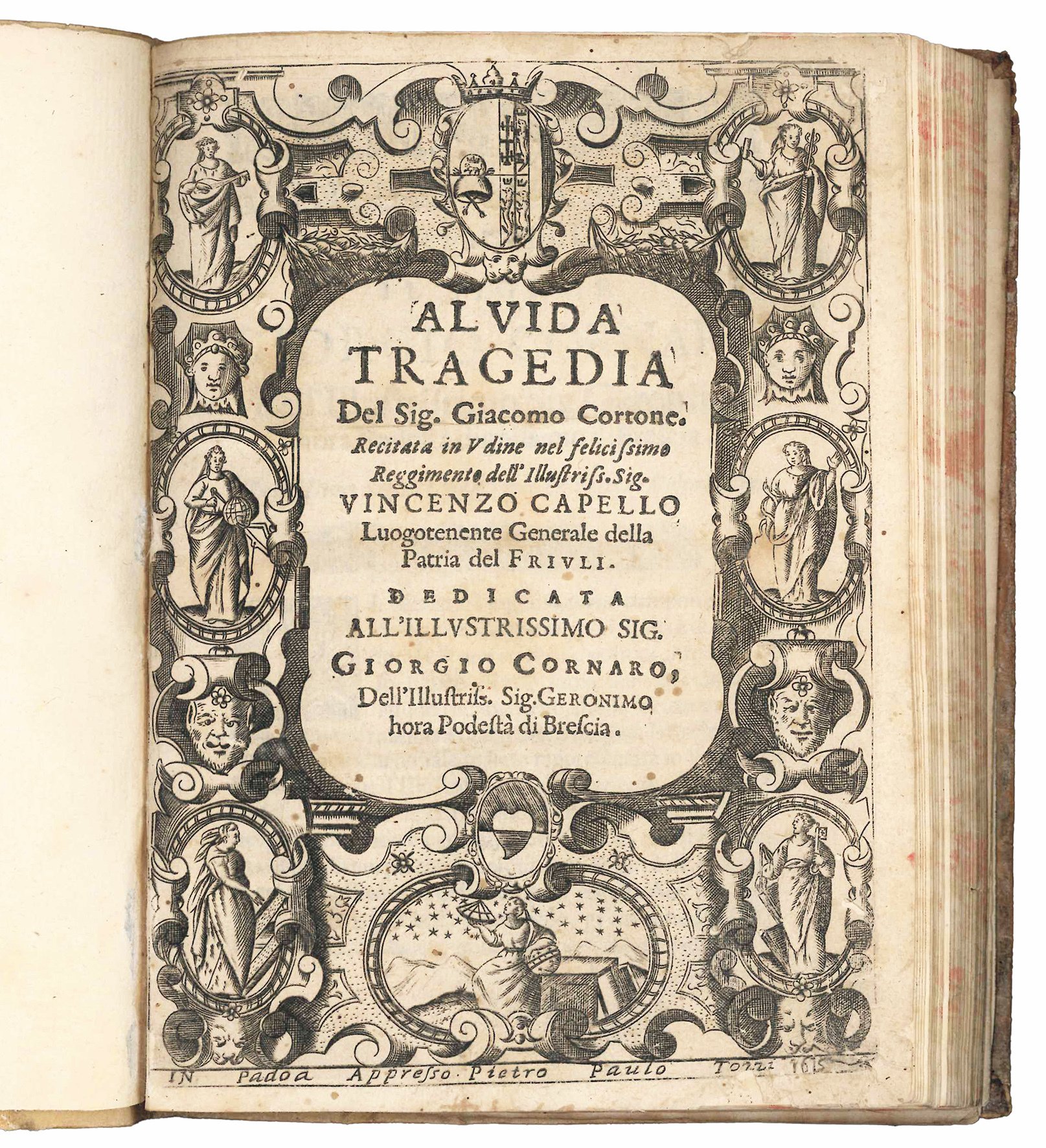
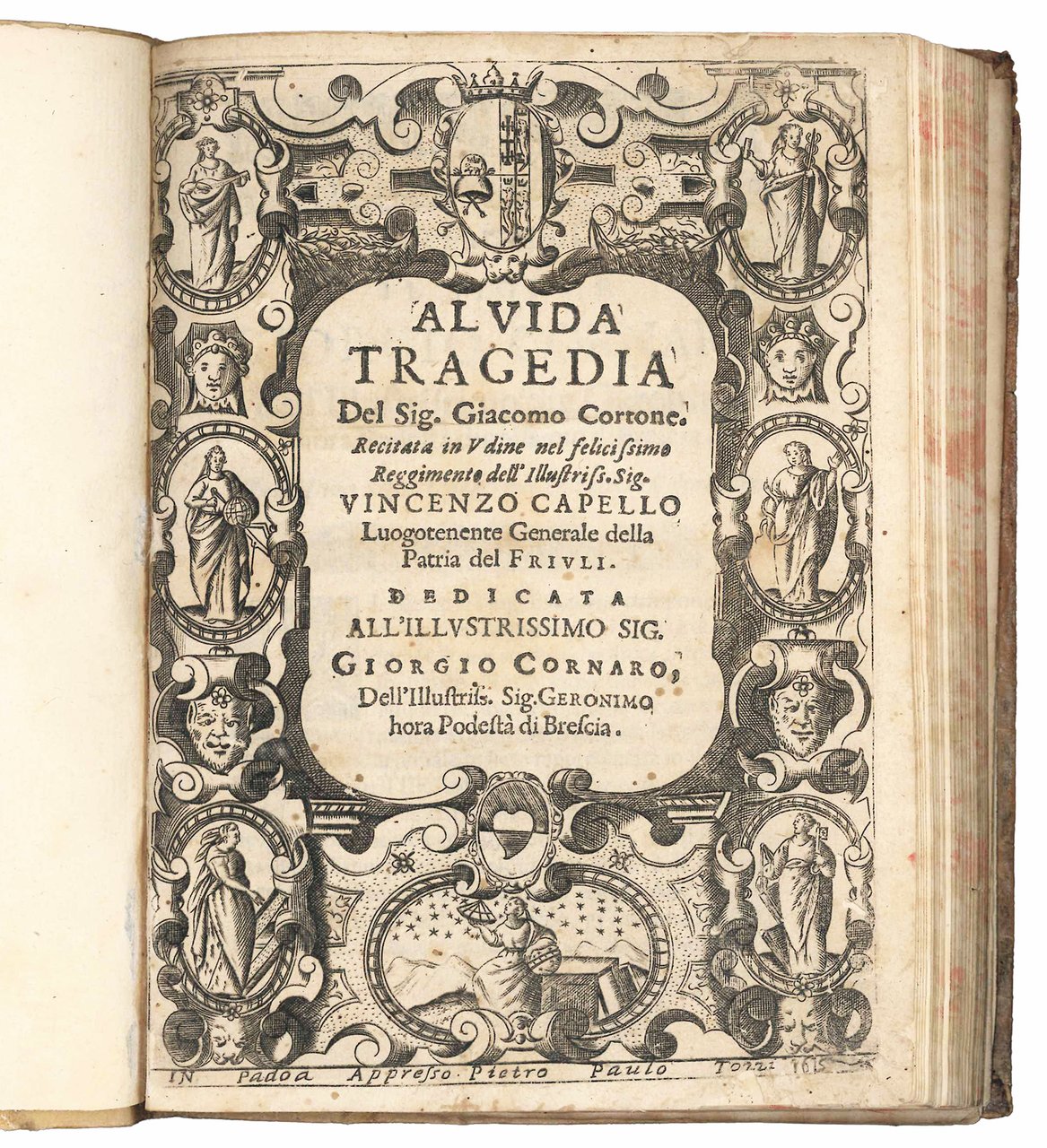
Alvida tragedia del Sig. Giacomo Cortone. Recitata in Udine nel felicissimo reggimento dell'Illustriss. Sig. Vincenzo Capello Luogotenente Generale della Patria del Friuli
Alvida tragedia del Sig. Giacomo Cortone. Recitata in Udine nel felicissimo reggimento dell'Illustriss. Sig. Vincenzo Capello Luogotenente Generale della Patria del Friuli | Libros antiguos y modernos | CORTONE, Giacomo (fl. 16th-17th cent.)
Alvida tragedia del Sig. Giacomo Cortone. Recitata in Udine nel felicissimo reggimento dell'Illustriss. Sig. Vincenzo Capello Luogotenente Generale della Patria del Friuli
Alvida tragedia del Sig. Giacomo Cortone. Recitata in Udine nel felicissimo reggimento dell'Illustriss. Sig. Vincenzo Capello Luogotenente Generale della Patria del Friuli | Libros antiguos y modernos | CORTONE, Giacomo (fl. 16th-17th cent.)
Formas de Pago
- PayPal
- Tarjeta de crédito
- Transferencia Bancaria
- Pubblica amministrazione
- Carta del Docente
Detalles
- Año de publicación
- 1615
- Lugar de impresión
- Padova
- Autor
- CORTONE, Giacomo (fl. 16th-17th cent.)
- Editores
- (Livio Pasquati) for Pietro Paolo Tozzi
- Materia
- seicento
- Conservación
- Bueno
- Idiomas
- Italiano
- Encuadernación
- Tapa dura
- Condiciones
- Usado
Descripción
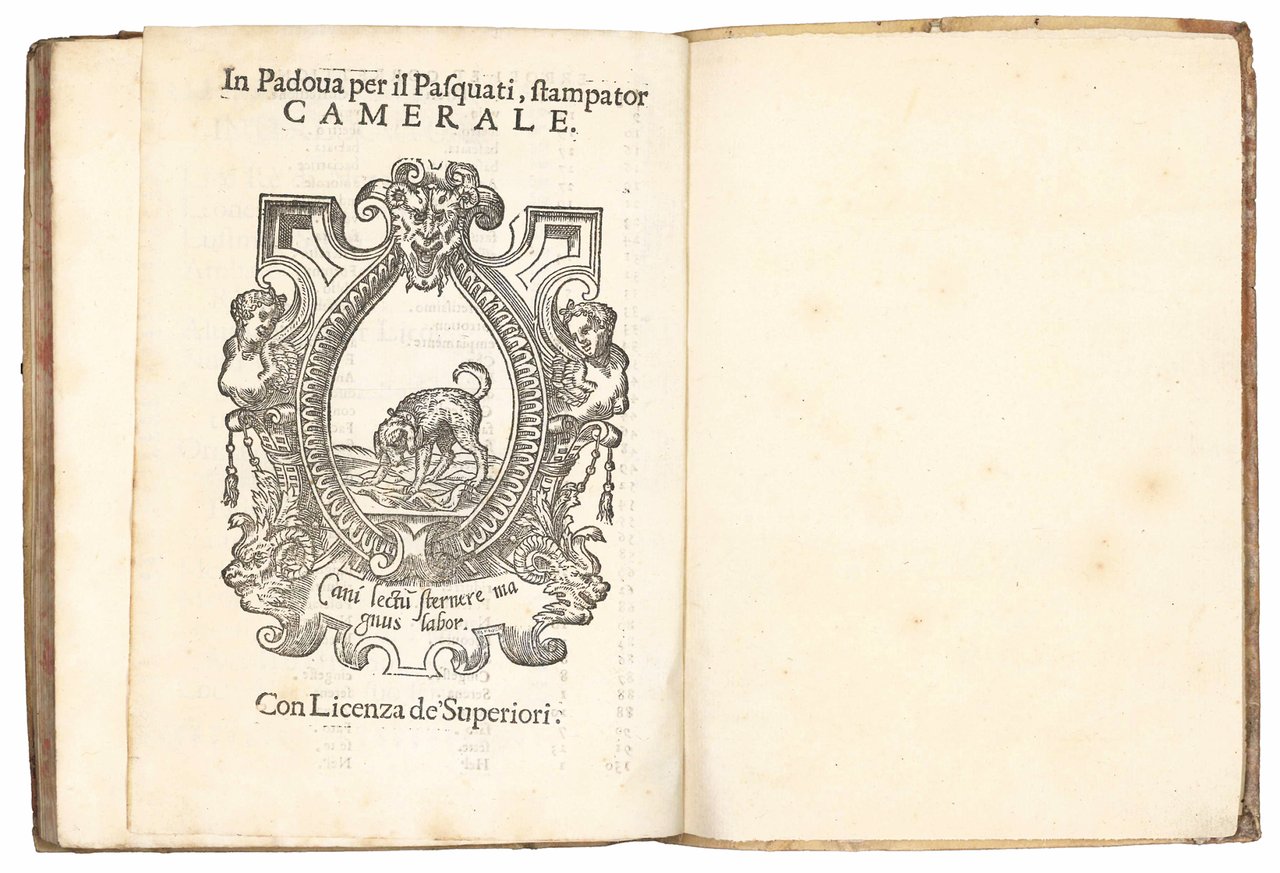
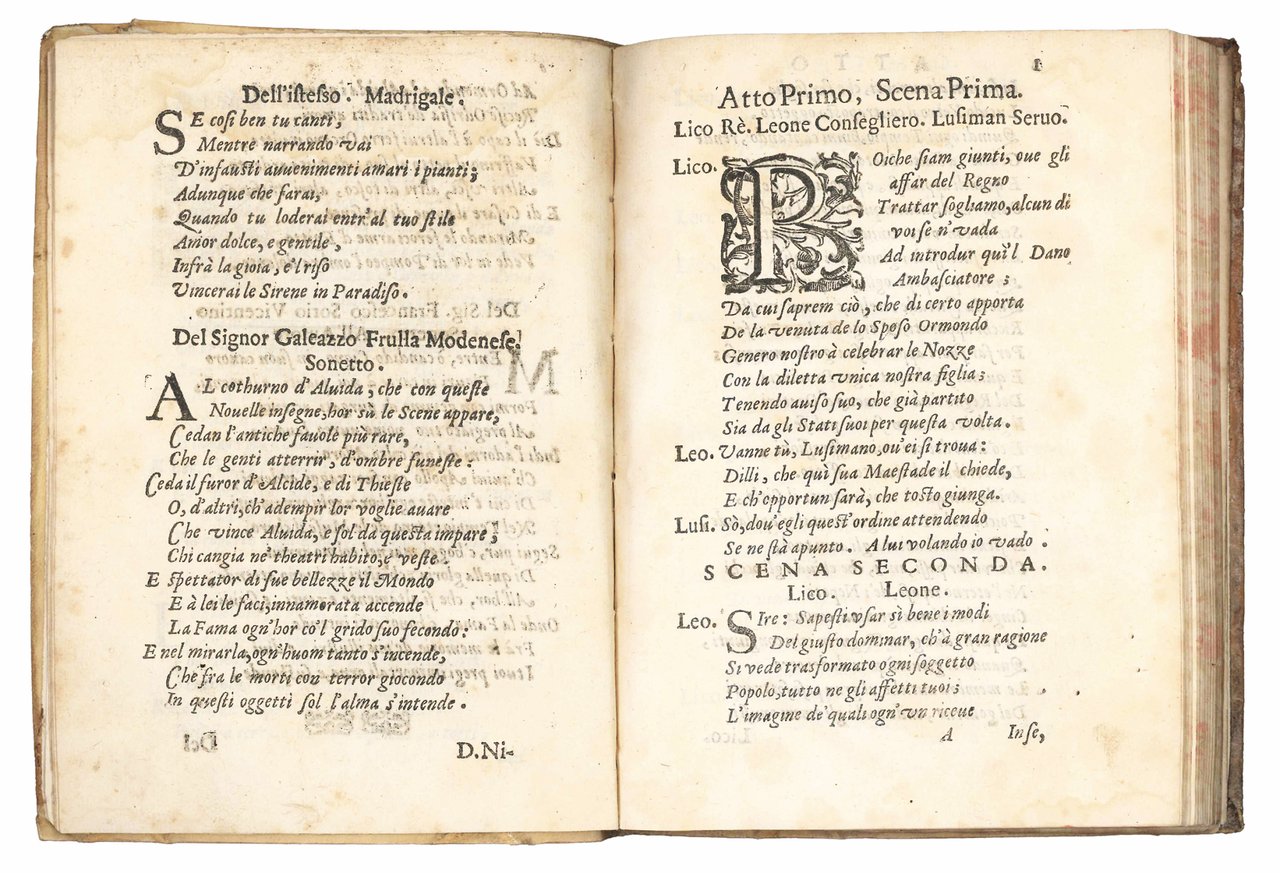
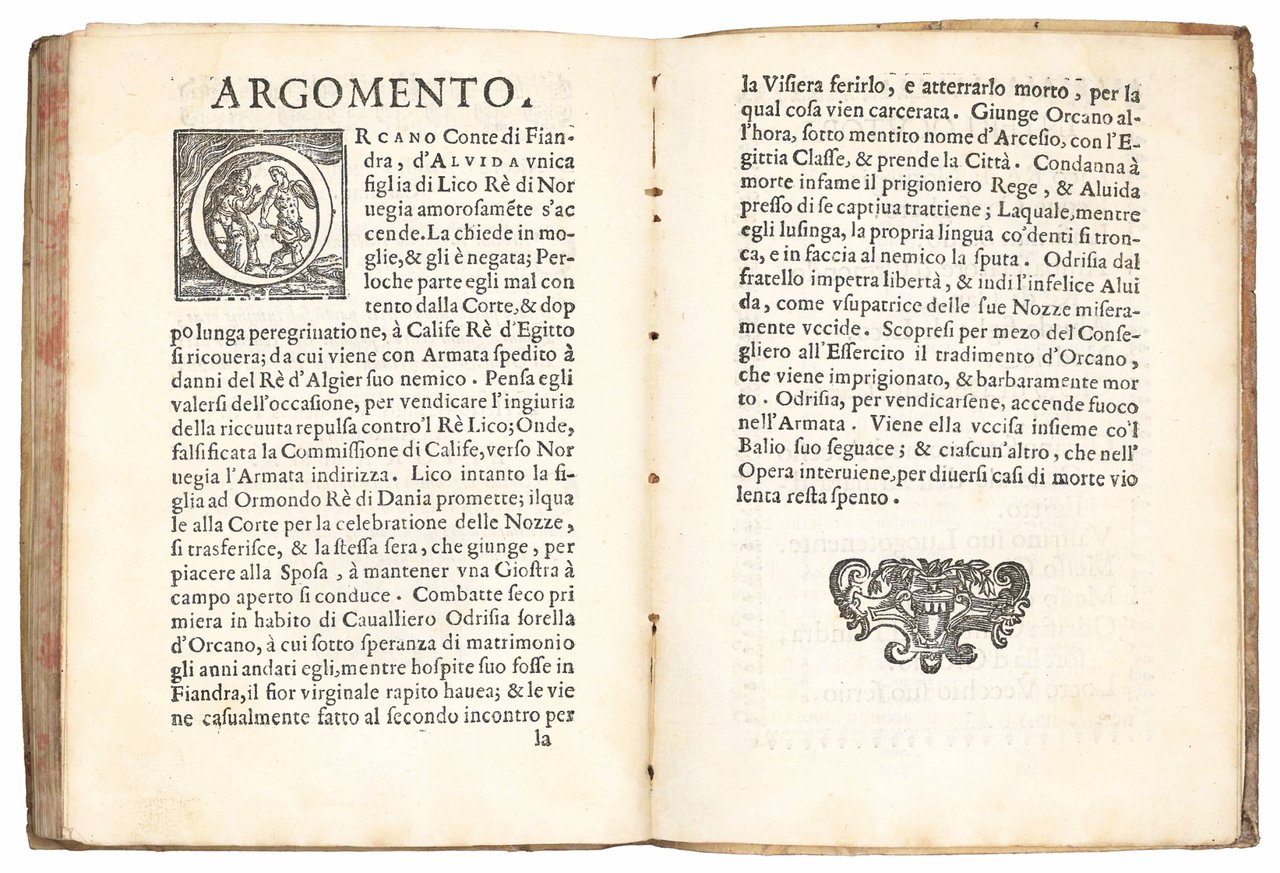
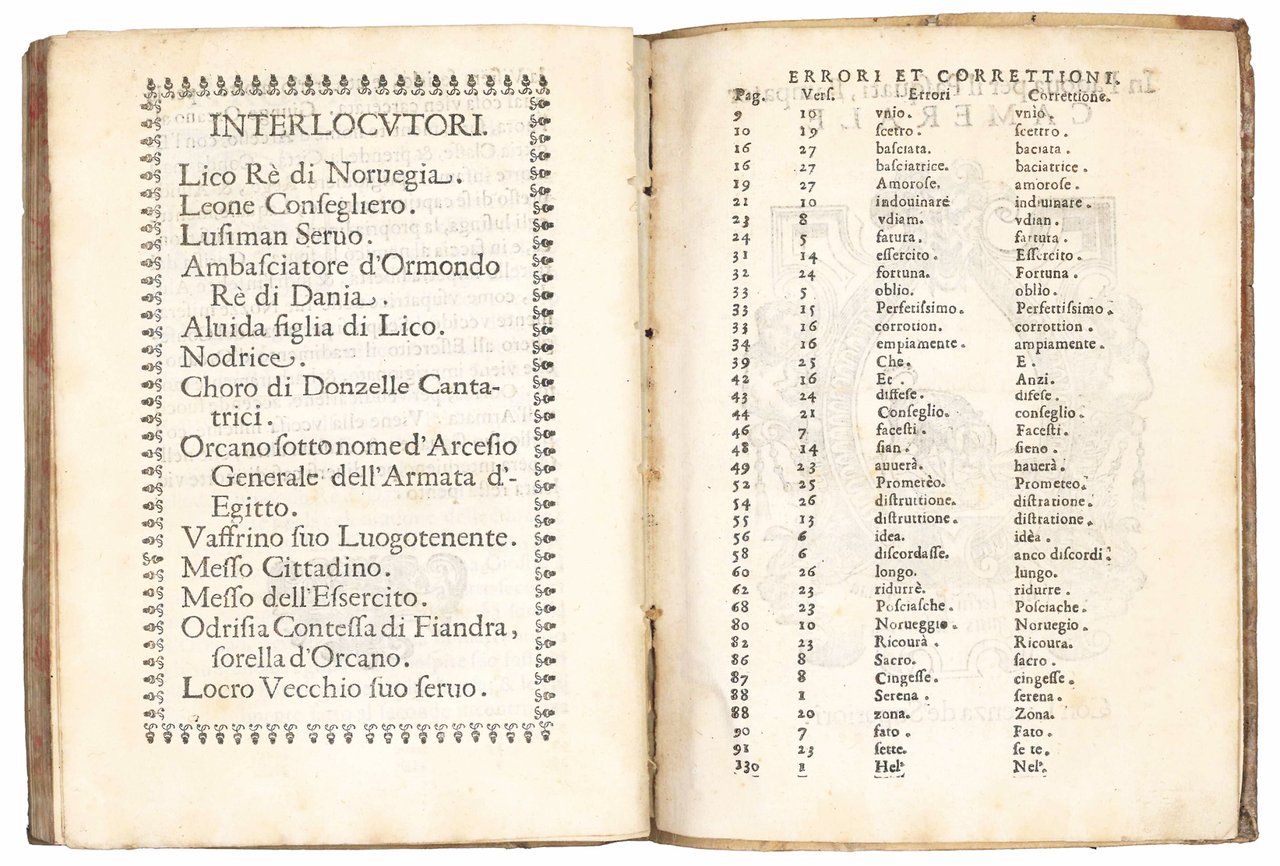
4to (193x139 mm). [12], 138, [2] pp. Collation: §4 §§2 A-R4 S2. The quire §§ is misbound at the end of the volume between ll. S1 and S2. Title page within an engraved allegorical border bearing the arms of Capello and Cornaro families. Woodcut initials and ornaments. Large woodcut device at the end. Modern flexible vellum, marbled edges. 17th-8th-century armorial stamp on l. §2r. Bottom margin of the title page repaired, round worm holes and repaired worm tracks on several leaves only occasionally slightly affecting the text, all in all a good copy.
Rare first edition, dedicated by the typographer Livio Pasquati to Giorgio Cornaro, podesta of Brescia, from Padua on 6 February 1615, of this tragedy in 5 acts in verse first performed in Udine at the presence of the lieutenant general of Friuli, Vincenzo Capello.
“After the success of Torquato Tasso's Torrismondo, other Italian tragedies were placed in mysterious Northern Europe. One of them was Giacomo Cortone's Alvida, applauded in Udine in 1614, printed in Padova in 1615, and quite forgotten now. This tragedy is mentioned, among the Italian imitations of Torrismondo, by Umberto Renda in a long essay published in 1905-6 [Il Torrismondo di T. Tasso e la tecnica tragica nel Cinquecento, in:; ‘Rivista abbruzzese', XXI, 1906, pp. 572-576]. Although the quality is rather poor, literarily speaking, it is worth reading as a document of Nordic spell - combined in this case with the violent atmosphere of XVIIth century's tragedies. The male protagonist is Orcano, Count of Flanders, who seeks Alvida in marriage from her father Lico, King of Norway. For Lico does not accept, Orcano leaves for Egypt thinking of revenging himself. In the meanwhile Lico promises his daughter to Ormondo, King of Denmark. Orcano, coming from Egypt with an army under the name of Arcesio, seizes the town and takes Alvida prisoner. Alvida is killed by Odrisia (but she had already maimed herself, biting her tongue and spitting it at Orcano, according to the violence of Giraldi's tragedies), Orcano's sister, who had been seduced by Ormondo (IV 8 p. 110: she had fallen in love with him when he was wounded, as Angelica with Medoro in Orlando Furioso XIX 20-30; but Ormondo, behaving himself ignobly as many characters of the Italian tragedy of that period, refused to marry her). All the dramatis personae die a violent death […] From the first lines (I 2, 4-5) it is clear that Norway's distance from the rest of the world is not warranty of peace and safety. Lico and his court are waiting for Ormondo and are ready to celebrate the marriage, but Alvida is upset by her dreams (her nurse tries to reassure her, saying that dreams are not true, like in Tasso's Torrismondo I 1, 125-126). As a matter of fact Vaffrino, Orcano's lieutenant, plans to insinuate himself into the Court changing his voice and his language (like his homonymous, Tasso's Vafrino in Gerusalemme Liberata XVIII 57-60). In spite of the nurse's gossiping about kissing (I 6, 13-19) according to Aminta's model, the atmosphere becomes soon tragic not only because of Alvida's dreams (I6, 20-23) but also of the counsellor's topical considerations about Fortune (II 3, 32-33). The dialogue between Odrisia and her waiter Locro is also gloomy, being constructed on that between Clorinda and Arsete in Gerusalemme liberata XII 18-20 and 39-40 (even if here Odrisia will not die fighting with her ancient lover Ormondo, as Locro has dreamt and is afraid of). The sad destiny of Norway is strictly connected with its king's personality. The Lico's character is modelled on the ancient good kings, as Priamus in Virgil's Aeneid. He has, for instance, some aspects of Theseus in Euripides' Suppliants: Lico too believes that a good chief must involve people in his decisions (II 6 p.43) […] In opposition to the tragic atmosphere of the Courts, the Chorus proposes the model of shepherd's life, so far from envy, war, ambition, avidity (pp. 81-84). While the Court goes towards a complet