The New York Times Magazine, January 3, 1965. Freedom to Learn But Not to Riot. Students at the University of California at Berkeley
The New York Times Magazine, January 3, 1965. Freedom to Learn But Not to Riot. Students at the University of California at Berkeley | Libros antiguos y modernos | THE NEW YORK TIMES MAGAZINE
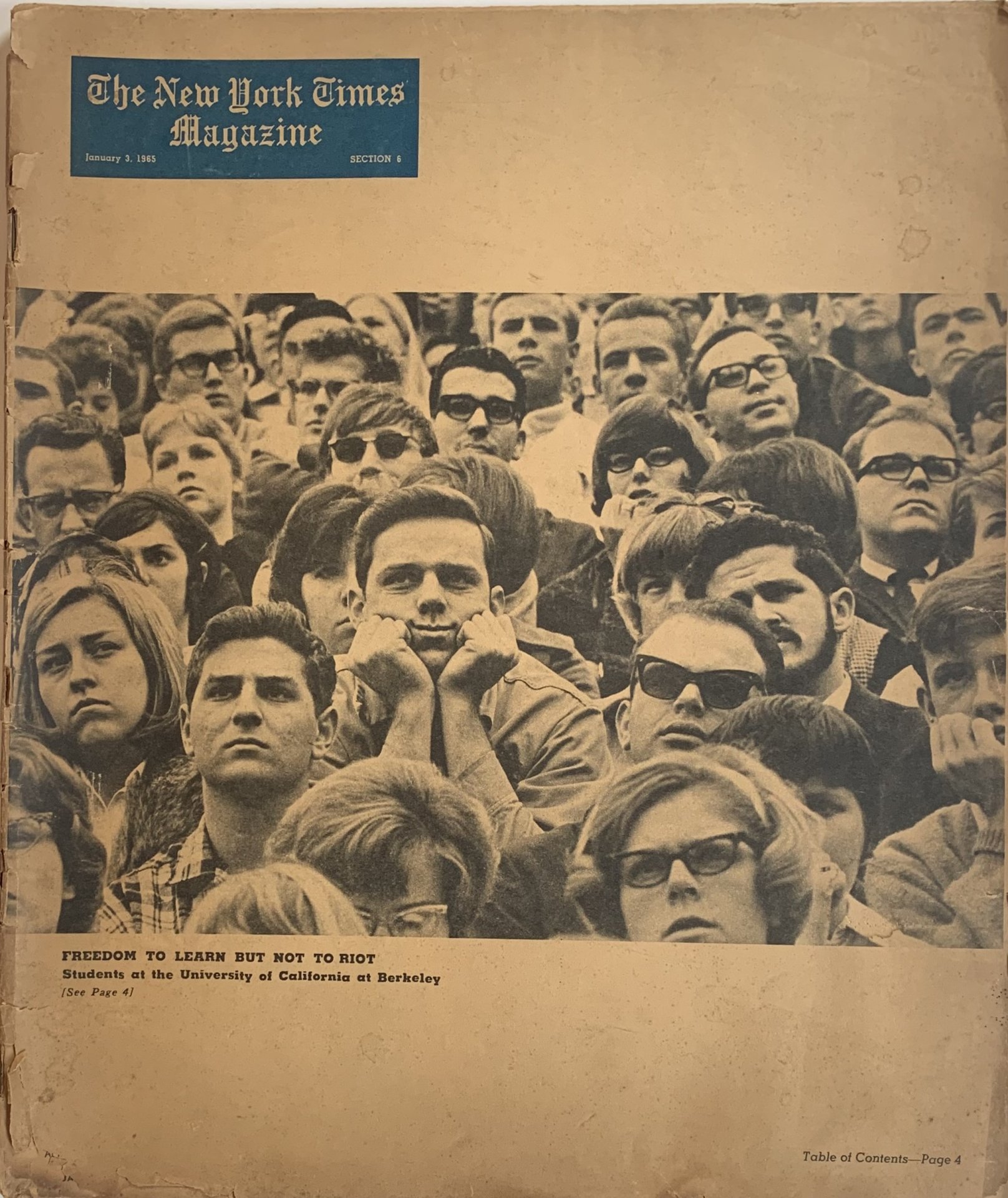
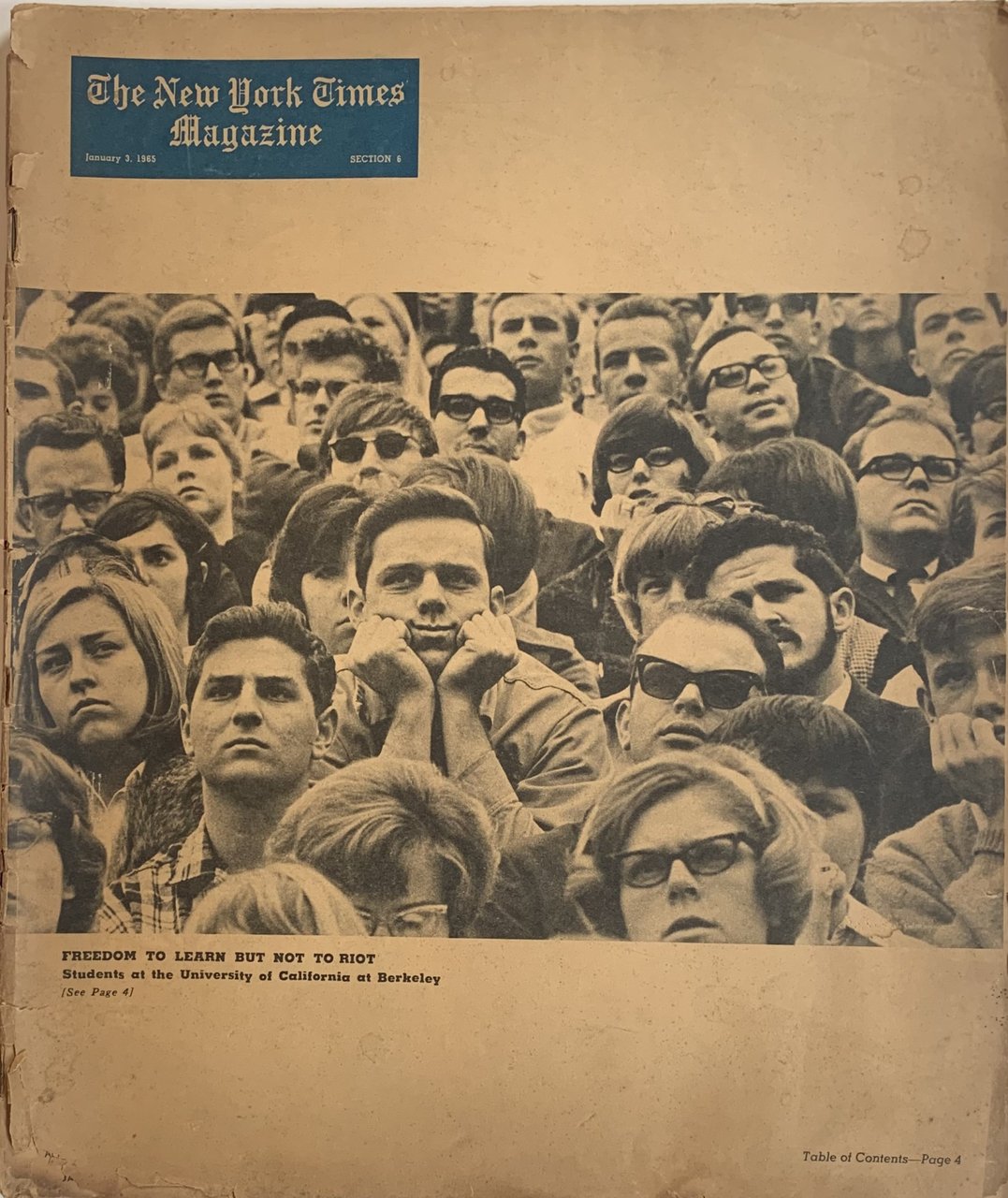
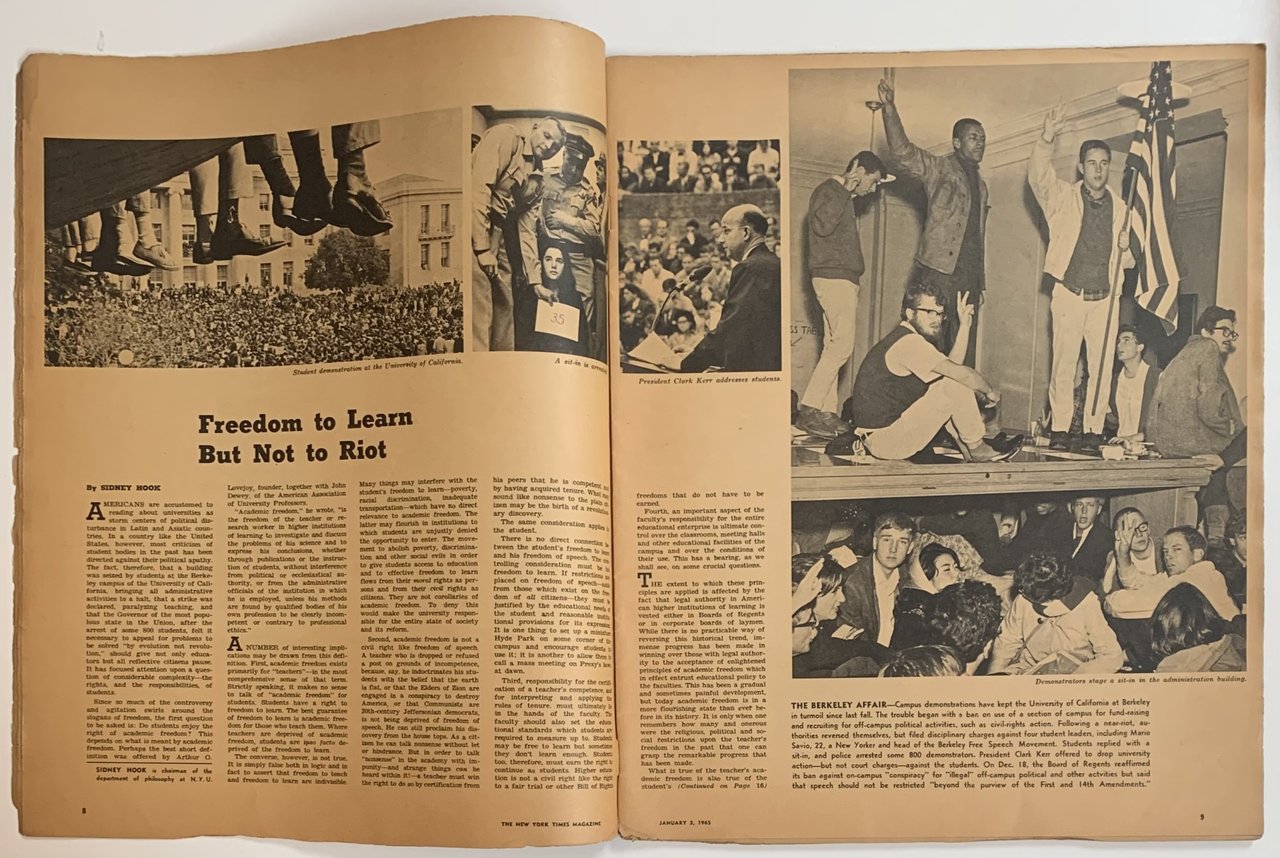
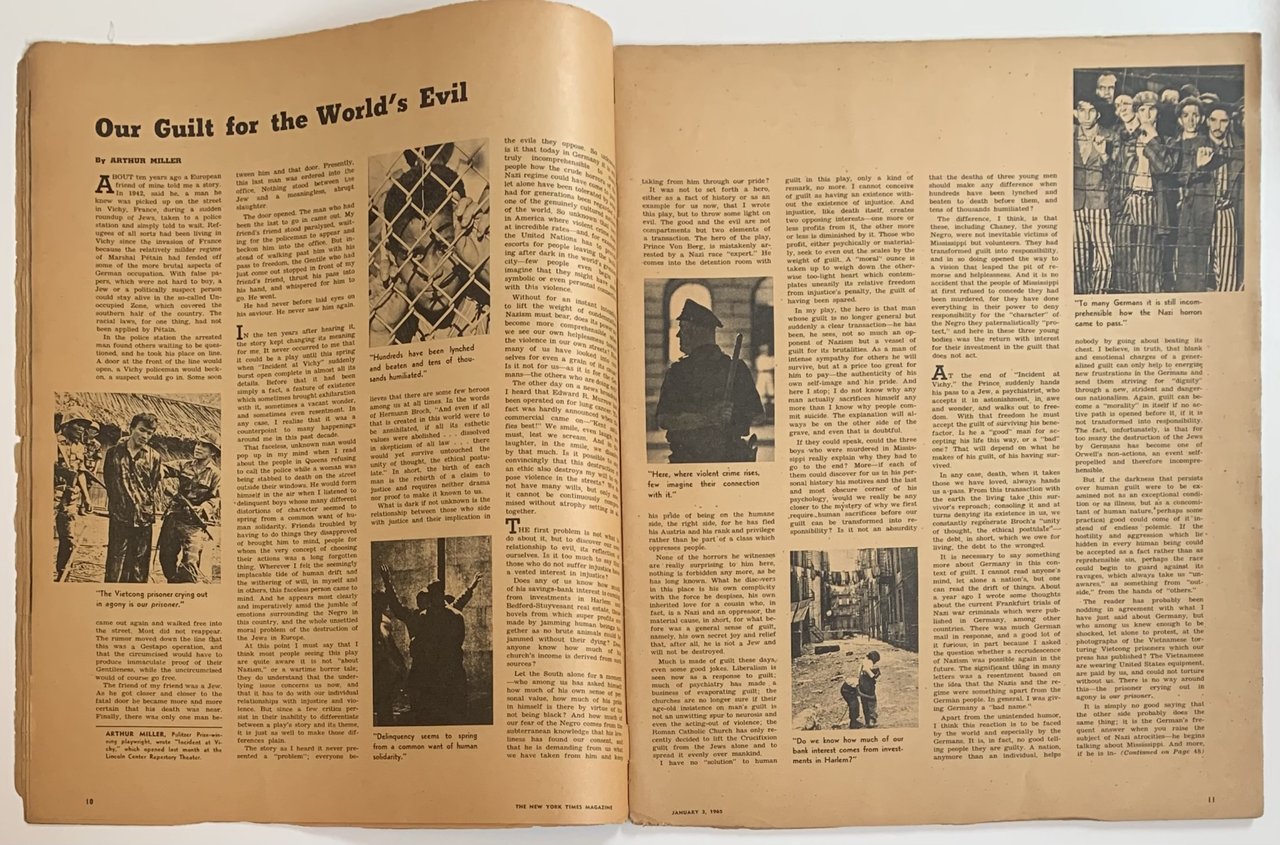
The New York Times Magazine, January 3, 1965. Freedom to Learn But Not to Riot. Students at the University of California at Berkeley
The New York Times Magazine, January 3, 1965. Freedom to Learn But Not to Riot. Students at the University of California at Berkeley | Libros antiguos y modernos | THE NEW YORK TIMES MAGAZINE
Formas de Pago
- PayPal
- Tarjeta de crédito
- Transferencia Bancaria
- Pubblica amministrazione
- Carta del Docente
Detalles
- Año de publicación
- 1965
- Lugar de impresión
- New York
- Autor
- THE NEW YORK TIMES MAGAZINE
- Páginas
- pp. 56
- Editores
- New York, The New York Times Company,
- Materia
- politics, ,
- Descripción
- paperback
- Conservación
- Bueno
- Idiomas
- Inlgés
- Encuadernación
- Tapa blanda
- Condiciones
- Usado
Descripción
Contents: "More Power to the President (Not Less)", by Louis W. Koenig; "Freedom to Learn but not to Riot. Campus demonstrations at the University of California", by Sidney Hook; "Our Guilt for the World's Evil" by Arthur Miller; "Smiling through with Thanom of Thailand", by Jack Langguth; "The two worlds of Jimmy Nkosi", by Anthony Lukas. Black and white photographs . Cm 34x28. pp. 56. . Buono (Good). Copertina sciupata e brunita ai margini con piccole mancanze all'angolo inferiore, così come le prime pagine. Per il resto buono, nonostante il tipo di carta e l'età (Front cover worn and browned at the edges, with small losses at the bottom corner, as . . . In "Our Guilt for the World's Evil" Arthur Miller sostiene che gli individui sono implicitamente complici dei mali globali che disprezzano, scegliendo di ignorare o distogliere lo sguardo dall'ingiustizia.L'articolo si concentra sull'idea di responsabilità collettiva condivisa, piuttosto che sull'innocenza individuale, suggerendo che il male persiste non solo attraverso le azioni di singoli individui, ma anche attraverso il silenzio e la cecità della maggioranza. Per Miller rimanere inconsapevoli del proprio odio e della propria ostilità – o ignorare le ingiustizie che ci circondano – è una "cecità fatale".
Mentre in "Freedom to Learn but not to Riot", pubblicato il 3 gennaio 1965, il filosofo Sidney Hook si schierò contro le rivolte e le occupazioni studentesche all'Università della California a Berkeley, distinguendo tra libertà accademica e diritti civili. Hook criticò l'attivismo studentesco definendolo "anarchia accademica" e sottolineò la responsabilità dell'università di mantenere l'ordine, una posizione che suscitò un acceso dibattito.