The Ugly in Russian Literature: Dostoevsky's Influence on Iurii Mamleev, Liudmila Petrushevskaia, and Tatiana Tolstaia
The Ugly in Russian Literature: Dostoevsky's Influence on Iurii Mamleev, Liudmila Petrushevskaia, and Tatiana Tolstaia | Libros antiguos y modernos | Inna Tigountsova
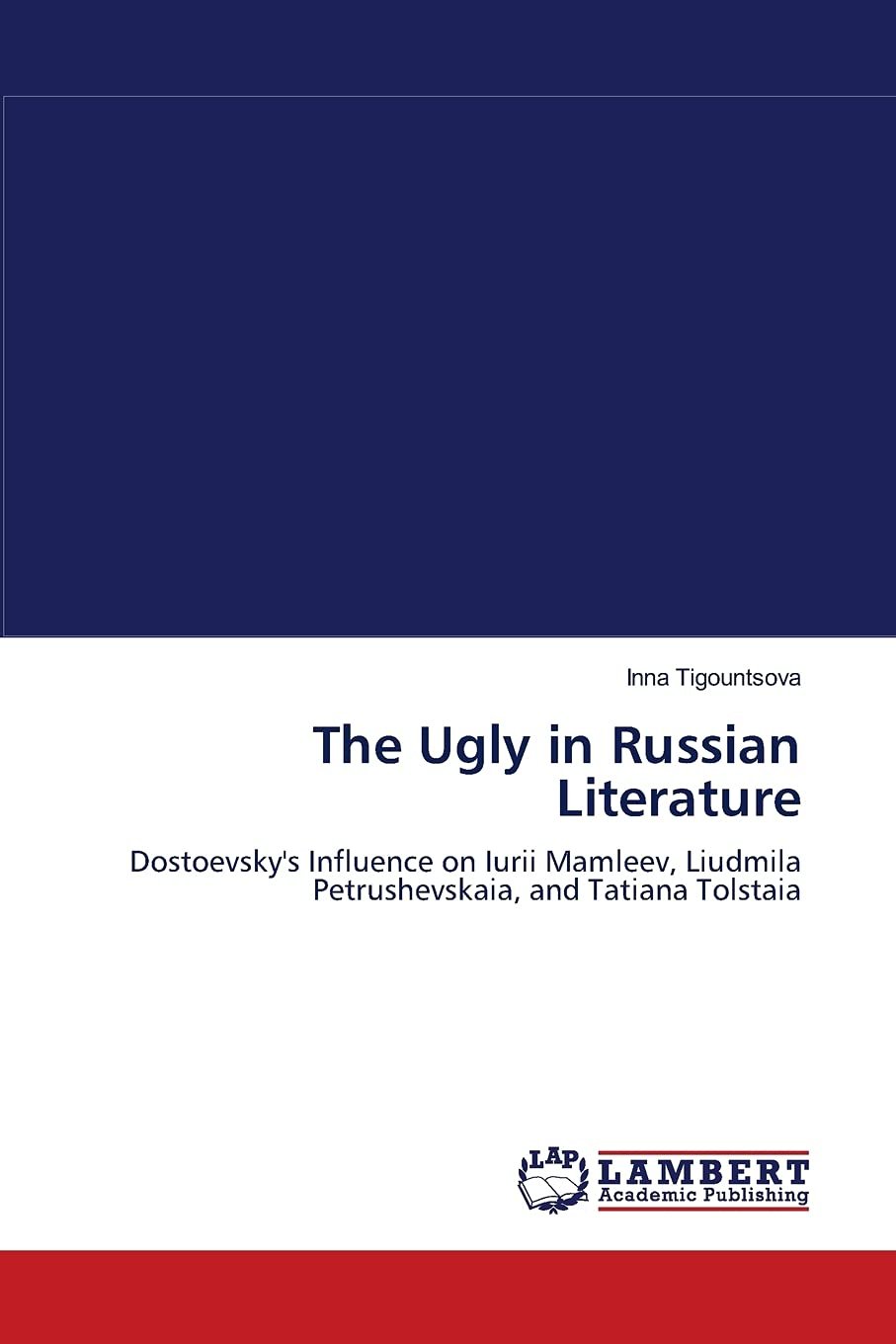
The Ugly in Russian Literature: Dostoevsky's Influence on Iurii Mamleev, Liudmila Petrushevskaia, and Tatiana Tolstaia
The Ugly in Russian Literature: Dostoevsky's Influence on Iurii Mamleev, Liudmila Petrushevskaia, and Tatiana Tolstaia | Libros antiguos y modernos | Inna Tigountsova
Formas de Pago
- PayPal
- Tarjeta de crédito
- Transferencia Bancaria
- Pubblica amministrazione
- Carta del Docente
Detalles
- Autor
- Inna Tigountsova
- Editores
- LAP LAMBERT Academic Publishing 2009
- Materia
- Russia
- Descripción
- S
- Sobrecubierta
- False
- Conservación
- Como nuevo
- Encuadernación
- Tapa blanda
- Copia autógrafa
- False
- Primera edición
- False
Descripción
8vo, br. ed. 219pp. Yurii Mamleevís ìnecrophiliac variantî of the Underground is the starting-point for Tigountsovaís ìthird wayî in Russian prose. This is an a-Soviet way (neither pro- nor dissident), connected to the paradox of Russian space ñ which goes on forever, even though every human being seems cramped and stuck away in corners or prison cells. Tigountsova is good with this parameter. As she notes, ìeven the metaphysical is cramped.î Mind, house, homeland are analogues of one another. Why do walls constructed to contain space in the mind /house /homeland of Russia and Russian literature so rarely lead to coziness, manageability, efficiency, but instead to demonic possession through crevices and shabby yellow wallpaper? In Tolstaia and Petrushevskaia, this focus on distorted, deprivatized yellow space creates a sense of vulnerability and terror. Full of observations on color and insect symbolism, her study ends with provocative inquiries into Dostoevskian post-modernism as the physically ugly brought about by distortion and juxtaposition of fragments. Here we see the legacy of Romanticism, but far more crooked than anything dreamed by Bakhtin. Caryl Emerson, Princeton University