Fregio ornamentale con paesaggio
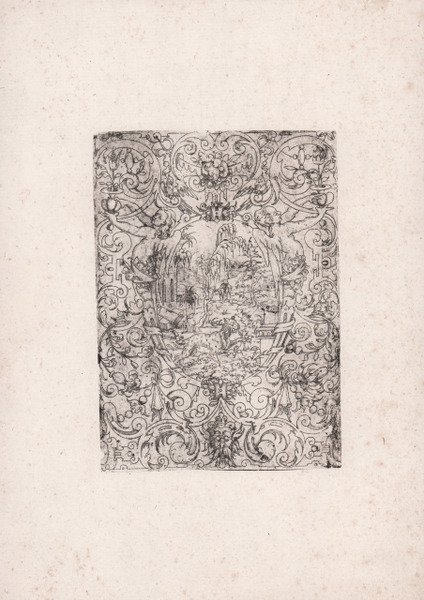
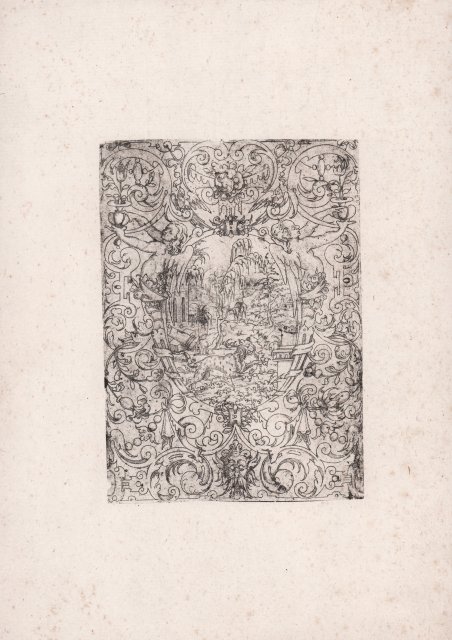
Fregio ornamentale con paesaggio
Formas de Pago
- PayPal
- Tarjeta de crédito
- Transferencia Bancaria
- Pubblica amministrazione
- Carta del Docente
Detalles
- Año de publicación
- 1551
- Formato
- 110 X 151
- Grabadores
- Zundt Matthias
Descripción
Acquaforte, circa 1551, senza dettagli di stampa. Controprova, stampata su carta vergata, con ampi margini, in perfette condizioni. ' Matthias Zündt fu incisore, scultore e orafo. Il suo lavoro fu influenzato dai 'Piccoli Maestri', un gruppo di stampatori del XVI secolo, prevalentemente di Norimberga, specializzati nella produzione di stampe molto piccole. ' Zündt è famoso per aver incorporato cavalli marini e satiri nel suo lavoro. Addestrato a Norimberga dall'orafo di corte, Wenzel Jamnitzer, fece molte incisioni che servirono come modelli per gli orafi e gli argentieri. Queste appaiono nel suo libro campione Insigne Ac Planè Novum Opus Cratero graphicum (1551). Più tardi nella sua carriera, tra il 1565 e il 1571, Zundt provò altre aree, incluse le mappe. Sul frontespizio della serie di Insigne Ac Planè Novum Opus Cratero graphicum coppe, candelabri, vasi e altri tipi di vasi che pubblicò nel 1551, dichiara che le sue illustrazioni erano destinate a ispirare orafi, scultori, pittori e altri artisti in opere proprie. Possiamo supporre, tuttavia, che lo sforzo di Zündt non fosse interamente altruistico. Pubblicando questi e molti altri disegni, si assicurò un aumento della propria fama e attirò l'attenzione sulle proprie capacità come orafo nella speranza di attirare più commissioni. Bibliografia Andresen, A., Der deutsche Peintre-Graveur…von dem letzten Drittel des 16. Jahrhunderts bis zum Schluss des 18. Jahrhunderts, Leipzig, 1864-1878, Vol. I, pp. 30-1. Etching, circa 1551, without printing details. Counterproof, printed on laid paper, with wide margins, in perfect condition. ' Matthias Zündt ' was an engraver, sculptor and goldsmith. His work was influenced by the ‘Little Masters’, a group of sixteenth-century printmakers, predominantly from Nuremberg, who specialized in producing very small prints. ' Zündt is famous for incorporating ' sea horses and satyrs in his work. Trained in Nuremberg by court goldsmith, Wenzel Jamnitzer, he made many etchings that served as templates for gold and silversmiths. These appear in his specimen book ' Insigne Ac Planè Novum Opus Cratero graphicum ' (1551). Later in his career, between 1565 and 1571, Zundt tried other areas, ' including maps. On the title page to the series of Insigne Ac Planè Novum Opus Cratero graphicum ' cups, candlesticks, vases, and other types of vessels he published in 1551, he states that his illustrations were intended to inspire goldsmiths, sculptors, painters, and other artists in works of their own. We can assume, however, that Zündt’s effort was not entirely altruistic. By publishing these and many other designs, he ensured an increase in his own fame and drew attention to his own capabilities as a goldsmith in the hopes of attracting more commissions. ' Bibliografia Andresen, A., Der deutsche Peintre-Graveur…von dem letzten Drittel des 16. Jahrhunderts bis zum Schluss des 18. Jahrhunderts, Leipzig, 1864-1878, Vol. I, pp. 30-1. Cfr.
