Idea delle antiche via Appia e Ardeatina & Veduta d’uno de’ circhi antichi con altri monumenti al dintorno
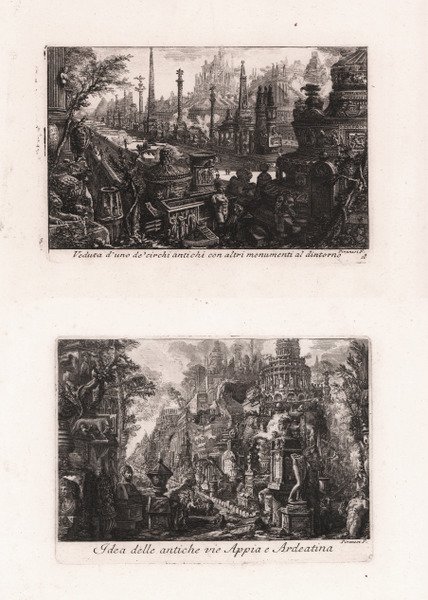
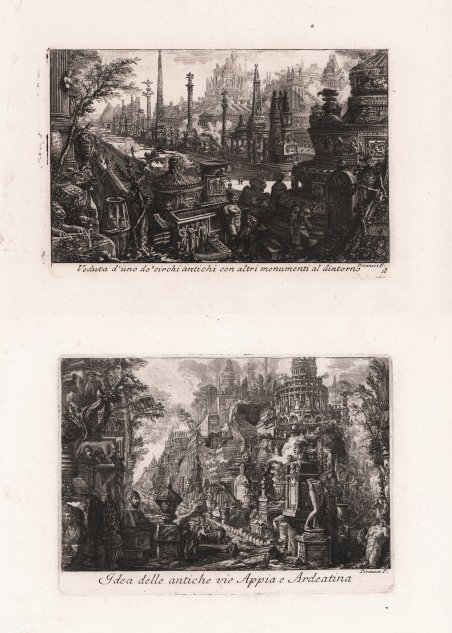
Idea delle antiche via Appia e Ardeatina & Veduta d’uno de’ circhi antichi con altri monumenti al dintorno
Formas de Pago
- PayPal
- Tarjeta de crédito
- Transferencia Bancaria
- Pubblica amministrazione
- Carta del Docente
Detalles
- Año de publicación
- 1757
- Formato
- 215 X 155
- Grabadores
- PIRANESI Giovan Battista
- Descripción
- Wilton Ely 746 & 747.
Descripción
Coppia di incisioni all’acquaforte, bulino e puntasecca, 1757, firmate in basso a destra. Magnifiche prove, impressa su carta vergata coeva con filigrana “doppio cerchio e giglio con lettere CB”, con ampli margini, in eccellente stato di conservazione. Versioni ridotte del frontespizio originale del volume II e del volume III delle Antichità Romane (1756). Per la prima volta inclusa nelle Lettere di giustificazione scritte a Milord Charlemont e à di lui agenti di Roma . intorno la dedica della sua opera delle Antichitá Rom[ane] fatta allo stesso signor ed ultimamente soppressa, 1757, e successivamente incluse in alcune edizione di Opere Varie a partire da circa il 1760. Lettere di Giustificazione scritte a Milord CharlemontL’elemento essenziale che caratterizzava il Piranesi era quel certo gusto per la polemica che finì per contraddistinguere gli ultimi trenta anni della sua vita e che allo stesso tempo diede linfa vitale e fu la base delle sue geniali creazioni. L’arma preferita per gli spunti polemici non erano però le parole, ma le immagini; il cercare di accusare, difendersi e polemizzare attraverso la grafica diede origine ad alcune tra le sue opere più sensazionali. Le ' Lettere di Giustificazione, ritenute la più importante opera polemica, sono basate sulle lettere scritte al nobiluomo irlandese Lord Charlemont, che oltre a non aver mantenuto la promessa di finanziare le ' Antichità Romane, ignorava totalmente le lettere di protesta inviategli dal Piranesi. Il testo dell’opera, pubblicata a Roma nel 1757, riproduce due delle lettere a Charlemont, oltre ad un’altra indirizzata a Padre Peter Grant, che si era proposto come paciere nella disputa. L’opera sintetizza problemi ben più seri di un semplice litigio, rappresentando i mutamenti che intervengono nei rapporti tra artisti e mecenati nella seconda metà del diciottesimo secolo. L’artista, che con il suo lavoro si proponeva di lasciare un segno importante ai posteri documentando i reperti relativi alla storia romana, si riteneva meritevole del rispetto di Lord Charlemont. Pertanto questo lavoro di protesta teneva a dissociare il nome del nobile irlandese dalle ' Antichità Romane, essendo per queste un indegno patrono, al punto tale che il Piranesi ne aveva già cancellato dal frontespizio del primo volume la scritta con cui gliele dedicava. Nell’opera l’artista, oltre ad alcune vignette satiriche sul conto del Charlemont, riprodusse in piccolo formato i quattro frontespizi principali contenuti nel principale lavoro archeologico. Questi piccoli capolavori, suscitarono molto entusiasmo nell’artista, che decise di inserire le lastre nella nuova edizione di ' Opere Varie ' pubblicata all’inizio degli anni sessanta. Pair of etchings, engraving and drypoint, 1757, signed in the lower right. Magnificent proofs, printed on contemporary laid paper with watermark "double encircled lily with the letters CB", with wide margins, in excellent condition. Smaller versions of the original title page of Volume II and Volume III of Roman Antiquities. For the first time included in the Lettere di giustificazione scritte a Milord Charlemont e à di lui agenti di Roma . intorno la dedica della sua opera delle Antichitá Rom[ane] fatta allo stesso signor ed ultimamente soppressa (1757) and subsequently included in some edition of ' Opere Varie from about 1760. The primary attitude which characterised Piranesi's personality was an unequivocal disposition towards controversy, which distinguished the last thirty years of his life and, at the same time, furnished him with the indispensable vigour and constituted the foundations which were necessary for his outstanding achievements. However, his favourite means for upholding debates were not words but pictures, and his attempts to blame, defend himself and contend gave rise to some of his most extraordinary works. The first of these was the one under scrutiny, which included the letters written to the Irish aristocrat Lord Charlemont who, not only had not kept his promise to fund the Antichità Romane., but also completely disregarded the complaint notes which Piranesi sent him.The text of the ' Lettere di Giustificazione ' published in Rome in 1757, reproduced two of his letters to Charlemont together with another one addressed to Father Peter Grant, who had volunteered to settle the question. This work outlined problems which were far more serious than a simple quarrel, delineating the changes which came about in the relationships between artists and their sponsors in the second half of the eighteenth century. The artist who, with his project, wanted to leave behind him an important milestone by describing ancient vestiges of Roman history, judged himself worthy of Lord Charlemont's esteem.Therefore, this work of complaint had the aim of separating the Irish aristocrat's name from the Antichità Romane. since he was regarded as an unworthy patron. This was true up to the point that Piranesi had cancelled from the title-page of the first volume the text with which he had dedicated it to him. In this work, apart from a few satirical vignettes concerning Charlemont, the artist reproduced small-size versions of the four main title-pages included in his primary archaeological composition. These diminutive masterpieces generated considerable excitement in the artist, who decided to include the plates in the new edition of the ' Opere Varie ' published at the beginning of the 1760s. Cfr. Wilton Ely 746 & 747.
