Detalles
Grabadores
Monogrammista GR
Descripción
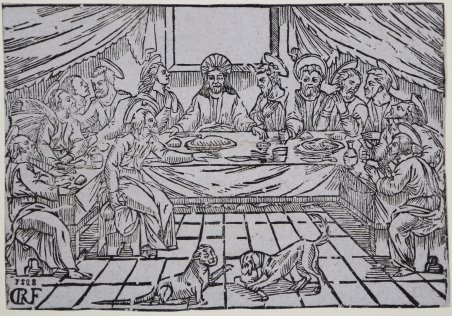
Xilografia, datata e monogrammata in tavola in basso a sinistra "1528/GRF". Ottima prova, impressa su carta vergata coeva con filigrana “scudo con mezzaluna”, rifilata alla linea marginale, leggere tracce di inchiostro antico, per il resto in ottimo stato di conservazione. Opera non descritta dai repertori, firmata con il monogramma GRF che alcuni studiosi (Nagler, Gori Gandellini) hanno sciolto in Guido Ruggieri Fecit. Le notizie su Guido Ruggieri o Ruggeri sono piuttosto confuse. Di lui è noto che era attivo a Fontainebleau tra il 1525 ed il 1531 alle dipendenze di Francesco Primaticcio. Il problema nasce per via della confusione tra i vari artisti che lavoravano nel castello in quel periodo e con la traduzione a stampa delle opere del Primaticcio e Rosso Fiorentino. La Biasini, nel saggio ' Le incisioni del Maestro FG italiano, collega Guido Ruggeri al monogramma FG che invece altri attribuiscono a Girolamo Fagiuoli o al francese Francois Gentil. Il Malvasia lo descrive come allievo, sia come pittore che come orafo ed incisore, di Francesco Francia. ' Bartsch ne descrive una stampa a bulino dal Primaticcio (B. vol. 15, pag. 415, 1); Nagler contribuisce solo alla confusione accorpando la descrizione ad altri artisti operanti a Fontainebleau incluso Giorgio Ghisi. Tuttavia, la tecnica adottata per la traduzione del soggetto, la xilografia invece che il bulino, la data leggermente precoce per il Ruggieri e la mancanza di possibilità di confronto con altre sue eventuali opere xilografiche ci inducono a non considerarlo quale autore di questa xilografia, probabilmente ispirata dall’opera di Albrecht Durer (1523) e basata su Leonardo da Vinci. Bibliografia Cfr. G.K. Nagler, Die Monogrammisten, III, pp. 96-98, nn. 326-330. Woodcut, dated and signed with monogram at lower left “1528/GRF”. A good proof, printed on contemporary laid paper with “shield with crescent” watermark, trimmed at marginal line, slight traces of old ink, otherwise in very good condition. Work not described by repertories, signed with GRF monogram that some scholars (Nagler, Gori Gandellini) have dissolved into Guido Ruggieri Fecit. News about Guido Ruggieri or Ruggeri is rather confused. Of him it is known that he was active in Fontainebleau between 1525 and 1531 under Francesco Primaticcio. The problem arises because of the confusion among the various artists working in the castle at that time and with the translation into print of the works of Primaticcio and Rosso Fiorentino. Biasini, in her essay Le incisioni del Maestro FG italiano, links Guido Ruggeri to the FG monogram, which others instead attribute to Girolamo Fagiuoli or the Frenchman Francois Gentil. Malvasia describes him as a pupil, both as a painter and as a goldsmith and engraver, of Francesco Francia. ' Bartsch describes an engraving of him by Primaticcio (B. vol. 15, p. 415, 1); Nagler only contributes to the confusion by lumping the description together with other artists working at Fontainebleau including Giorgio Ghisi. However, the technique adopted for the translation of this subject, woodcut instead of engraving, the slightly early date for Ruggieri and the lack of possibility of comparison with any of his other woodcut works lead us not to consider him as the author of this woodcut, probably inspired by the work of Albrecht Durer (1523) and based on Leonardo da Vinci. Bibliografia Cfr. G.K. Nagler, Die Monogrammisten, III, pp. 96-98, nn. 326-330. Cfr.

 Descubre cómo utilizar
 Descubre cómo utilizar