Tivoli, cascade
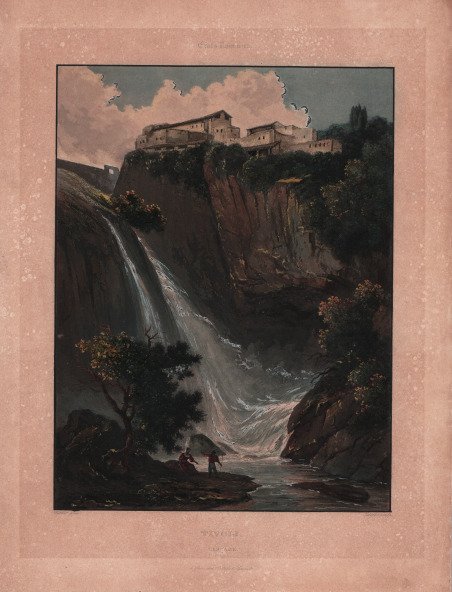
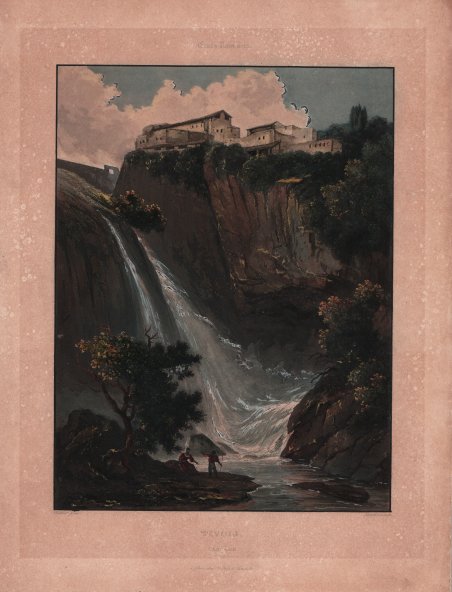
Tivoli, cascade
Formas de Pago
- PayPal
- Tarjeta de crédito
- Transferencia Bancaria
- Pubblica amministrazione
- Carta del Docente
Detalles
- Año de publicación
- 1840
- Formato
- 185 X 250
- Grabadores
- SALATHE' Frederich
Descripción
Veduta della cascata dell’Aniene a Tivoli incisa da F. Salathè e pubblicata dalla tipografia di Rittner & Goupil a Parigi, circa 1840. Acquaforte e acquatinta, impressa su carta coeva – leggermente brunita – magnifica coloritura d’epoca, in buono stato di conservazione. Friedrich Salathé, nato l'11 gennaio 1793 a Binningen vicino a Basilea e morto il 12 maggio 1858 a Parigi, è stato un pittore svizzero di paesaggi, disegnatore e acquafortista. Allievo del pittore svizzero Peter Birmann, Salathé trascorse lunghi periodi in Italia (Roma, Napoli) dove frequentò, tra gli altri, gli artisti tedeschi Joseph Anton Koch e Carl Vogel von Vogelstein e lo storico dell'arte Johann David Passavant. Nel 1819 espone a Roma e disegna numerosi paesaggi dei dintorni di Roma, Ariccia e Terni. Dopo un ritorno nella sua città natale nel 1821, dove lavorò per la società Falkeisen e Huber, si stabilì definitivamente a Parigi all'età di 30 anni. Lì lavorò come incisore di acquatinta. Ciononostante, continuò a dipingere e disegnare per se stesso ed espose nel 1834, 1836 e 1848 alle mostre d'arte svizzere a Berna. Due delle sue acquetinte furono anche esposte al Salon di Parigi nel 1841. Insieme al suo amico, il fotografo Johann Jacob Steinmann, contribuì alla produzione di litografie da lastre fotografiche. I paesaggi giocano un ruolo importante nel lavoro di Salathé. Si sforza di mostrare le sue impressioni di una natura viva e spesso selvaggia. L'albero appare come un simbolo romantico dell'uomo e delle sue speranze. I suoi lavaggi, più o meno densi, giocano con il bianco della carta per descrivere la nobiltà della natura senza tendere all'idealizzazione dei nazareni o al classicismo delle vedute. ' La casa Adolphe Goupil fu fondata nel 1827, poi in società con Henry Rittner nel 1829, quando l'editore Adolphe Goupil e il commerciante di stampe Henry Rittner s'incontrano grazie all'intermediazione del pittore di paesaggi marini Charles Mozin e s'associano per consacrarsi all'impressione e all'edizione di stampe originali (incisioni e litografie) al boulevard Montmartre a Parigi. Grazie alla famiglia di Rittner, abitante a Dresda, la compagnia assume già dall'inizio una portata internazionale. Passo dopo passo, ha sviluppato un mercato mondiale di riproduzioni di opere pittoriche e scultoree: una rete con filiali a Londra, Bruxelles, L'Aia, Berlino e Vienna, così come a New York e Australia. Una così grande espansione è determinata dagli ateliers fotografici e dal primo laboratorio insediato nel 1869 ad Asnières allora piccolo borgo a nord di Parigi. L'ideatore dell'innovativo sistema di divulgazione dell'opera d'arte è stato Adolphe Goupil (1806–1893), coadiuvato dalla figlia Marie, sposata con l'artista Jean-Léon Gérôme. Adolphe Goupil che, da iniziale fabbricante, editore e mercante di stampe, diventa il committente - acquirente di costosi dipinti, realizzati esclusivamente per essere riprodotti, con le più moderne tecniche di stampa, in formati diversi in modo tale da soddisfare le esigenze della piccola e media borghesia il cui status economico non è ancora sufficientemente consolidato per poter sostenere l'acquisto di un quadro originale. La Maison Goupil di Parigi, con le sue numerose filiali aperte nelle principali città europee e d'oltreoceano, diventa, quindi, una sorta di arbiter elegantiae e di dittatrice del gusto borghese in pieno clima Belle Époque. View of the Aniene waterfall at Tivoli engraved by F. Salathè and published by the printing house of Rittner & Goupil in Paris, circa 1840. Etching and aquatint, printed on contemporary paper - slightly browned - magnificent contemporary colouring, in good condition. Friedrich Salathé, born on January 11, 1793 in Binningen near Basel and died on May 12, 1858 in Paris, was a Swiss landscape painter, draughtsman and aquafortist. A student of the Swiss painter Peter Birmann, Salathé spent long periods in Italy (Rome, Naples) where he frequented, among others, German artists: Joseph Anton Koch and Carl Vogel von Vogelstein as well as the art historian Johann David Passavant. In 1819 he exhibited in Rome, and drew many landscapes of the surroundings of Rome, Ariccia and Terni. After a return to his native city in 1821 where he worked for the company Falkeisen and Huber, he settled permanently in Paris at the age of 30. There he worked as an aquatint engraver. Nevertheless, he continued to paint and draw for himself and exhibited in 1834, 1836 and 1848 at Swiss art exhibitions in Bern. Two of his aquatints were also shown at the Paris Salon in 1841. Together with his friend, the photographer Johann Jacob Steinmann, he contributed to the creation of lithographs from photographic plates. Landscapes play an important role in Salathé's work. He endeavors to show his impressions of a living and often wild nature. The tree appears as a romantic symbol of man and his hopes. His washes, more or less dense, play with the white of the paper to describe the nobility of nature without tending to the idealization of the Nazarenes or the classicism of the vedute. The Adolphe Goupil house was founded in 1827, then in partnership with Henry Rittner in 1829, when the publisher Adolphe Goupil and the print dealer Henry Rittner met thanks to the intermediation of the seascape painter Charles Mozin and associated themselves to devote themselves to the printing and publishing of original prints (engravings and lithographs) in the boulevard Montmartre in Paris. Thanks to Rittner's family, who lived in Dresden, the company took on an international scope right from the start. Step by step, it developed a worldwide market for reproductions of paintings and sculptures: a network with branches in London, Brussels, The Hague, Berlin and Vienna, as well as New York and Australia. Such a great expansion is determined by the photographic studios and the first laboratory established in 1869 in Asnières, then a small village north of Paris. The creator of the innovative system of dissemination of the work of art was Adolphe Goupil (1806-1893), assisted by his daughter Marie, married to the artist Jean-Léon Gérôme. Adolphe Goupil, who went from being a manufacturer, publisher and dealer in prints, became the buyer of expensive paintings, made exclusively to be reproduced, using the most modern printing techniques, in different formats in order to meet the needs of the small and middle classes whose economic status was not yet sufficiently consolidated to be able to afford the purchase of an original painting. The Maison Goupil of Paris, with its numerous branches opened in the main European and overseas cities, becomes, therefore, a sort of arbiter elegantiae and dictator of bourgeois taste in full Belle Époque climate. Cfr.
