Verona Venetie Civitas
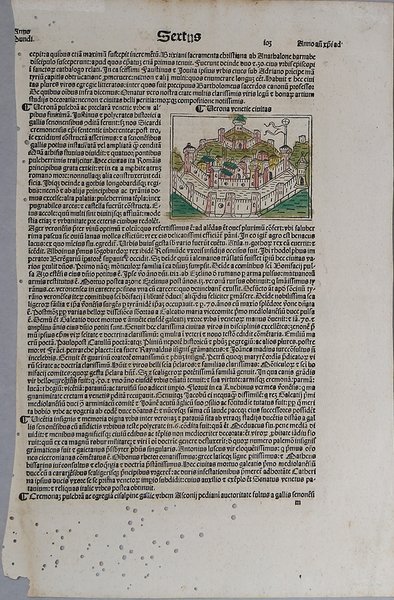
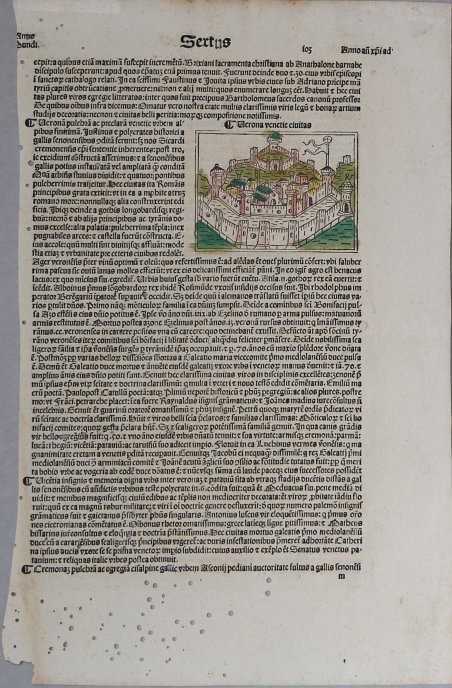
Verona Venetie Civitas
Formas de Pago
- PayPal
- Tarjeta de crédito
- Transferencia Bancaria
- Pubblica amministrazione
- Carta del Docente
Detalles
- Año de publicación
- 1474
- Lugar de impresión
- Colonia
- Formato
- 75 X 60
- Grabadores
- Rolevinck Werner
Descripción
Veduta della città tratta dal Fasciculus Temporum del Rolewink, la prima storia del mondo. Silografia, inserita in una pagina di testo, coloritura antica, fori di tarlo, per il resto in ottimo stato di conservazione. Il westfaliano Werner Rolewinck (1425-1502) era un monaco certosino della Certosa di Colonia o Utrecht; poco altro si sa. Il 'Fasciculus temporum' fu il suo capolavoro, con decine di edizioni apparse in latino, francese, olandese e tedesco solo durante la sua vita. Basato sulle principali fonti storiografiche cristiane come Orosio ed Eusebio, il 'Fasciculus' presenta una storia del mondo sotto forma di genealogia - una struttura storiografica tradizionale che risale alla tarda antichità - che conduce il lettore dalla Creazione al pontificato di Sisto IV. Nel 1474 lo stampatore Arnold Ther Hoernen di Colonia pubblicò la prima edizione stampata datata del Fasciculus temporum. Un'altra edizione non datata del libro di Rolewinck fu pubblicata da Nicholaus Götz, probabilmente a Colonia e non prima del 1474. "The Fasciculus temporum, a fifty-age linear chart that moved from the Creation to the present, set out to give readers an overview of world history: a readable visual presentation that they could treat as both a memory system and as the spark for religious meditation. Rolevinck used a system of coordinated circles to locate biblical, classical and modern rulers and writers in the flow of historical time—a system so complicated that the first printer who grappled with it botched the job, producing an unintelligible text; later printers reasurred readers that they had followed the author's manuscript. And the results were most impressive: a neatly designed, powerfully horizontal line of time plunging forward from the Creation to the present. Around it nearly arranged and coordinated name bubbles and extracts from historical texts put meat on the book's numerical bones" (Rosenberg & Grafton, Cartographies of Time [2010] 28-30). Werner Rolevinck è nato a Laer vicino a Horstmar come figlio maggiore di un ricco agricoltore, Johann Schulte Rolevinck, che aveva i mezzi per finanziare l'istruzione superiore per lui. Nel 1443-1444, Werner Rolevinck continuò i suoi studi presso la Facoltà di Giurisprudenza di Colonia, dove rimase fino alla sua morte, nel 1502, a causa di un'epidemia di peste. Lascia una cinquantina di opere di predicazione, storia ed esegesi biblica, scritte secondo la scolastica medievale e trasmesse a frammenti da studiosi del Rinascimento umanista. Le sue opere più note sono il Fasciculus temporum, seguito da De laude antiquae Saxoniae nunc Westfaliae dictae. An imaginary view taken from Werner Rolevinck's Fasciculus Temporum - the first history of the world ever created. Woodcut, set in a text page, contemporary colour, many worm holes but generally in good conditions. The Westphalian Werner Rolewinck (1425-1502) was a Carthusian monk in the Charterhouse of Cologne or Utrecht; little else is known. ‘Fasciculus temporum’ was his masterpiece, with dozens of editions appearing in Latin, French, Dutch and German solely in his lifetime. Based on major Christian historiographic sources like Orosius and Eusebius, ‘Fasciculus’ presents a history of the world in the form of a genealogy—a traditional historiographic structure dating back to late antiquity—leading the reader from the Creation to the pontificate of Sixtus IV. In 1474 printer Arnold Ther Hoernen of Cologne, issued the first dated printed edition of the Fasciculus temporum. Another undated edition of Rolewinck's book was published by Nicholaus Götz, probably in Cologne and not before 1474. Rolevinck's work also contains some of the earliest evidence of collaboration between an author and his printer in the design of printed books. A few contemporary manuscripts that have survived, such as those for the Nuremberg Chronicle, are similar to the complex typography and woodcuts of the printed edition, but none have been demonstrated to be the author's exemplar for the printer. (cfr. Wilson, The Making of the Nuremberg Chronicle [1976] pp. 38-41). "The Fasciculus temporum, a fifty-age linear chart that moved from the Creation to the present, set out to give readers an overview of world history: a readable visual presentation that they could treat as both a memory system and as the spark for religious meditation. Rolevinck used a system of coordinated circles to locate biblical, classical and modern rulers and writers in the flow of historical time—a system so complicated that the first printer who grappled with it botched the job, producing an unintelligible text; later printers reasurred readers that they had followed the author's manuscript. And the results were most impressive: a neatly designed, powerfully horizontal line of time plunging forward from the Creation to the present. Around it nearly arranged and coordinated name bubbles and extracts from historical texts put meat on the book's numerical bones" (Rosenberg & Grafton, Cartographies of Time [2010] 28-30, with illustrations). Cfr.
