Les suites du Bal Masqué
Les suites du Bal Masqué | Prints | GAVARNI
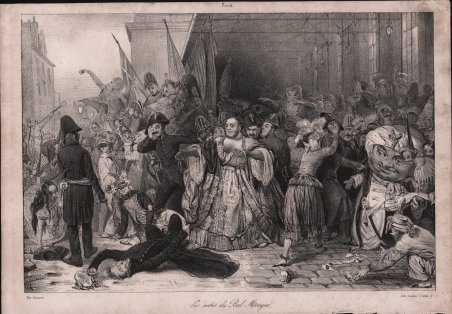
Les suites du Bal Masqué
Les suites du Bal Masqué | Prints | GAVARNI
Payment methods
- PayPal
- Credit card
- Bank transfer
- Pubblica amministrazione
- Carta del Docente
Details
- Year of publication
- 1839
- Size
- 355 X 250
- Engravers
- GAVARNI
Description
Litografia, 1839, sotto l’immagine: ‘Par Gavarni’ e ‘Lith. Coluon, r. richer, 7.’ Da un dipinto di Biard. Paul Gavarni, pseudonimo del disegnatore e litografo Sulpice-Guillaume Chevalier (Parigi 1804 - ivi 1866). Esordì (1824) pubblicando le prime litografie col nome di Hippolyte, che (1828) mutò con quello di Gavarni (da Gavarnie nei Pirenei), pubblicando i Costumes des Pyrénées. Collaborò a La Mode, disegnando figurini, e fondò il Journal des Gens du Monde; collaborò poi a Parigi al Charivari, e a Londra (1847-51) all'Illustration e all'Illustrated London News. Tra le serie più celebri sono: Fourberies des femmes, Les Étudiants, Les Lorettes, Le Carnaval, Propos de Thomas Vireloque, Masques et Visages, le illustrazioni all'Ebreo Errante di E. Sue. Temi preferiti del Gavarni sono la vita parigina, le donne, i costumi borghesi; l'accento satirico e quello galante si alternano e associano felicemente nella sua opera, arguta nell'osservazione e sottile. La sua satira, tenue e insinuante, è più rivolta a cogliere l'aspetto comico che l'aspetto morale del vizio. Il suo disegno, sempre inseparabile dalla battuta umoristica, mira a fare del tema il pretesto d'una narrazione elegante piuttosto che il motivo di una polemica sociale. Lithograph, 1839, below the image: ‘Par Gavarni’ and ‘Lith. Coluon, r. richer, 7.’ After a painting by Biard Paul Gavarni (Paris, 1804-1866) was the nom de plume of Sulpice Guillaume Chevalier (a French illustrator, born in Paris. About 1831 Gavarni began publishing his scenes of everyday contemporary life, and praise from writers such as ' Honoré de Balzac gained him popularity. In 1833 he began publication of the ' Journal of High Society, which failed after 18 numbers and was responsible for Gavarni’s imprisonment for debt in 1835 for almost a year. From 1839 to 1846 he issued his famous series ' Les Lorettes, ' Les Débardeurs, and ' Les Fourberies de femmes ' (“The Deceit of Women”). After the death of his mother and the end of his marriage, about 1845, his style changed, deepening in seriousness and subtlety. Enhanced by his deeper insight into human nature, Gavarni’s compositions of this time ironically depict the grotesque sides of family life and generally bear the stamp of a bitter philosophy. In 1847 he went to London, and he spent his time in England observing the life of the poor and producing some of his most compelling work. After his return to Paris he devoted more time to watercolour and in 1851 met the Goncourt brothers, who had long been his admirers; their book Gavarni: The Man and the Work appeared in 1873. Again Gavarni took up lithography, and in the periodical Paris he brought forth another of his great series, Masques et visages (1852–53). At the time of his death he was working in etching, lithography, and a new process, electric engraving. Cfr.