Santa Barbara
Santa Barbara | Prints | BALDUNG GRIEN Hans
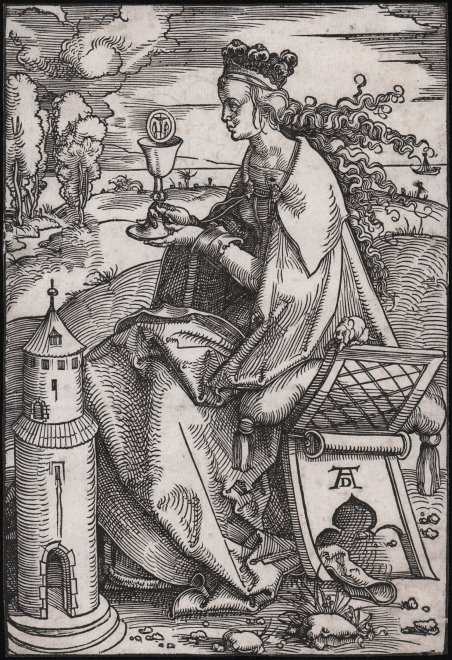
Santa Barbara
Santa Barbara | Prints | BALDUNG GRIEN Hans
Payment methods
- PayPal
- Credit card
- Bank transfer
- Pubblica amministrazione
- Carta del Docente
Details
- Year of publication
- 1505
- Size
- 160 X 235
- Engravers
- BALDUNG GRIEN Hans
Description
Santa Barbara a figura intera, seduta su una sedia senza schienale rivolta a sinistra; regge un calice con un ostia raffigurante Cristo in Croce; in basso a sinistra una torretta, sullo sfondo del paesaggio. Xilografia, 1505-07 circa, firmata con monogramma di Albrecht Durer in basso a destra. Magnifica impressione del secondo stato (con il monogramma aggiunto), stampata con tono su carta vergata coeva con filigrana âcroce con tre montiâ (Briquet 1242), rifilata ai margini, in ottime condizioni. Questa composizione costituiva la parte destra di un virtuale trittico a stampa ideato da Hans Baldung, che comprendeva la Santa Caterina a sinistra e la Vergine col Bambino al centro. Lâopera viene datata al periodo 1505/7, quando Baldung lavorava a Norimberga nella bottega di Dürer. Il modo in cui Baldung tratta la testa, e in particolare le ciocche di capelli, è singolarmente caratteristico e sarà sviluppato con grande effetto nelle sue opere successive. La connessione con Dürer è riconosciuta nella successiva aggiunta del monogramma AD; infatti, come in altre xilografie devozionali di Baldung, il secondo stato mostra il monogramma del Maestro. Mende ha ipotizzato la probabilità che Baldung, nel ritornare in Alsazia, abbia lasciato le matrici di queste prime stampe nella bottega di Dürer. Data l'estrema sensibilità di Dürer allâuso del suo monogramma che, nel 1512, portò addirittura ad una legge che ne vietava lâuso fraudolento, appare possibile che i secondi stati di queste xilografie furono stampati dalla vedova solo dopo la sua morte (1528) e in qualità di produzioni autorizzate della bottega di Dürer. Ciò avrebbe sicuramente avuto l'effetto di aumentarne la commerciabilità e il valore. Alunno di spicco del maestro tedesco Albrecht Dürer, Hans Baldung, prese il soprannome di Grien, o Grün per il suo uso del colore verde. Lâartista veniva da una famiglia molto istruita, che lo distingueva dai suoi contemporanei tedeschi. Era molto noto per la scelta ardita di temi grotteschi, così come per i soggetti soprannaturali ed erotici. La sua arte includeva pittura, ritratti, intaglio, illustrazioni di libri e progettazione di vetrate colorate. Studiò presso Dürer, a Norimberga, dal 1503 al 1507 e pare che i due avessero sviluppato una stretta amicizia, e qui prese il soprannome Grien, per essere distinto dallâaltro Hans dello studio. Baldung si spostò probabilmente a Strasburgo e poi a Friburgo in Brisgovia, dove eseguì quello che è noto come il suo capolavoro. Sia i suoi dipinti che le più famose xilografie avevano uno stile molto personale, soprattutto per la prevalente influenza del Rinascimento italiano. Realizzò molte opere religiose, allegoriche, mitologiche e tante raffigurazioni di streghe. In molti casi l'artista combinava i temi, come nell'erotico e orrorifico, come ne La morte e la fanciulla o nella raffigurazione dello scudiero. L'artista aveva un approccio superbamente fantasioso, influenzato dalla stregoneria; Baldung disegnò anche scene selvaggiamente erotiche, come La strega in piedi con il drago. Il suo approccio ai ritratti non era dissimile, dato che il suo scopo era quello di catturare la personalità e l'umore dei suoi soggetti, piuttosto che di realizzare una rappresentazione diretta. Bellissimo esemplare di questo rara opera; al verso, firma e timbro di collezione della Biblioteca di Treviri. Bibliografia Matthias Mende, 'Hans Baldung Grien. Das graphische Werk', Unterschneidheim 1978, n.13; Marianne Bernhard 13; Dodgson 1903, 1911 I.560.24; Bartsch VII.181.24 (Appendix, as Dürer); Hollstein, German engravings, etchings and woodcuts c.1400-1700 (134.II).