Oratio de vita et morte Illustrissimae Principis ac Dominae Dorotheae Ursulae: Illustrissimi Principis ac Domini D. Caroli Marchionis Badensis et Hochburgensis [...] filiae: Illustriss: Principis, ac Domini D. Ludovici Ducis Wirtenbergici et Teccii comitis Montispeligardi etc. coniugis dilectiss: Quae Anno.83, ipso die Pentecostes, Noribergae feliciter in Christo obdormivit. Habita in nobilissimo frequentissimoque Auditorio Tubingae. A Theodorico Snepffio, Doctore et Professore Theologo in Academia Tubingensi. Additis, et Doctorum aliquot virorum, iuvenumque studiosorum, quae in funere ad valuas Templi affixae fuerunt, Naeniis
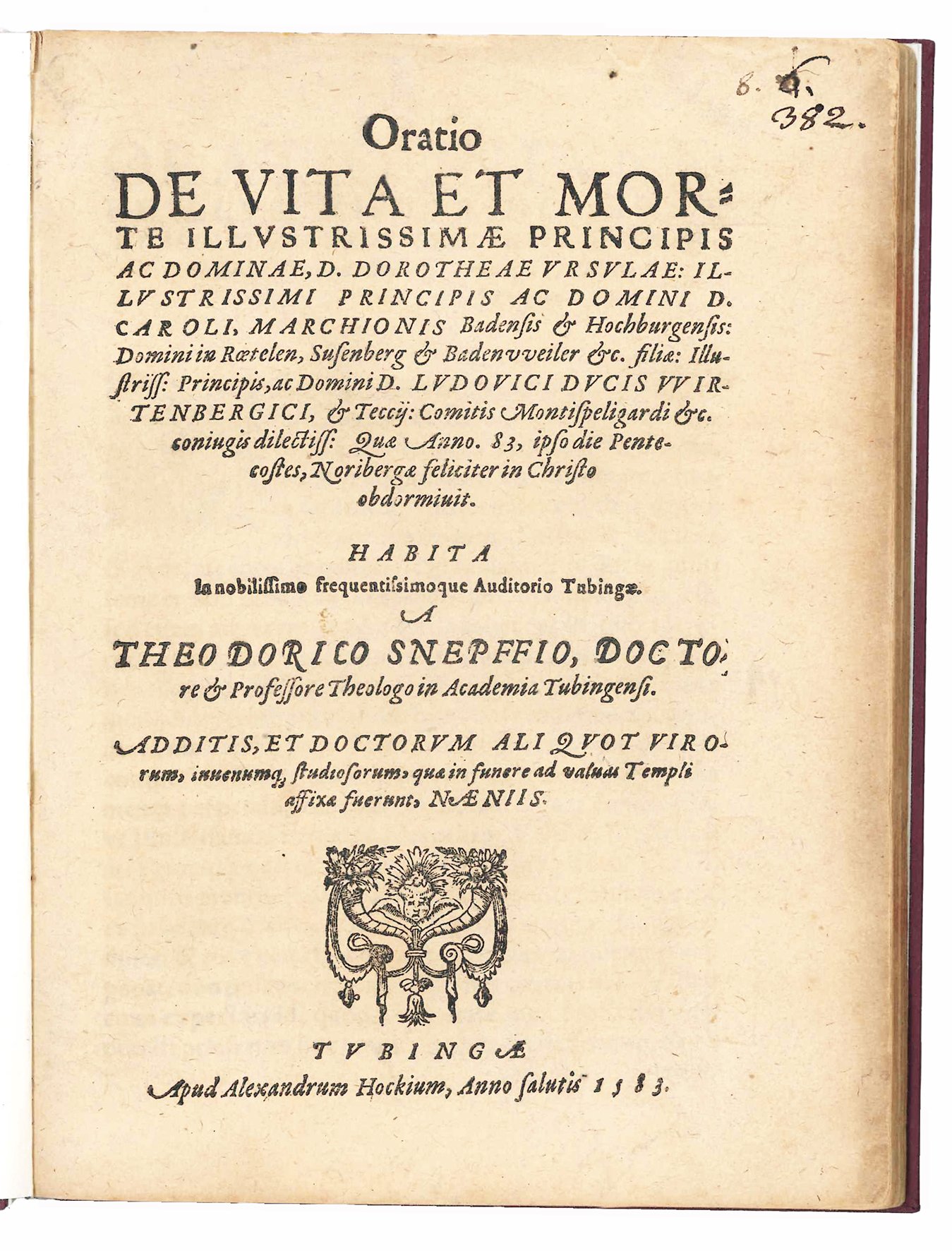

Oratio de vita et morte Illustrissimae Principis ac Dominae Dorotheae Ursulae: Illustrissimi Principis ac Domini D. Caroli Marchionis Badensis et Hochburgensis [...] filiae: Illustriss: Principis, ac Domini D. Ludovici Ducis Wirtenbergici et Teccii comitis Montispeligardi etc. coniugis dilectiss: Quae Anno.83, ipso die Pentecostes, Noribergae feliciter in Christo obdormivit. Habita in nobilissimo frequentissimoque Auditorio Tubingae. A Theodorico Snepffio, Doctore et Professore Theologo in Academia Tubingensi. Additis, et Doctorum aliquot virorum, iuvenumque studiosorum, quae in funere ad valuas Templi affixae fuerunt, Naeniis
Payment methods
- PayPal
- Credit card
- Bank transfer
- Pubblica amministrazione
- Carta del Docente
Details
- Year of publication
- 1583
- Place of printing
- Tübingen
- Author
- SCHNEPFF, Dietrich (1525-1586)
- Publishers
- Alexander Hock
- Keyword
- Quattro-Cinquecento
- State of preservation
- Good
- Languages
- Italian
- Binding
- Hardcover
- Condition
- Used
Description
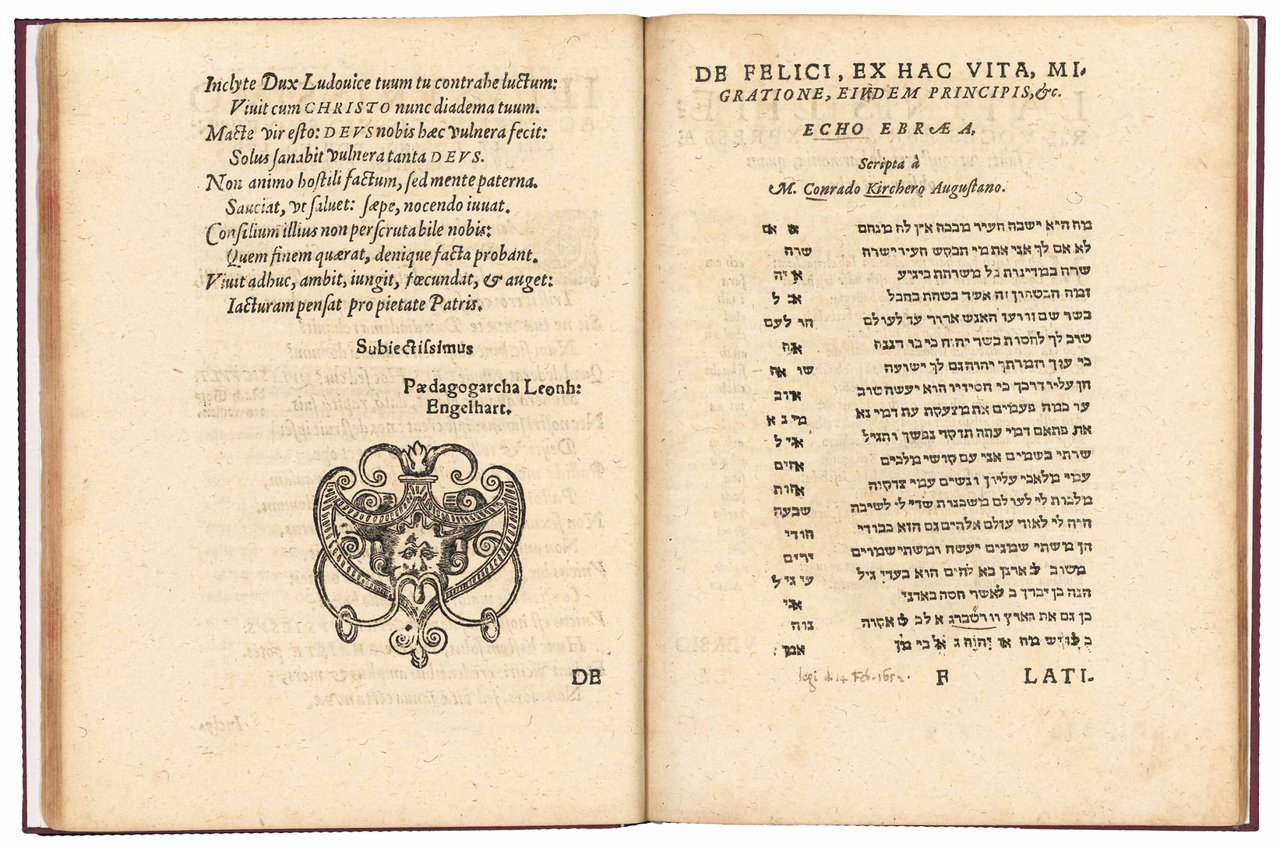
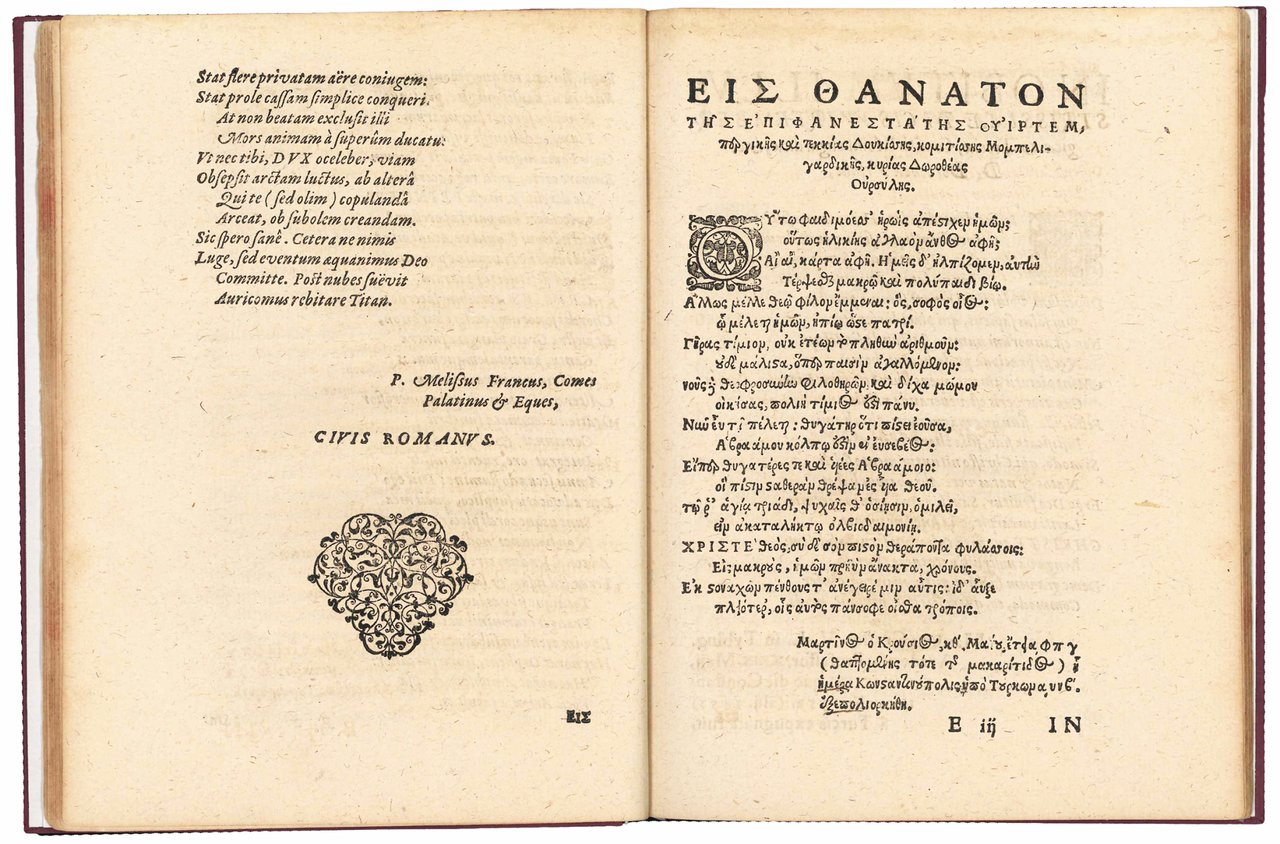
4to (194x146 mm). [44] leaves. Collation: A-L4. The final leaf is a blank. Woodcut ornament on the title page. Woodcut decorative initials, head- and tail-pieces. Roman, Greek, and Hebrew types. Modern cloth-backed boards. Occasional reading signs and marginal notes in a 17th-century hand. Slightly uniformly browned. A good copy.
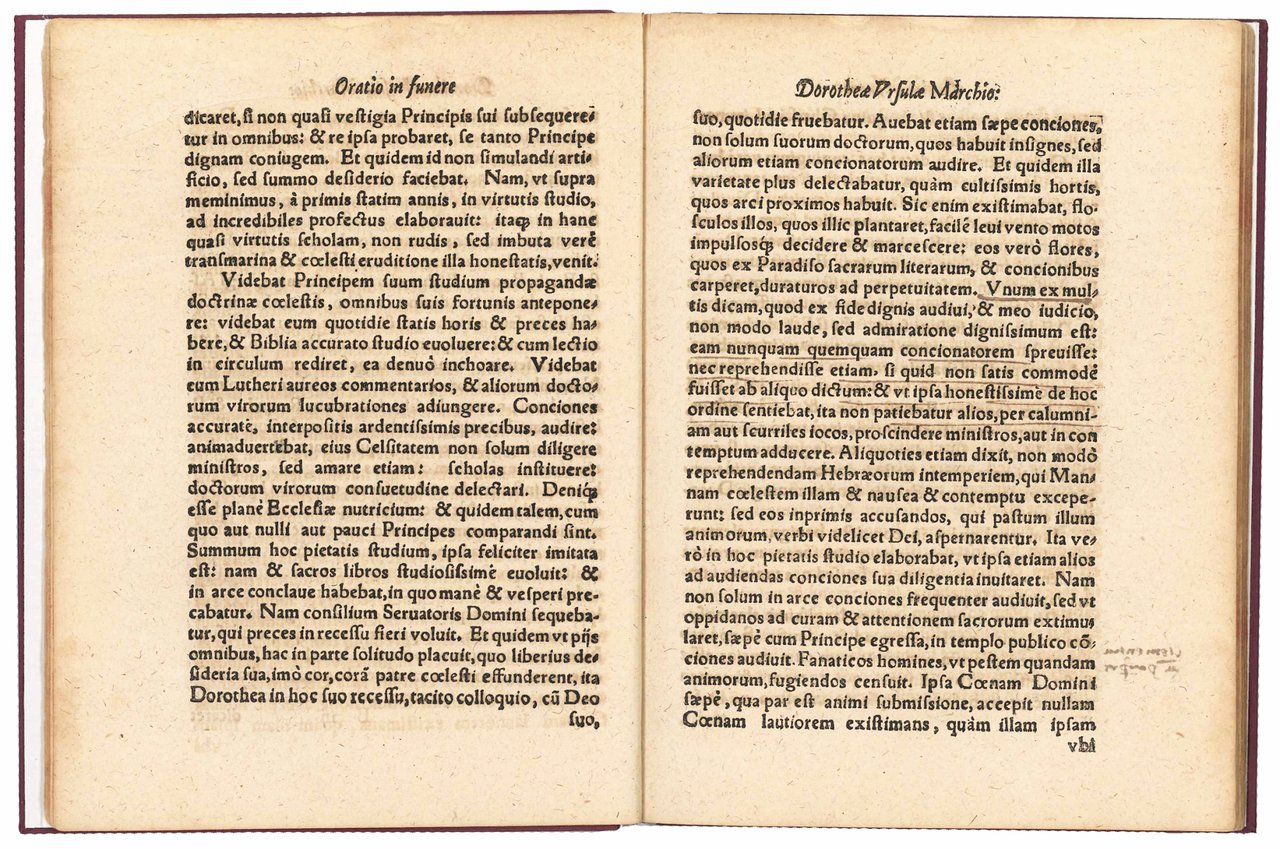
Rare original edition of the funeral speech for Dorothea Ursula von Baden-Durlach (1559-1583) by the Tübingen professor Dietrich Schnepff, followed by verses in Latin, Greek, and Hebrew by several scholars, including Valentin Cless (1561-1634), Leonhard Engelhart (1526-1602), Paulus Schede Melissus (1539-1602), Johann Scholtz (1558-1618), Simon Studion (1543-1605), and Paul Weniger (1552-1619).
Princess Dorothea Ursula von Baden was born in Pforzheim on 20 June 1559, the daughter of Karl II von Baden-Durlach (1529-1577) and Anna von Pfalz-Veldenz. She married Duke Ludwig III von Württemberg (1554-1594) on 7 November 1575 at age of 16 and died in Nuremberg on 19 May 1583 at the age of 23. Schnepff here describes her as “donum Dei” (‘a gift from God'), celebrates the noble origins of the young woman and in particular her parents for the education they gave her, dwells on her studies, especially religious ones, describes her both physically and morally, praises her piety, recalling how she read the Bible and Luther's commentaries with avidity and passion, highlights the charity she did for the poor, so much so that she established a ‘pharmacopolion' at the court of Tübingen, i.e. a pharmacy that distributes free medicines to those in need. He discusses her marriage to Ludwig and the infertility issues that troubled her. Finally, he describes her death in Nuremberg from a brain condition, and the funeral procession upon the return of her body. This was attended not only by prominent figures from the duchy, but also by 1,200 students and many people from the countryside. In the oration, Schnepf quotes Homer, St. Augustine, Socrates, Cicero, Luther, St. Basil, John Chrysostom, Gregory of Nazianzus, and the prophet Isaiah.
The verses include lines in Greek composed by Martin Crusius (1526-1607), Tübingen professor of Greek and Latin, known as the ‘champion of philhellenism in Europe', and a Hebrew poem by the preacher and philologist Konrad Kircher (fl. 2nd half of the 16th cent.), given in Hebrew, in transliteration, and in Latin translation.
Dietrich (or Theodor) Schnepf (Snepffius) was born in Wimpfen in 1525, the son of the theologian Erhard Schnepf (1495-1558). Schnepf attended Latin schools in Marburg and Stuttgart and enrolled at the University of Tübingen in 1539. In 1544, he received his master's degree alongside Jakob Dachtler the Younger (1525-1598), Georg Liebler (1524-1600), and David Chyträus (1530-1600). He then became teacher of Greek in Tübingen. In 1550, together with Jacob Heerbrand (1521-1600), Jakob Andreae (1528-1590), and Jakob Dachtler, he studied Hebrew privately with Erasmus Oswald Schreckenfuchs (1511-1579). In 1553, Schnepf became a pastor in Derendingen. In 1554, he received his doctorate in theology in Tübingen with a dissertation on the doctrine of original sin. From 1555, he was special superintendent and city pastor in Nürtingen. In 1557, he succeeded Martin Frecht (1494-1556) as professor of theology in Tübingen. In the same year, he took part in the Worms Religious Colloquy and in 1561 in the Colloquy in Erfurt. Schnepf was rector of the university six times betwee 1561 and 1584. In April 1564, he participated in the Maulbronn Religious Colloquy. In 1568, he delivered the funeral oration for Duke Eberhard (1545-1568), in 1569 for Duke Christoph of Württemberg (1515-1568) and in 1583 for Dorothea Ursula of Baden-Durlach. In 1569, Schnepf, together with professor of law Kilian Vogler (1516-1585), was sent as an envoy of the university to the new Duke Ludwig the Pious (1554-1593) to confirm its privileges. Around 1570, Schnepf preached in Tübingen against the prevalent belief
