Rare and modern books
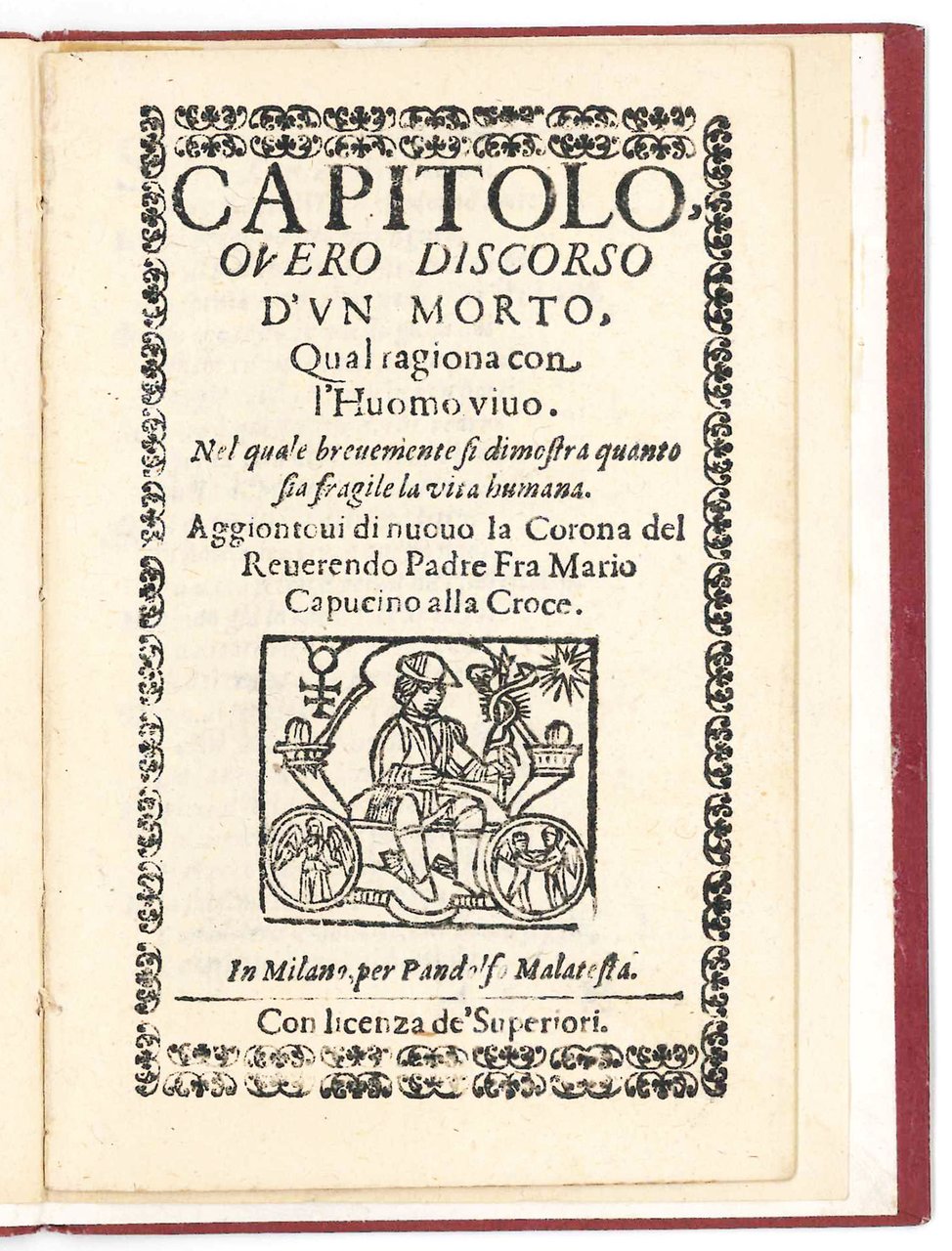
CAPITOLO
overo discorso d'un morto, qual ragiona con l'Huomo vivo. Nel quale brevemente si dimostra quanto sia fragile la vita humana. Aggiuntovi di nuovo la Corona del Reverendo Padre Fra Mario Capucino alla Croce
Pandolfo Malatesta, [not before 1594]
1200.00 €
Govi Libreria Antiquaria
(Modena, Italy)
The correct shipping costs are calculated once the shipping address is entered during order creation. One or more delivery methods are available at the Seller's own discretion: Standard, Express, Economy, In-store pick-up.
Bookshop shipping conditions:
For items priced over €300, it is possible to request an instalment plan from Maremagnum. Payment can be made with Carta del Docente, Carta della cultura giovani e del merito, Public Administration.
Delivery time is estimated according to the shipping time of the bookshop and the courier. In case of customs detention, delivery delays may occur. Any customs duties are charged to the recipient.
For more infoPayment methods
- PayPal
- Credit card
- Bank transfer
-

-
 Find out how to use
your Carta del Docente -
 Find out how to use
your Carta della cultura giovani e del merito
Details
Description
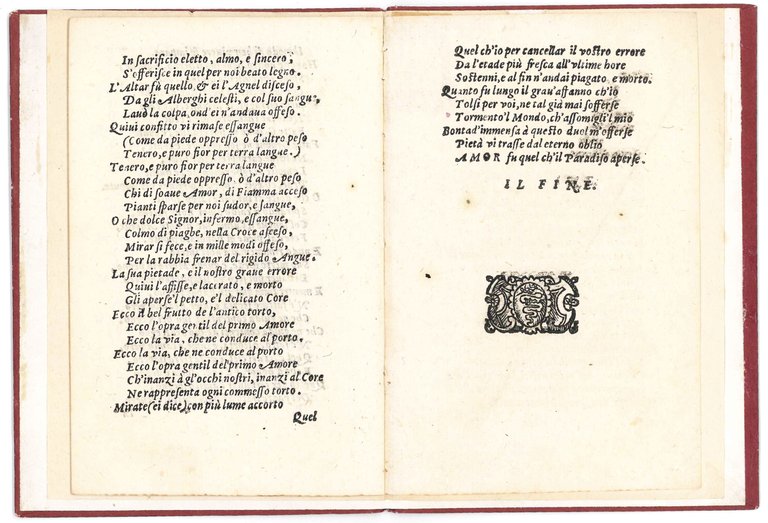
8vo (146x96 mm). [16] pp. Collation: A4. Woodcut vignette on the title page showing the chariot of the tarots with zodiac signs. Title page set within a typographic frame. Two tailpieces, one incorporating the “biscione” (‘grass snake'), the historic symbol of the city of Milan. Modern cardboards. In very good condition.
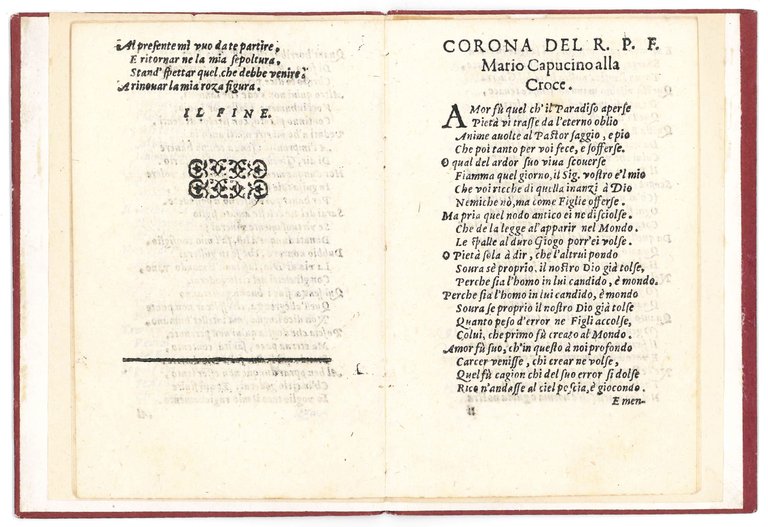
Apparently unrecorded publication by the typographer Pandolfo Malatesta who was active in Milan between 1593 and 1626 with the title of royal chamber printer. Similar to other popular imprints issued by Malatesta at the beginning of his career, the pamphlet is presumably datable to the last years of the 16th century. It contains an anonymous poem in tercets (incipit: “Spettacol pien d'horror hor son, ch'io fui”) in which a dead man counsels a living man on the fragility of life in the framework of the traditional contrasts between the living and the dead, as well as a shorter poem in quatrains (incipit: “Amor fu quel ch'il Paradiso aperse”) attributed to a probably fictious Fra Mario Cappuccino alla Croce.
