Remedium ferendarum iniuriarum, sive de compescenda ira
Remedium ferendarum iniuriarum, sive de compescenda ira | Rare and modern books | DONZELLINI, Girolamo (ca. 1513-1587)

Remedium ferendarum iniuriarum, sive de compescenda ira
Remedium ferendarum iniuriarum, sive de compescenda ira | Rare and modern books | DONZELLINI, Girolamo (ca. 1513-1587)
Payment methods
- PayPal
- Credit card
- Bank transfer
- Pubblica amministrazione
- Carta del Docente
Details
- Year of publication
- 1586
- Place of printing
- Venezia
- Author
- DONZELLINI, Girolamo (ca. 1513-1587)
- Publishers
- Frescesco Ziletti
- Keyword
- Quattro-Cinquecento
- State of preservation
- Good
- Languages
- Italian
- Binding
- Hardcover
- Condition
- Used
Description
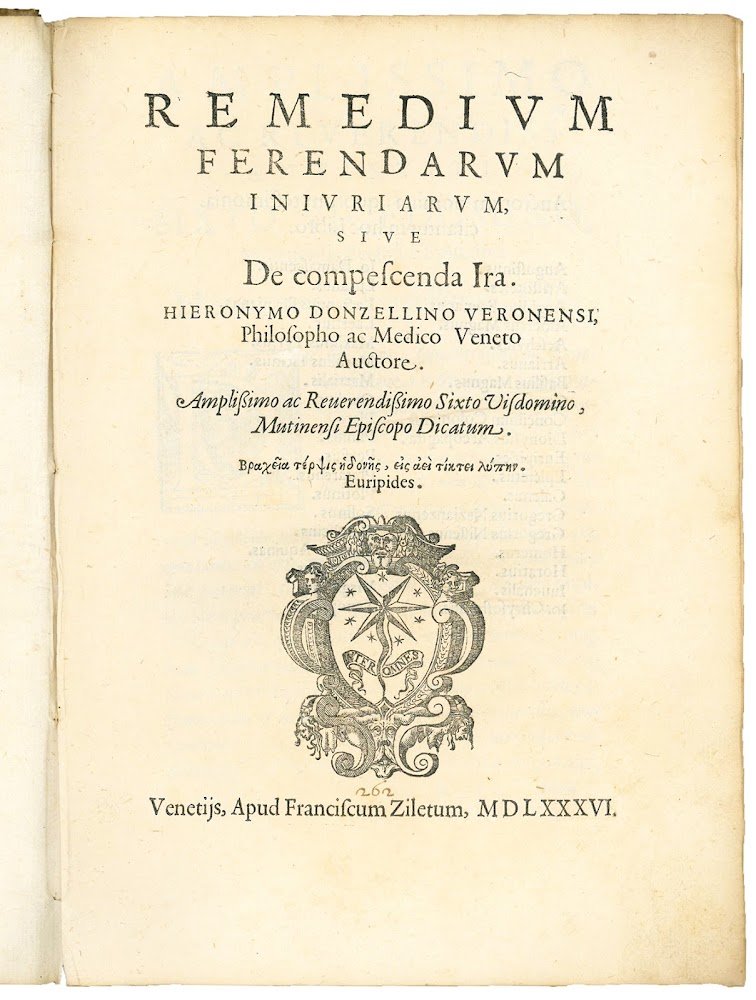
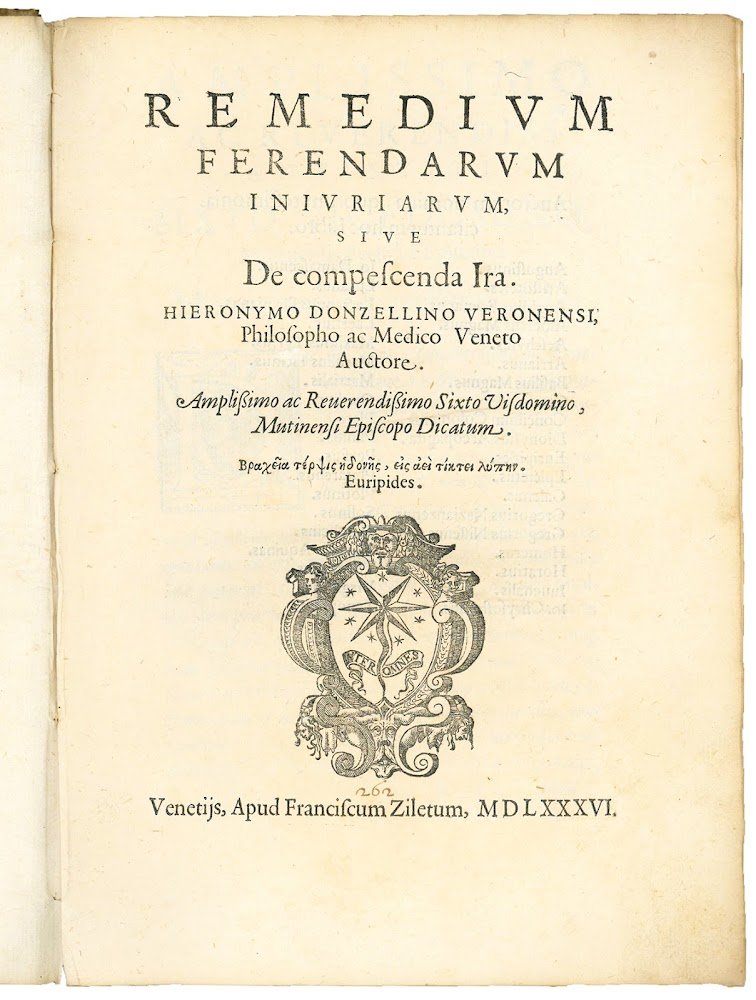
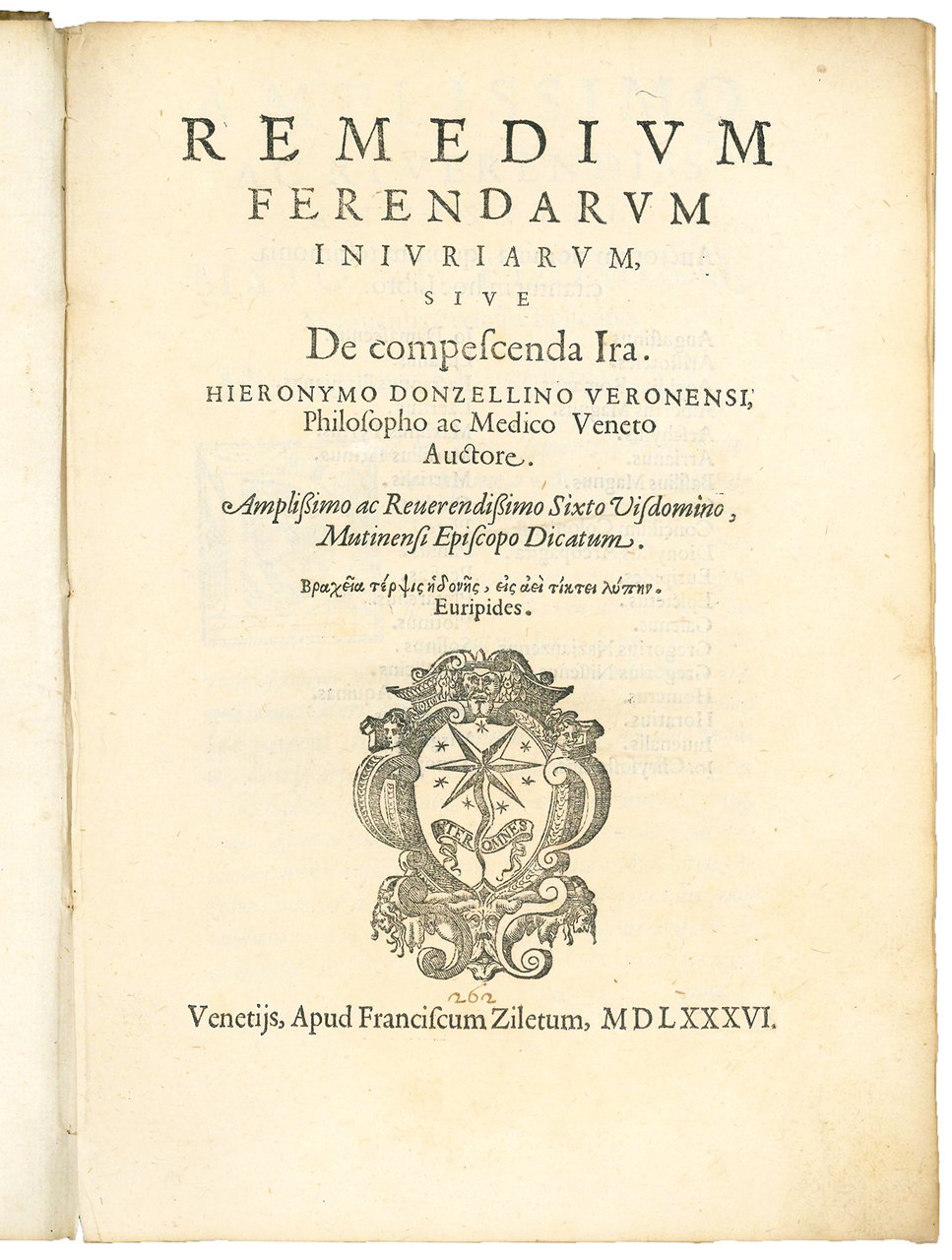
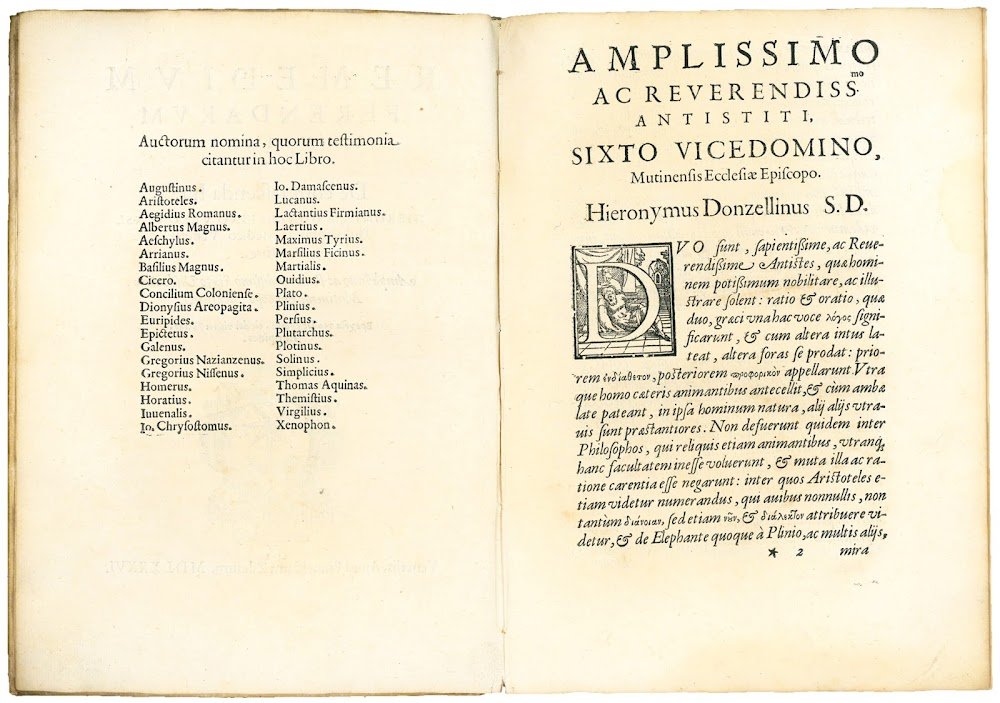
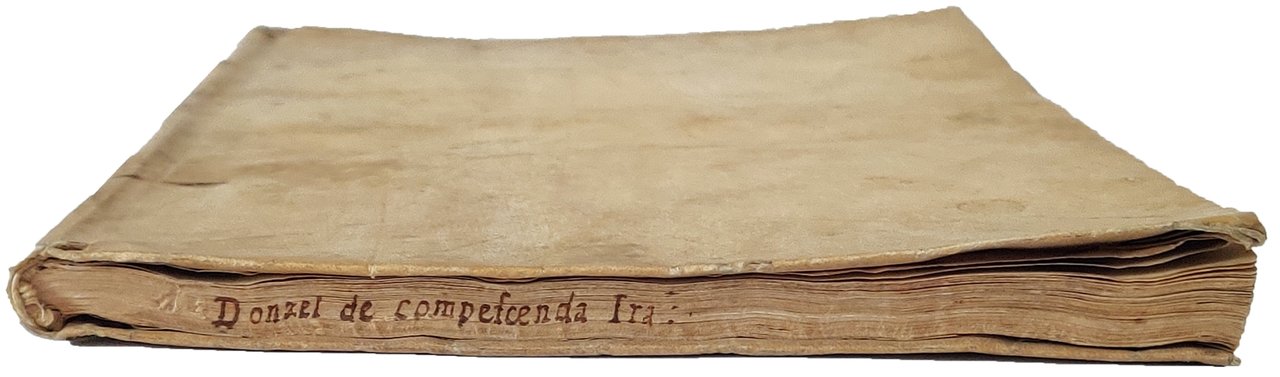
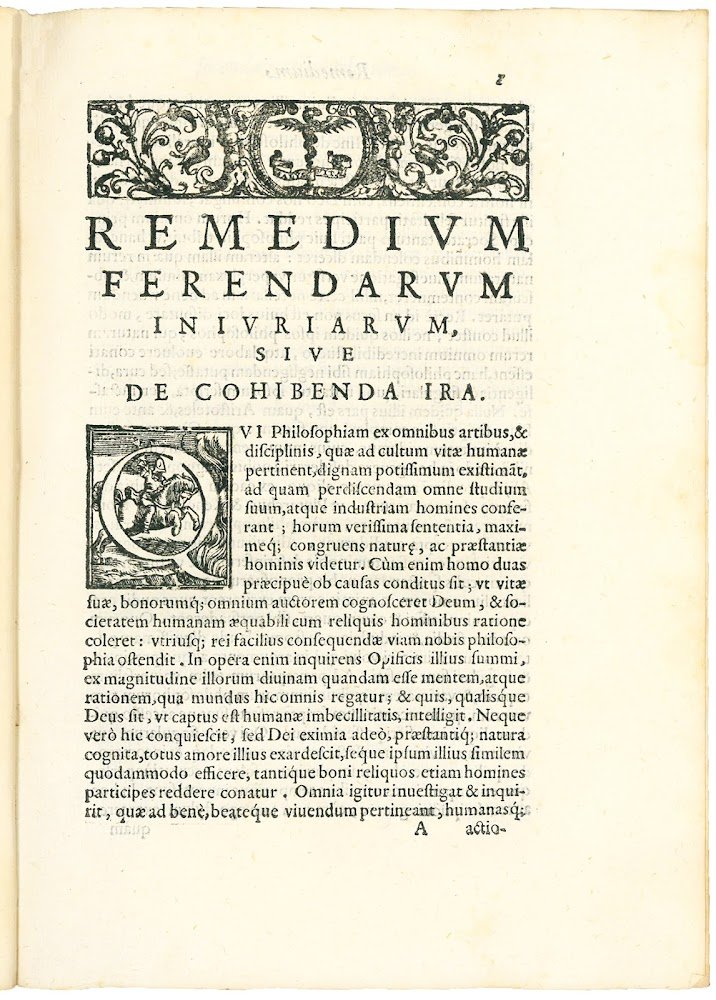
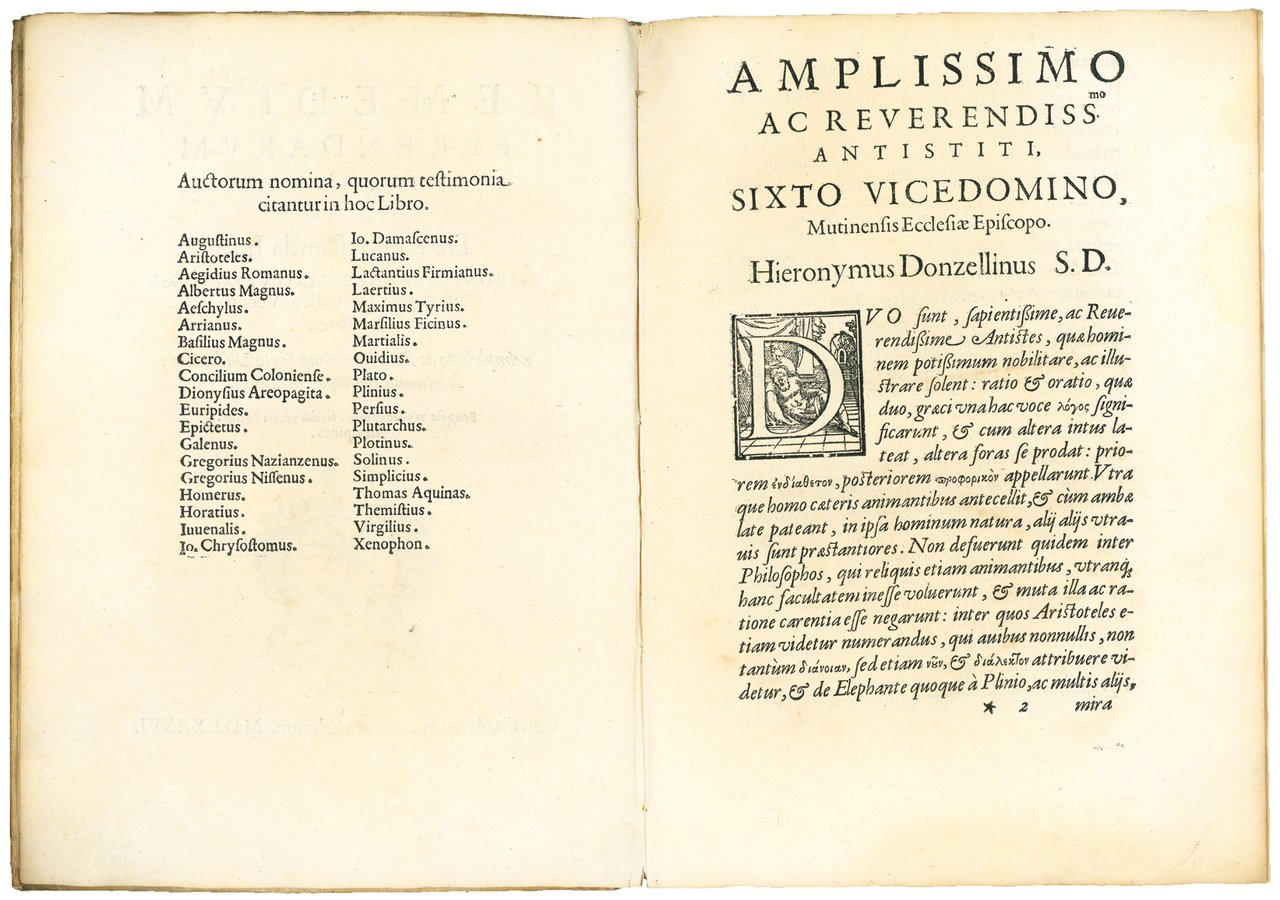
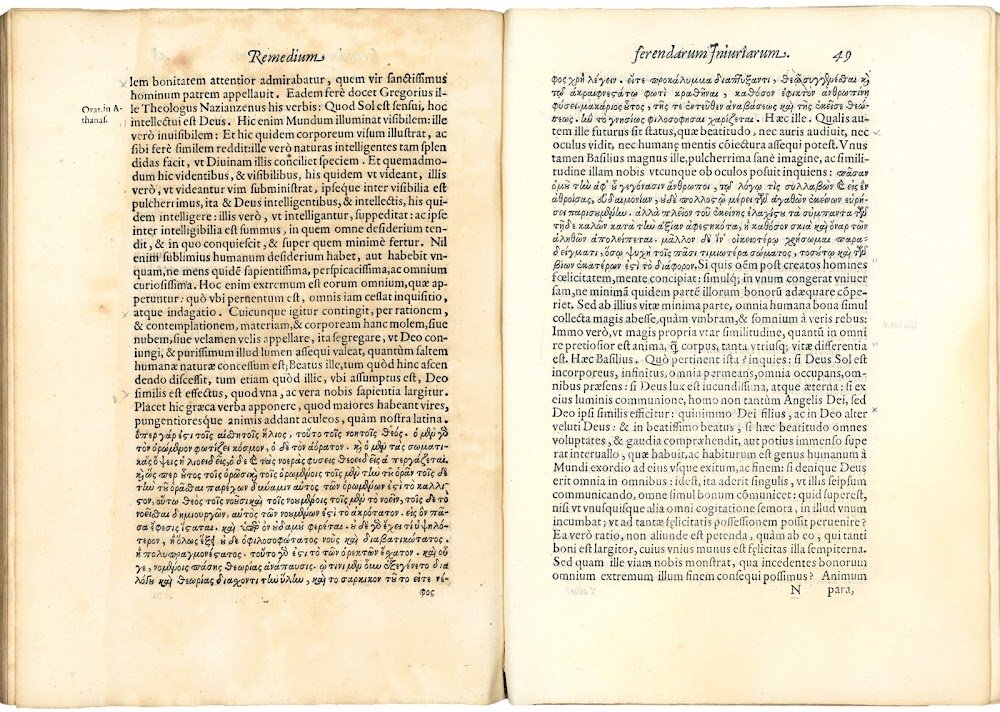
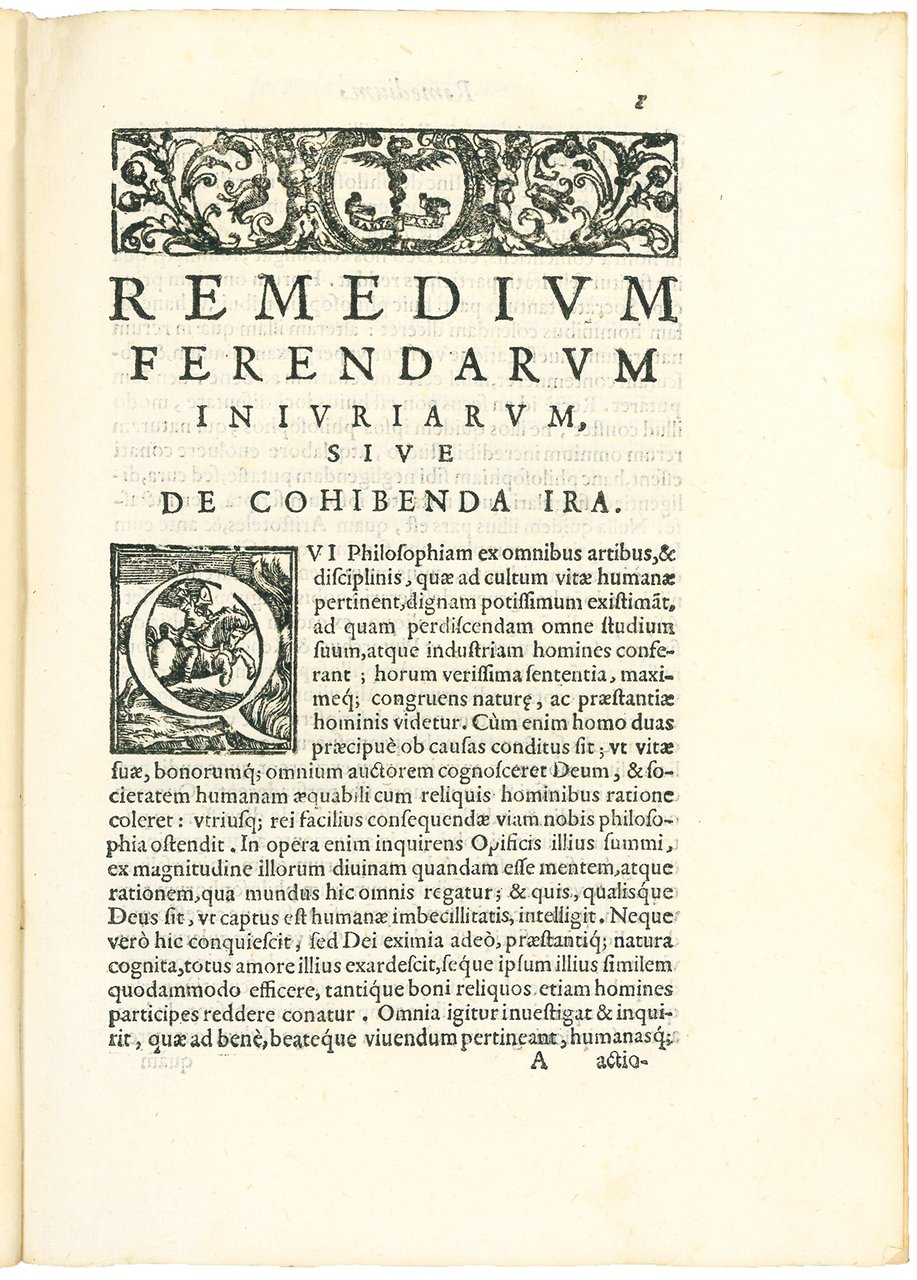
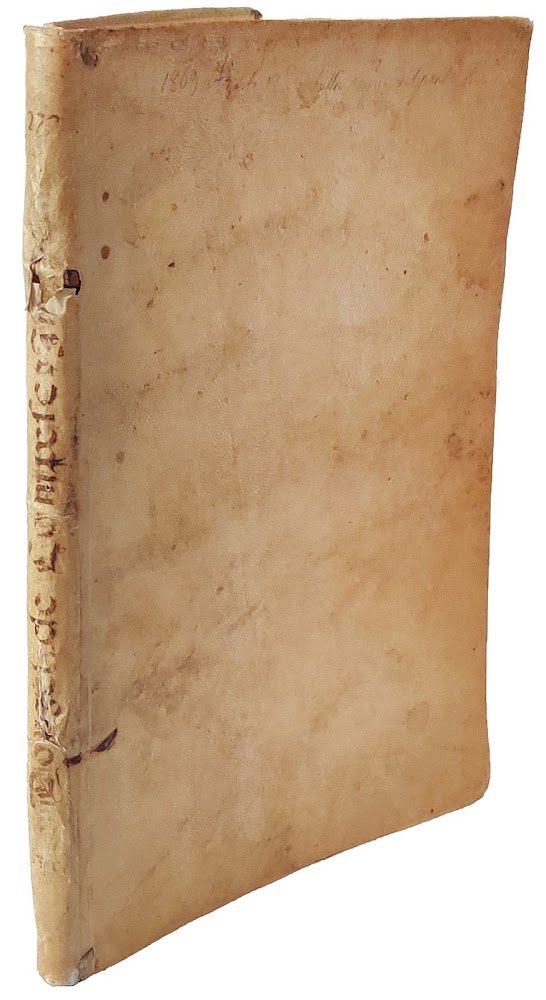
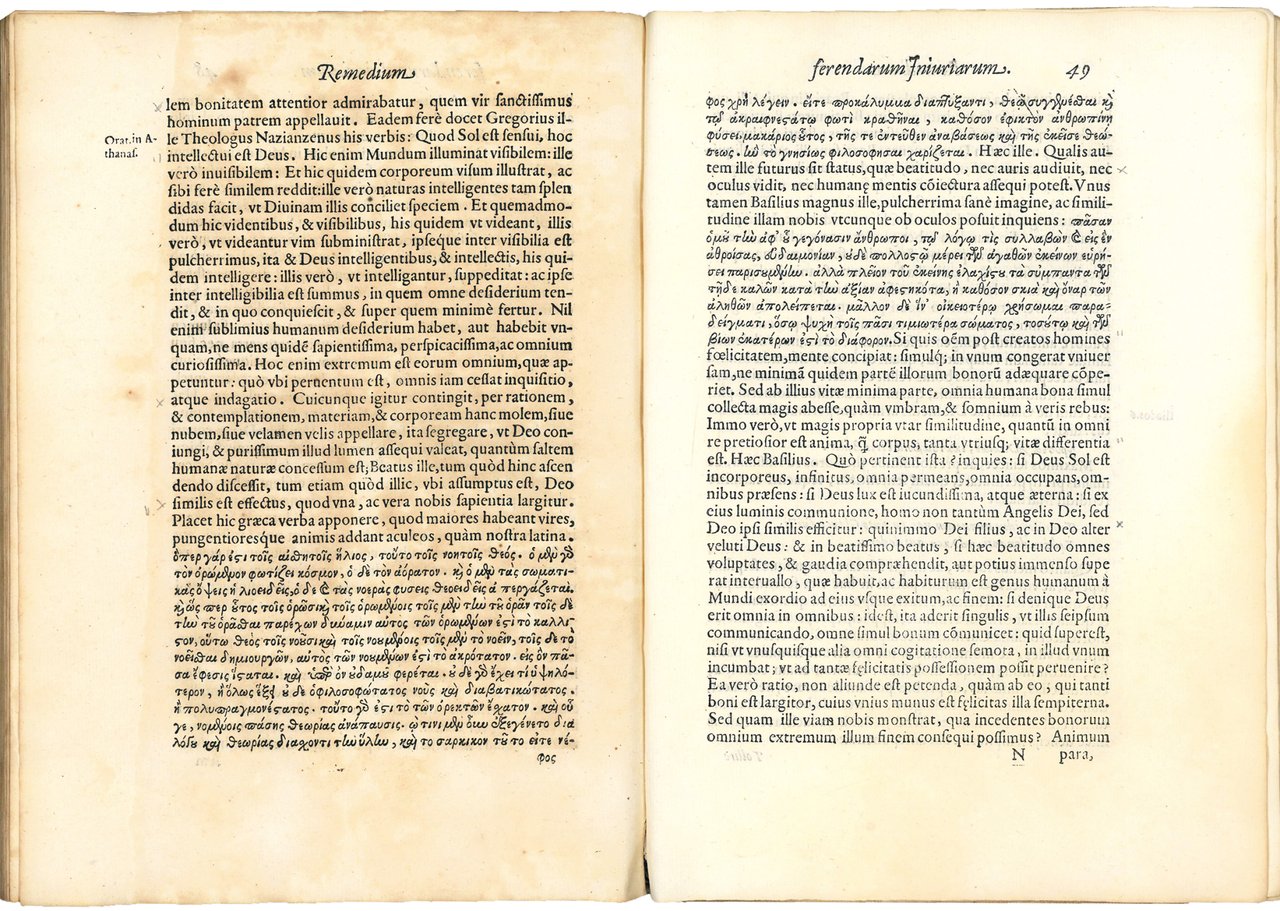
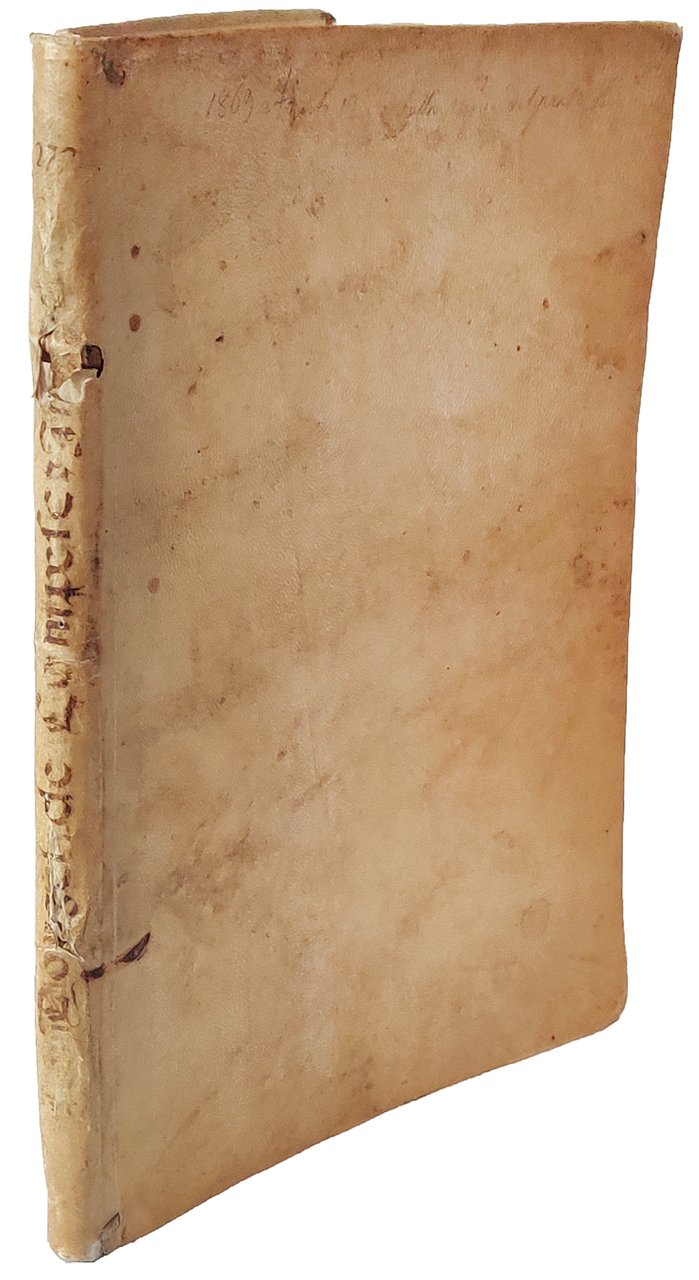
In 4to (mm. 245x175). Cc. [8], 55, [1 bianca]. Segnatura: *-**4 A-O4. Marca tipografica al titolo. Caratteri tondi e greci. Pergamena floscia coeva con titolo manoscritto lungo il titolo e al margine inferiore (piccole mancanze al dorso). Segno di tarlo abilmente restaurato al margine interno di alcune carte all'inizio del volume, alcuni fascicoli un po' bruniti, nel complesso ottima copia estremamente genuina e marginosa.
Rara prima edizione (una seconda fu pubblicata ad Altdorf da Nikolaus Knorr nel 1587 e una terza a Leida da Joannes Maire nel 1635) di questo trattato su come sopportare le offese e trovare rimedi efficaci contro l'ira. Quando Donzellini scrisse la sua ultima opera, aveva già affrontato ripetuti interrogatori e torture da parte dell'Inquisizione e nel corso della sua vita aveva anche avuto modo di riflettere sulle molte offese subite a causa delle sue convinzioni religiose e dei suoi molti nemici sia in campo medico che in campo religioso. Sotto la spinta dell'ira, gli esseri umani si comportano come animali. Donzellini afferma che nulla è più dannoso per gli esseri umani della rabbia e della sete di vendetta. Nel suo trattato egli rielaborò i temi del controllo dell'ira e della risposta dell'uomo alle offese, recuperando il pensiero di Aristotele, dei peripatetici, degli stoici e degli epicurei, ma ponendoli al centro come nessuno aveva fatto prima di lui (cfr. C.L. Redmond, Girolamo Donzellino, Medical Science and Protestantism in the Veneto, Stanford, CT, 1984, pp. 198-231).
“Donzellini's interest in Paracelsianism needs to be contextualised against the backdrop of the physician's philosophical attitude and his fascination with Hermeticism and emanationism. In this respect, Donzellini's most significant philosophical output is his Remedium ferendarum iniuriarum, sive de compescenda ira. Drafted in 1586, only a year before his execution, this tract offers both physical and philosophical analysis of the issue of anger. The stated aim of the work is to promote values of temperance, concord, and love among men by teaching forgiveness and tolerance of offences. To this end, the text blends philosophy, theology, and medicine, with a marked emphasis on the former two. Due to its hybrid nature, the density of its content, and the time of its drafting, the Remedium is an excellent anthology of Donzellini's philosophical, religious, and medical ideas. It reveals the extent and manner in which his intellectual profile was influenced by these different aspects. Moreover, it showcases his propensity for a humanist religion that took on potentially subversive overtones in the late Cinquecento. These radical implications and the choice of subject matter suggest that the tract was drafted as a militant work. In this sense, its call to conquer irascibility takes shape as a metaphor for the desire to overcome confessional disputes and the defence of religious tolerance. The text was published by Francesco Ziletti, a printer who played various roles in Donzellini's network […] The Remedium was a complex text because it could be used and interpreted on different levels and offered a variety of approaches for analysing the subject of anger and bearing injuries. It joined a series of humanist treatises on wrath, with a flurry of works produced during the sixteenth century: the philosopher Agostino Nifo, the physician Johann Weyer and, later, Justus Lipsius and Michel de Montaigne all wrote on the matter, often absorbing the influence of Plutarch's De cohibenda ira (On the Control of Anger) and Seneca's De ira (On Anger). For Girolamo, however, the theme of bearing injustice also struck a personal chord. After all, he had been persecuted, imprisoned, and deprived of the dignity of his profession on two occasions. He explained in the Remedium that surrendering to rage – the most dangerous of all passions – could never be justified, even by victims of the worst iniquities. This insight takes on a dramatic significance in the ligh