Il sogno di Giuseppe
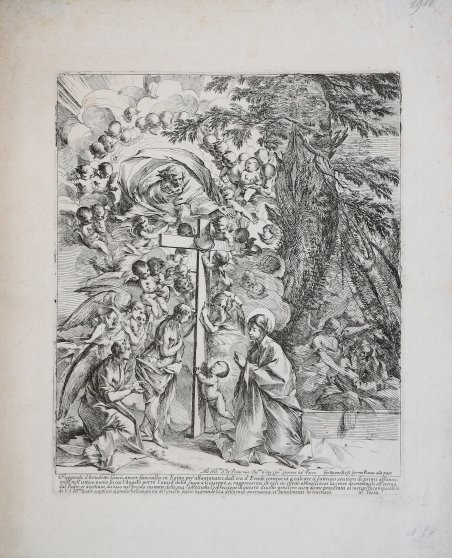
Il sogno di Giuseppe
Payment methods
- PayPal
- Credit card
- Bank transfer
- Pubblica amministrazione
- Carta del Docente
Details
- Year of publication
- 1635
- Size
- 304 X 362
- Engravers
- TESTA detto "Il Lucchesino" Pietro
Description
Acquaforte,1635-1637 circa, firmata in lastra alla fine della dedica. Esemplare nel secondo stato di due, con l'indirizzo di Giovan Gioacomo de Rossi.Magnifica prova, impressa su su carta vergata coeva, con ampi margini, in perfetto stato di conservazione.L’incisione rappresenta il secondo sogno di Giuseppe, narrato, come il primo, nel vangelo di Matteo (2,13). La spiegazione del soggetto è fornita dallo stesso Testa nella dedica al suo mecenate Cassano del Pozzo: un angelo nuovamente appare in sogno a Giuseppe per comunicargli la strage degli innocenti ordinata da Erode, e invitarlo a fuggire in Egitto. Nella scena sono però combinati altri temi: è rappresentato Gesù che bambino, accanto alla Vergine, abbraccia la croce, sorretta dalla Maddalena e dagli angeli, mentre intorno sono raffigurati gli Innocenti. Sulla croce, la figura di Dio padre e una colomba, simbolo dello spirito santo, a completare così la santissima Trinità. In questo modo, attraverso l’espediente del sogno, sono ricordate tutte le fasi salienti del Vangelo: l’Annunciazione, la Strage degli Innocenti, la Fuga e la Crocifissione. L’interpretazione della Fuga in Egitto come inizio della via crucis non era inusuale negli scritti cristiani dell’epoca, in cui i bambini uccisi da Erode veniva considerati come i primi martiri in nome di Cristo. Una simile combinazione di temi si riscontra in due versioni della Fuga in Egitto di Nicolas Poussin, dipinte rispettivamente nel 1629 e nel 1634. Questo lavoro del Lucchesino, appartiene a un gruppo di invenzioni della maturità che comprendono Venere e Adone ma anche l’allegoria dedicata all’arrivo del cardinale Franciotti a Lucca, sicuramente databile al 1637. È la sola opera del Testa dedicata a Cassano del Pozzo, particolare che è stato messo in relazione con la detenzione dell’artista a Tor di Nona nel 1637, prima di seguire Franciotti a Lucca.Si conservano diversi disegni preparatori di quest’opera che conobbe grande popolarità, come provano le numerose copie che ne furono tratte. La vicenda artistica di Pietro Testa, detto il Lucchesino dalla sua città d’origine, è assai tormentata. Poco o nulla si sa del suo primo apprendistato nella città natale. Arrivato a Roma nel 1629, fu probabilmente dapprima a scuola presso il Domenichino, poi presso la bottega di Pietro da Cortona, suo vero maestro. Il carattere introverso dell’artista gli procurò comunque sempre difficoltà con ' i suoi colleghi: il Cortona infatti fu costretto a cacciarlo dalla sua scuola per l’atteggiamento di sprezzante superiorità assunta dall’allievo . Il Testa frequentò allora la casa del suo primo mecenate, il celebre collezionista Cassiano del Pozzo, per il quale eseguì disegni dall’antico. Fu probabilmente nella sua casa che conobbe il pittore Nicolas Poussin, che influenzerà profondamente la sua arte sia nella sua prima fase di adesione tizianesca ' al movimento neo-veneto, sia nel periodo più maturo, a partire dagli anni 1635 in poi, caratterizzati da un intellettualismo classicheggiante. Resta comunque il fatto che le sue incisioni (che ammontano a 40 tavole circa) furono considerate fin dall’antichità, a partire dal Sandrart e dal Baldinucci, le opere grafiche più importanti del '600 italiano. Etching, about 1635-1637, signed in the plate at the end of the dedication. Example in the second state of two, with the address of Giovan Gioacomo de Rossi. Magnificent proof, on on contemporary laid paper, with wide margins, in excellent condition. The etching is the second dream of Joseph, narrated, like the first, in the Gospel of Matthew (2:13). The explanation of the subject is provided by the same head in the dedication to his patron Cassano del Pozzo: an angel again appeared in a dream to Joseph to tell him the Massacre of the Innocents ordered by Herod, and invite him to flee to Egypt. In the scene, however, are combined other themes: Jesus is represented as a child, next to the Virgin, embracing the Cross, supported by Magdalene and angels, while all around are depicted the Innocents. On the cross, God the Father and the figure of a dove, the symbol of the holy spirit, so to complete the Holy Trinity. In this way, through the expedient of the dream, I remember all the important phases of the Gospel: the Annunciation, the Massacre of the Innocents, the Escape and the Crucifixion. The interpretation of the Flight into Egypt as the beginning of the cross was not unusual in Christian writings of the period, in which the children killed by Herod was regarded as the first martyrs in the name of Christ. A similar combination of themes is found in two versions of the Flight into Egypt by Nicolas Poussin, painted respectively in 1629 and in 1634. This work Lucchesino, belongs to a group of inventions of maturity including Venus and Adonis but also an allegory dedicated to the arrival of Cardinal Franciotti in Lucca, certainly dating back to the 1637's the only work of the Head Cassano dedicated to the Well, particular that has been put in connection with the detention of the artist Tor di Nona in 1637, before following Franciotti in Lucca. They keep several preparatory drawings for this work that he met great popularity, as evidenced by the numerous copies that were drawn. Pietro Testa was called Lucchesino for he was born in Lucca. There are but a few news about his apprenticeship in his hometown; for sure, he went to Rome in 1629 to study in the school of Domenichino first and then, towards the end of the year, he moved to the studio of his real master, Pietro da Cortona. His introvert temper caused him a lot of troubles; Cortona, in fact, was obliged to send him away due to his hostile and disdainful behaviour. Testa went then to the house of his first patron, the famous collector Cassiano del Pozzo, and for him he realized his drawings from antiques. Maybe it was in this house that he met Nicolas Poussin who deeply influenced his art both in the neo-Venetian phase and the intellectual classicist one, from 1635. His engravings though, about 40 pieces, have been considered, starting from Sandrart and Bladinucci, the most important graphic works of the Italian XVII century. Cfr. Bartsch 4; Bellini, 10; Cropper, 46.
