L’incoronazione della Vergine
L’incoronazione della Vergine | Prints | JEGHER Christoffel
L’incoronazione della Vergine
L’incoronazione della Vergine | Prints | JEGHER Christoffel
Payment methods
- PayPal
- Credit card
- Bank transfer
- Pubblica amministrazione
- Carta del Docente
Details
- Year of publication
- 1633
- Size
- 440 X 330
- Engravers
- JEGHER Christoffel
Description
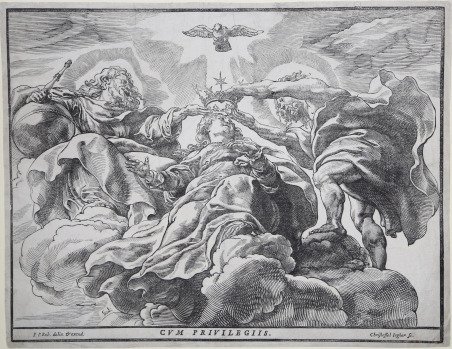
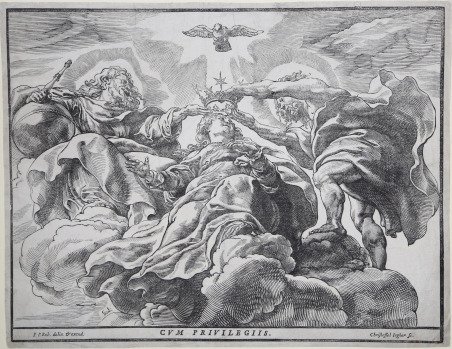
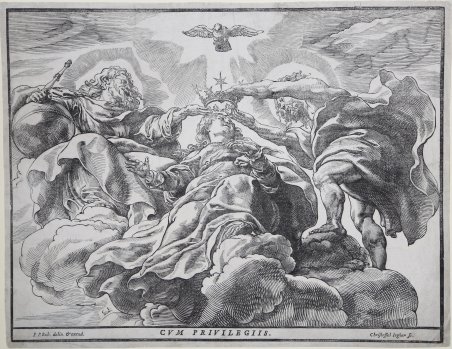
Xilografia, 1633, firmata in lastra in basso a destra. Da un soggetto di Peter Paul Rubens, un dipinto già nella chiesa dei Gesuiti di Anversa.Esemplare del primo stato di due, edito dallo stesso Rubens. ' Avendo intuito i potenziali profitti derivanti dalle stampe riproduttive delle sue opere, P. P. Rubens iniziò a rivolgersi ai tipografi a partire dal 1619. All'inizio degli anni Trenta del Cinquecento si dedicò alle xilografie in stretta collaborazione con Christoffel Jegher. Nel 1630 Jegher è presente nella bottega di Peter Paul Rubens come incisore su legno e, a partire dal 1633, la collaborazione tra i due artisti si intensifica e lo stile di Jegher nell'incidere su legno alcune importanti opere, che il maestro fiammingo intendeva pubblicare, cambia profondamente. Realizzate sotto l'occhio vigile di quest'ultimo, sono eseguite con grande virtuosismo e creano l'illusione del disegno a penna e inchiostro. Il posto di Jegher nella storia dell'arte come il più importante xilografo del suo tempo si basa esclusivamente sulle nove grandi xilografie a pagina singola nate da questa collaborazione. Buona prova, impressa su carta vergata coeva, con margini oltre la linea marginale, tracce di piega di carta verticale al verso, per il resto in buono stato di conservazione. Bibliografia Schneevoogt 1873 / Catalogue des estampes gravées d'après P.P.Rubens (79.40); Hollstein / Dutch and Flemish etchings, engravings and woodcuts c.1450-1700 (10.I); Le Blanc 8, Hollstein 10; Bodart, Rubens e l’incisione 153. The Coronation of the Virgin; the Virgin is crowned by God the Father holding an orb and a sceptre, Christ at right, the Holy Spirit hovering above; on clouds view da sotto in su; after Peter Paul Rubens, 1633. Monogrammed within image, in lower left: "C.I.". Lettered in lower margin: "P.P.Rub. delin. & excud" and "CUM PRIVILEGIIS.' and "Christoffel Iegher. sc.". From 1625 on, Christoffel Jegher worked as an xylographer in the printing house run by Christophe Plantin in Antwerp. He produced book illustrations, ornaments and woodcuts with Christian religious themes. In 1627-1628 Jegher was admitted to the Antwerp Guild of St. Luke as a wood engraver. Having realized the potential profits to be made from reproductive prints of his work, Rubens began to engage printmakers from 1619 onward. In the early 1630s, he turned to woodcuts in close collaboration with Christoffel Jegher. Indeed, Jegher's place in art history as the most important woodcutter of his time rests exclusively on the nine large single-page woodcuts that resulted from this collaboration. In 1630, he was present in the workshop of Peter Paul Rubens as a wood engraver and from 1633 onwards, the collaboration between Rubens and Jegher intensified, and Jegher's style of wood engraving several important works that the Flemish master intended to publish changed profoundly. Done under the watchful eye of the latter, they are executed with great virtuosity and create the illusion of pen-and-ink drawing. A good impression of the first state, published by Rubens himself, with margins, showing trace of central fold, generally in good conditions. Bibliografia Schneevoogt 1873 / Catalogue des estampes gravées d'après P.P.Rubens (79.40); Hollstein / Dutch and Flemish etchings, engravings and woodcuts c.1450-1700 (10.I); Le Blanc 8, Hollstein 10; Bodart, Rubens e l’incisione 153. Cfr.