Le tre parche
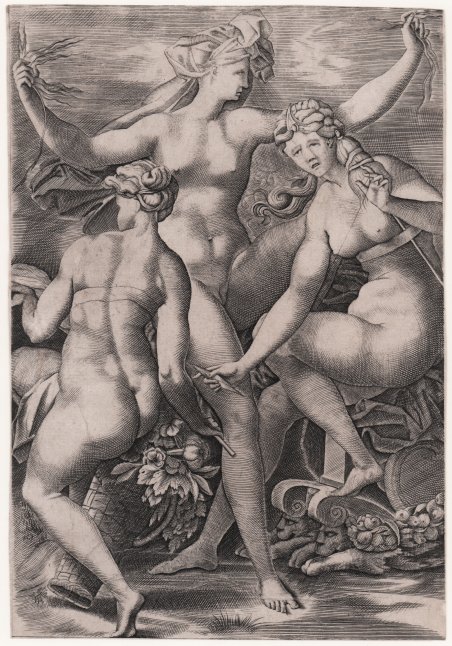
Le tre parche
Payment methods
- PayPal
- Credit card
- Bank transfer
- Pubblica amministrazione
- Carta del Docente
Details
- Year of publication
- 1540
- Size
- 167 X 243
- Engravers
- BOYVIN Renè
Description
Bulino, circa 1540-45, privo di dati editoriali. Da un soggetto di Rosso Fiorentino.Bellissima prova, impressa su carta vergata coeva, rifilata al rame, in perfetto stato di conservazione.La scena raffigura le tre Parche: a destra, Lachesi, tiene in mano la conocchia e fila il destino della vita umana;a sinistra, Cloto presa di schiena ne misura la lunghezza, nel mezzo, Atropo strappa il vilo, determinando il momento irrevocabile della morte.Anche se questa incisione non reca il nome di Rosso Fiorentino, la sua paternità della composizione non è mai stata messa in discussione.Dumesnil ascrive l'incisione a Renè Boyvin perché la figura di Cloto visto di schiena trova precise corrispondenze con la figura femminile della "Caritas Romana", a lui attribuita.Secondo documenti pubblicati da Metman, le Tre Parche sarebbero state incise da Pierre Milan, intorno al 1545.Milan potrebbe aver lavorato direttamente da un disegno di Rosso, o su una copia del disegno di Rosso realizzata ad hoc, come modello per l'incisore, come nel caso della Danza delle Driadi.Van Mander sembra aver identificato le tre figure femminili come le Tre Grazie, poiché, contrariamente all’iconografia tradizionale delle Parche, le figure appaiono giovani e nude, esili ed aggraziate. Anche altri dettagli ed attributi possono riferirsi ad un ambito diverso da quello consueto delle Parche. Il turbante di Atropo le conferisce un aspetto sibillino; Cloto siede precariamente su un cesto di fiori, suggerendo Flora o la primavera o semplicemente l'abbondanza e la freschezza.Lachesi indossa una corona, e il suo sedile assomiglia ad un carro trainato da leoni. Questi attributi sono forse un riferimento a Cibele. Il cielo appare in tutta l'arte di Rosso, in particolare nelle opere da lui prodotte in Francia, e non sembra inadeguato qui, come sfondo, ad allargare il significato delle tre Parche.L’opera, infatti, offre diversi livelli di lettura e di significato: se la sessualità delle figure è esplicita e manifesta, anche la loro postura e i gesti sono assolutamente eloquenti. Quest’ eloquenza s’insinua nella loro sessualità nel momento in cui viene riconosciuta la loro identità che ci porta a riflettere sulle conseguenze indicate dal gesto di Atropo.Bellissimo esemplare di questa rara incisione. Engraving, 1540-45 circa, not signed. After Rosso Fiorentino.A very good impression, printed on contemporary laid paper, trimmed close to the platemark, some paper folds at bottom left, generally very good condition.The scene depicts the three Fates: on the right, Lachesis spinning the thread of life from her distaff, on the left Clotho, seen from behind, measuring the thread with a rod, and in the middle, Atropos ripping it apart.Although this engraving is not inscribed to Rosso, his authorship of its composition has never been questioned.Dusmenil ascribed the engraving to Renè Boyvin, because the Fate seen from the back is used for the female figure of “Caritas Romana”, attributed to him.According to the documents published by Metman, the Three Fates would have been engraved by Milan by 1545. Milan could have worked directly from a drawing by Rosso, or he could have worked from a copy of Rosso’s drawing made especially as a model for the engraver, as in the case of Milan’s Dance of the Dryads. Being young and nude as well as slender and graceful, these three figures have something of the aspect of the Three Graces, as Van Mander seems to have identified them.Other details in the picture may also be references to subjects beyond the usual realm of the Fates themselves. Atropos’turban gives her a sibylic aspect. Clotho sits precariously upon a basket of flowers, suggesting Flora or Spring or simply abindance and freshness.Lachesis wears a crown, and her seat resembles a chariot pulled by lions. These attributes are possibly a reference to Cybele. The sky appears throughout Rosso’s art, especially in the works he produced in France, and they not seem inappropriate here in enlarging upon the meaning of the three Fates.The Three Fates offer a different level and a different range of significance. Its sexuality is frank but also compelling, because the figures are so grand and so eloquent in their posture and gestures. This eloquence insinuates their sexuality into their identify as the Fates and leads us to experience the tragic consequences indicates by Atropo’s gesture. Cfr. Zerner 1969 PM.2; Robert-Dumesnil 1835-71 VIII.33.31; Carroll, Rosso Fiorentino, n.105.
