Obeliscus Pamphilius à la place Navonne à Rome
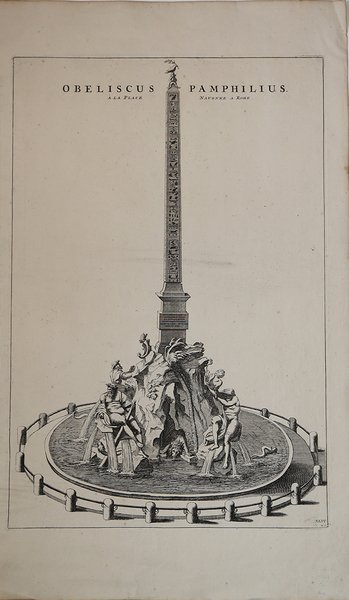
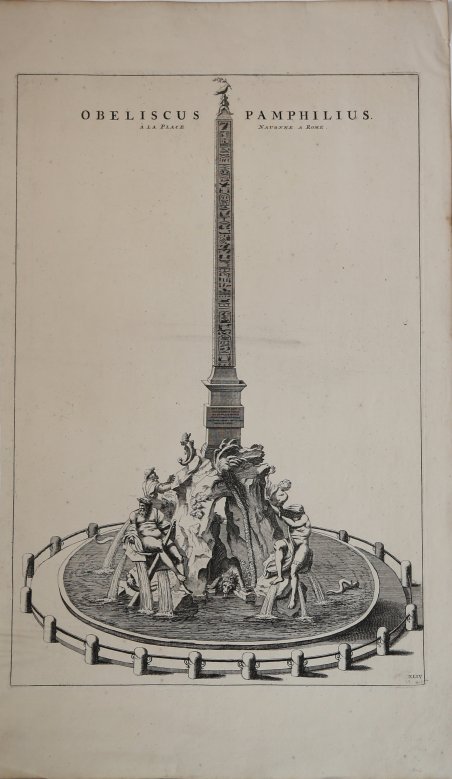
Obeliscus Pamphilius à la place Navonne à Rome
Payment methods
- PayPal
- Credit card
- Bank transfer
- Pubblica amministrazione
- Carta del Docente
Details
- Year of publication
- 1663
- Place of printing
- Amsterdam
- Size
- 352 X 460
- Engravers
- BLAEU Johannes
- Inscription description
- Koeman pp. 332/338, Cremonini pp. 83-90.
Description
Veduta della Fontana dei Fiumi a Piazza Navona, opera di Gian Lorenzo Bernini.Opera per la prima volta pubblicata nel “Theatrum Civitatum et admirandorum Italiae”, pubblicato ad Amsterdam nel 1663. Johannes Blaeu, durante la sua lunga attività editoriale pubblica tre volumi sulle città italiane. Nel 1663 i primi tre, suddivisi in Stato della Chiesa, Roma e Regno di Napoli e Sicilia. Alla sua morte i suoi eredi danno alla luce altri due volumi datati 1682 incentrati sulle città del Piemonte e della Savoia, poi ristmapti da altri editori nel 1693 e 1697. Il francese Pierre Mortier pubblica una ristampa nel 1704/5, intitolata “Nouveau Theatre de l’Italie”. L’opera è in quattro volumi e comprende le lastre del Blaeu, ritoccate e modificate in piccola parte, integrate dall’aggiunta di numerose nuove mappe di proprio disegno, raffiguranti le città della parte settentrionale della penisola, racchiuse nel primo volume dell’opera. L’atlante del Mortier venne pubblicato con testo latino, francese ed olandese. La particolarità che differenzia le due edizioni di Blaeu e Mortier è rappresentata dal fatto che il testo non è al verso della singola mappa (che quindi è bianca nel retro), ma si trova all’inizio di ogni singolo volume. Il grande successo dell’opera diede origine ad un’ulteriore ristampa, praticamente identica, curata da R. Alberts ed edita nel 1724/5. Le opere tratte dalla prima edizione del Blaeu, 1663, sono caratterizzate dalla presenza del testo al verso e sono piuttorsto rare. Incisione in rame, in buono stato di conservazione. Esemplare tratto dal "Nouveau Theatre de l'Italie" pubblicato ad Amsterdam nel 1704/5 o nel 1724. Architectural views of the monument called here the Pamhili Obelisk, now known as the Obelisk of Domitian. It is shown after it had been relocated to the Piazza Navona in Rome and placed atop a fountain designed for it by the great sculptor Gian Lorenzo Bernini.The obelisk’s long history in Rome begins when it was brought from Egypt by Roman Emperor Domitian (82-96 AD), most likely to decorate a temple to the Egyptian goddess Isis, who had been integrated into the Roman religion. The obelisk was moved by another emperor in the early 4th century to the Appian Way, where it stood until falling in the 6th century and breaking into pieces. In 1648, Pope Innocent X (1644-55) decided to restore it and move it in front of the Pamphili pope’s family palazzo on the Piazza Navona, also the former site of the Circus of Domitian. Bernini’s Fountain of the Four Rivers represents rivers flowing from a mountain, and added a dove, the symbol of Innocent X, on top of the obelisk.This engraving was originally published by Joan Blaeu, who published three town-books of Italy during his lifetime: Citta del Vaticano, Roma and Napoli. By the year 1672, a fire largely destroyed the main Blaeu workshop, and much of the prepared material. Nonetheless,work on the town-books continued, and in 1682 the completed work was published in Amsterdam by his heirs. The town-books were a great success and reissued several times by different publishers in Amsterdam, as late as 1726. Pierre Mortier reissued all the Blaeu plates in the years 1704-05 in an atlas comprising four volumes with the imprint of “A Amsterdam Chez P. Mortier Avec Privilege.” Cfr. Koeman pp. 332/338, Cremonini pp. 83-90.
