Sansone e Dalila
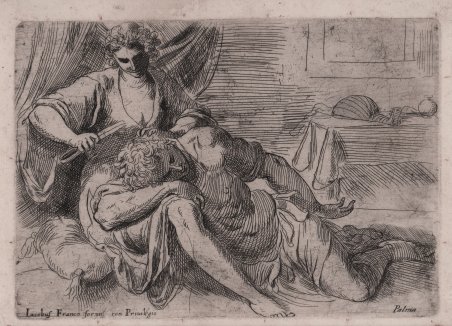
Sansone e Dalila
Payment methods
- PayPal
- Credit card
- Bank transfer
- Pubblica amministrazione
- Carta del Docente
Details
- Year of publication
- 1611
- Size
- 209 X 147
- Engravers
- PALMA detto "Palma il Giovane" Jacopo
Description
Acquaforte, 1611 circa, firmata in basso a destr:a Palma; a sinistra: ' Jacobus Franco formis con Priuilegio. Stato unico.Splendido esemplare, impresso su carta vergata coeva, margini bianchi di circa 1 cm per lato, lievissimo foxing sui margini, per il resto in ottimo stato di conservazione. La scena raffigura il noto episodio biblico in cui Dalila, fatto addormentare Sansone sulle sue ginocchia, gli rade i capelli, privandolo così della sua forza leggendaria. La storia di Sansone, uno dei Giudici d’Israele ed eroe nazionale nella lotta contro i Filistei, si trova narrata nella Bibbia, Antico Testamento, Giudici, dal capitolo 13 al 16.Questa stampa faceva parte del gruppo di ventisei acqueforti di Palma il Giovane, incise da suoi disegni, pubblicate da Franco in due edizioni: la prima, nel 1611, e successivamente nel 1636, nella serie in due volumi, completata da incisioni di Franco e del Ciamberlano. Etching, 1611 circa, signed lower right: 'Palma' and inscribed with publisher's address lower left: 'Jacobus Franco formis con Priuilegio'. Only state.Excellent example, printed on contemporary laid paper. wide margins, occasional light foxing in the margins, generally very good condition.The scene depicts Delilah seated on a tree trunk at right, in profile to left, cutting the sleeping Samson's hair. judge Samson sleeps in the lap of his Philistine lover Delilah, who shears a lock of hair from his head to drain his superhuman strength. The subject is from the Old Testament Book of Judges (16: 17-20)The plate was one of 26 etchings after Palma’s design published in 1611 by Giacomo Franco and again in 1636 by Marco Sadeler.On the basis of style and because some etchings can be related to Palma's paintings of the period, Bruce Davis claimed that Palma did not select drawings from his entire career but from those created roughly in the first decade of the seventeenth century. Cfr. Bartsch XVI.294.26; Bury in Edinburgh 2004, no. 154; TIB 33, 1626
