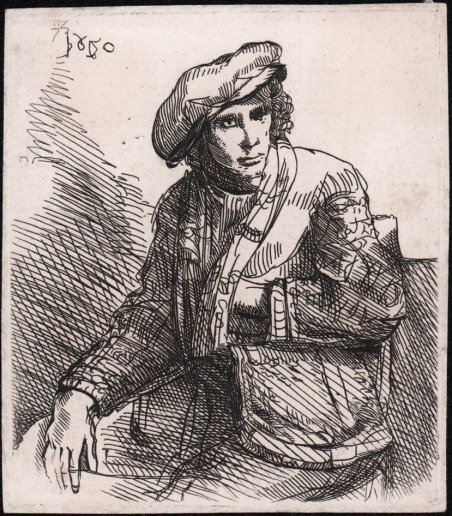
Un giovane seduto, a mezzo busto, con una borsa da gioco
Un giovane seduto, a mezzo busto, con una borsa da gioco | Prints | Van RENESSE Constantijn
Un giovane seduto, a mezzo busto, con una borsa da gioco
Un giovane seduto, a mezzo busto, con una borsa da gioco | Prints | Van RENESSE Constantijn
Payment methods
- PayPal
- Credit card
- Bank transfer
- Pubblica amministrazione
- Carta del Docente
Details
- Year of publication
- 1650
- Size
- 75 X 80
- Engravers
- Van RENESSE Constantijn
Description
Acquaforte, datata in alto a sinistra: "1650". Stampa realizzata dalla Scuola di Rembrandt, attribuita a Constantyn Daniël van Renesse da Wurzbach e Munz, mentre White & Boon suggeriscono Barend Fabritius – un altro allievo di Rembrandt – quale auotre. Tuttavia, anche nel catalogo del British Museum rimane attribuite a Renesse. Una buona impressione, su carta vergata contemporanea, con margini sottili, ottime condizioni. Constantijn van Renesse, apparentemente, iniziò la sua carriera artistica a Leida contemporaneamente ai suoi studi all'Università. Anche se la natura della sua prima formazione artistica non è nota, ha studiato con Rembrandt van Rijn ad Amsterdam alla fine degli anni 1640 e all'inizio degli anni 1650. Un certo numero di disegni di soggetti religiosi di questo periodo sopravvivono, alcuni dei quali Rembrandt sembra aver corretto, che dimostrano l'abilità di Van Renesse di assimilare lo stile del Maestro. Van Renesse probabilmente assistette Rembrandt nell'esecuzione di una serie di dipinti religiosi su larga scala nei primi anni 1650 (vedi La discesa dalla croce). Van Renesse imparò anche a fare incisioni con chiaroscuri pronunciati durante il suo apprendistato con Rembrandt. Tra le scene di genere e i ritratti che Van Renesse incise nei primi anni 1650 c'è un autoritratto datato 1651. Bibliografia Hind 1923, A Catalogue of Rembrandt's Etchings; chronologically arranged and completely illustrated (347); White & Boon 1969; Rembrandt's Etchings: An Illustrated Critical Catalogue. p. 181, n. B 258. Etching, dated in top left corner: "1650". Print made by the School of Rembrandt, formerly attributed to Constantyn Daniël van Renesse by Wurzbach and Munz, while White & Boon suggest Barend Fabritius. However, even in the British Museum catalog it remains attributed to Renesse. A good impression, on contemporay laid paper, with thin margins, good condition. Constantijn van Renesse ' seems to have been skilled as a draughtsman, and apparently began his artistic career in Leiden simultaneously with his studies at the University. Although the nature of his early artistic training is not known, he did study with Rembrandt van Rijn (Dutch, 1606 - 1669) in Amsterdam in the late 1640s and early 1650s. A number of drawings of religious subjects from this period survive, some of which Rembrandt appears to have corrected, that demonstrate Van Renesse’s ability to assimilate Rembrandt’s style. Van Renesse probably assisted Rembrandt in the execution of a number of large-scale religious paintings in the early 1650s (see The Descent from the Cross). Van Renesse also learned to make etchings with pronounced chiaroscuro during his apprenticeship with Rembrandt. Among the genre scenes and portraits Van Renesse etched in the early 1650s is a self-portrait dated 1651. Bibliografia Hind 1923, A Catalogue of Rembrandt's Etchings; chronologically arranged and completely illustrated (347); White & Boon 1969; Rembrandt's Etchings: An Illustrated Critical Catalogue. p. 181, n. B 258. Cfr.