Un mendicante che cammina con due stampelle
Un mendicante che cammina con due stampelle | Prints | VLIET Jan van
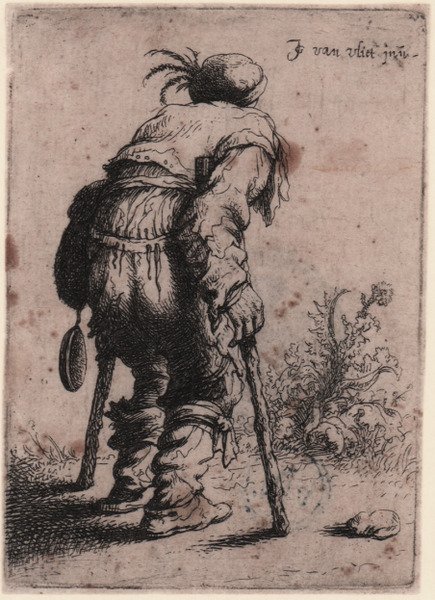
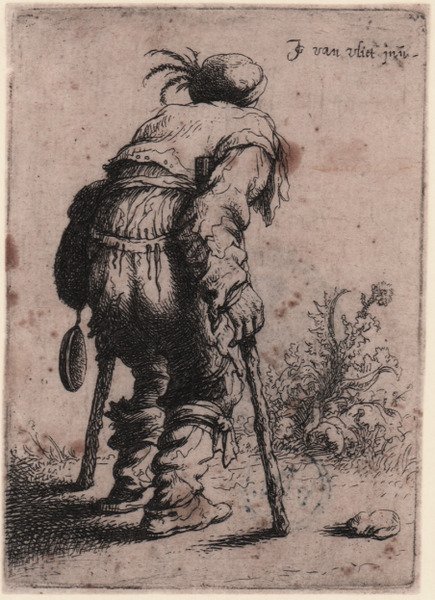
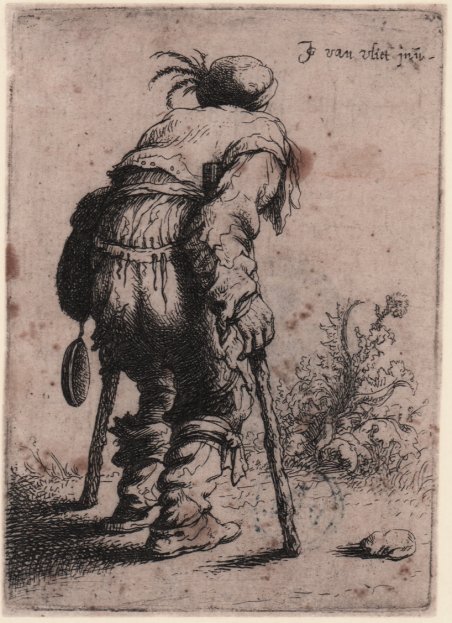
Un mendicante che cammina con due stampelle
Un mendicante che cammina con due stampelle | Prints | VLIET Jan van
Payment methods
- PayPal
- Credit card
- Bank transfer
- Pubblica amministrazione
- Carta del Docente
Details
- Year of publication
- 1632
- Size
- 65 X 89
- Engravers
- VLIET Jan van
Description
Acquaforte e bulino, 1632, con iscrizione sul foglio: “JG van vliet inv.". Appartiene ad una serie di dieci tavole (Hollstein 73-82), da soggetti di Rembrandt, definita I Mendicanti. Van Vliet, acquafortista e disegnatore olandese, deve la sua reputazione alla collaborazione con Rembrandt, dal 1629, a Leida, per alcuni anni, e poi ancora, nel 1631, quando Rembrandt si trasferì ad Amsterdam. Non sappiamo, tuttavia, se anche van Vliet si trasferì. Non era un allievo di Rembrandt, ma un acquafortista indipendente, che realizzava anche stampe dai suoi stessi disegni. Collaborò con Rembrandt alla preparazione di dipinti, e stampe e copiò alcune delle sue acqueforti. Le acqueforti dai suoi disegni vennero realizzate nello stesso periodo in cui lavorò per Rembrandt, come si evince da data e firma. Alcune derivano, tematicamente, da Rembrandt, ad esempio la serie I Mendicanti (1632), soggetto inciso dal maestro nel 1630 circa. I soggetti preferiti da Van Vliet erano presi dalla vita quotidiana: contadini, giocatori di carte, artigiani e bordelli. Tuttavia, la sua opera è priva della forza che emanano le opere di artisti come Adriaen van Ostade, Jan Miense Molenaer e Cornelis Dusart. Esemplare appartenuto alle collezioni di Nagler (Lugt 2529); Baron von Derschau (Lugt 2510); Gabinetto delle Stampe di Berlino (Lugt 1606). Bibliografia 'Rembrandt and van Vliet. A collaboration on Copper', exh. cat. (Amsterdam: Rembrandthuis), Amsterdam 1996, cat.56; Hollstein / Dutch and Flemish etchings, engravings and woodcuts c.1450-1700 (76); Bartsch-Claussin 1797-1828 / Catalogue raisonné de toutes les estampes de Rembrandt (plus Supplement) (II.102.76). A beggar walking on two crutches; seen from behind, a bowl dangling from his satchel at left. Etching and engraving, 1632, lettered on the sheet: “JG van vliet inv.". From a series of ten plates (Hollstein 73-82), after Rembrandt. Magnificent impression, rich in shades, printed on contemporary laid paper without watermark, trimmed to platemark or with thin margins, in excellent condition. Jan van Vliet, Dutch draughtsman and etcher, owes his reputation to the fact that from c. 1629 he worked for Rembrandt in Leiden for a few years and again after Rembrandt moved to Amsterdam in 1631. However, it is uncertain whether van Vliet also moved to Amsterdam. He was not Rembrandt’s pupil but an independent etcher, who also made etchings after his own designs. He collaborated with Rembrandt in preparing his painted compositions as prints and also copied etchings by Rembrandt. Van Vliet’s etchings after his own designs were done during the same period he was working for Rembrandt, and these works he signed. Some are thematically derived from Rembrandt, such as this series of Beggars (1632), a subject etched by Rembrandt c. 1630. Van Vliet’s principal subjects were drawn from everyday life and depicted peasants, card-players, craftspeople and brothel scenes. However, his work lacks the humorous force of comparable works by such artists as Adriaen van Ostade, Jan Miense Molenaer and Cornelis Dusart. Ex collezione: Nagler (Lugt 2529); Baron von Derschau (Lugt 2510); Gabinetto delle Stampe di Berlino (Lugt 1606) Bibliografia 'Rembrandt and van Vliet. A collaboration on Copper', exh. cat. (Amsterdam: Rembrandthuis), Amsterdam 1996, cat.56; Hollstein / Dutch and Flemish etchings, engravings and woodcuts c.1450-1700 (76); Bartsch-Claussin 1797-1828 / Catalogue raisonné de toutes les estampes de Rembrandt (plus Supplement) (II.102.76). ' Cfr.